

Every collector has that moment. The one where they’re staring down a supposed “authentic” fossil online, squinting at a grainy thumbnail like it’s a Rosetta Stone. One click could get you a 66-million-year-old relic—or a cleverly aged chunk of cement shaped in someone’s garage.
Pachycephalosaur teeth are some of the most sought-after dinosaur fossils in the world, and for good reason. These dome-headed creatures, famous for their skulls thick enough to rival bowling balls, make up only a microscopic sliver of the fossil record. Just one percent, to be exact. That’s not a cute exaggeration. It’s science.
Now, think about that. One percent of all fossil finds in the Hell Creek Formation belong to this quirky little group. So if you’re seeing Pachycephalosaur teeth for sale in every other fossil listing, the math isn’t mathing.
The reality is, most of what’s floating around in the online fossil market is either misidentified, misrepresented, or straight-up manufactured. If you want the real thing—the kind of fossil that holds its own in a glass case under a spotlight—you’re going to need more than just enthusiasm. You’ll need an eye sharper than a theropod’s talon and a bit of behind-the-scenes know-how.
Let’s show you what to look for.
First, Know What You’re Actually Looking At
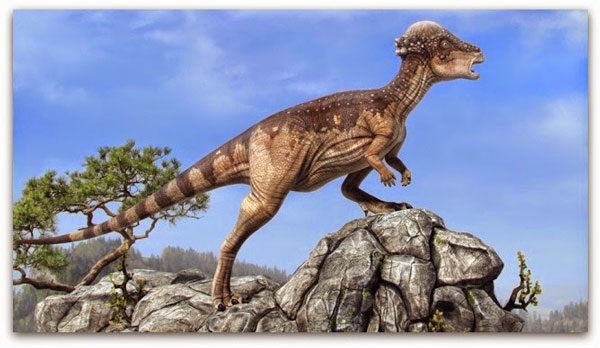
A Pachycephalosaur wasn’t some Hollywood-size meat-eater with slicing fangs. It was more of a mid-sized, herbivorous tank, covered in bone armor and topped with a ridiculously thick skull. Their teeth were small—often less than an inch—and designed for grinding rather than tearing. Which means their teeth didn’t shout aggression, but they whispered durability. You won’t find serrated daggers here. You’ll find tall crowns with subtly chaotic enamel ridges and a center groove that often steals the show.
If you’re holding a tooth that looks like it was carved by a laser and smoothed by a gemstone polisher, you might want to start asking questions.
Pachy teeth stand out for a few key reasons: they are asymmetrical, with vertical ridges that aren’t just decoration but part of the feeding structure. One center ridge tends to be more pronounced than the others, and the crown shape isn’t balanced like a perfectly mirrored Thescelosaurus tooth. That distinction matters more than you think.
Which brings us to a common pitfall.
The Great Thescelosaurus Mix-Up
Misidentification is the fossil world’s version of catfishing. Thescelosaurus and Pachycephalosaurus teeth are suspiciously similar, especially if you’re going off photos alone. That’s why so many dealers—some knowingly, some not—slap a “Pachy” label on something that never even belonged to a dome-head.
Here’s the difference you’ll want to keep in your back pocket. Thescelosaurus teeth? Cleaner symmetry. Neat, predictable ridges. Pachy teeth? Ridges that refuse to follow rules. A little rugged, a little unpredictable, and all the more beautiful for it.
So if a seller isn’t willing to tell you how they differentiated between the two, or worse, if they don’t seem to know there’s a difference at all, that’s your cue to back away slowly.
Why Dig Site Details Matter
Another red flag? A fossil with no hometown.
Real Pachycephalosaurus teeth almost always hail from formations like Hell Creek in Montana or Lance Creek in Wyoming. They don’t just pop up from random gravel pits or imported Moroccan quarries. These are specific to Late Cretaceous North America, and reputable sellers will proudly note that their specimens were legally collected on private land within those zones.
If you find Pachycephalosaur teeth for sale with no geological formation or legal provenance listed, consider that your not-so-gentle warning siren.
Texture Tells the Tale
Let’s get tactile. If you can hold the fossil in person—or if the seller provides clear macro images—look at the enamel. Not just the color, but the texture.
Fossil enamel shouldn’t be pristine. It should feel ancient. It should look like it’s been through millions of years of pressure, mineralization, and time’s unrelenting march. Real enamel often carries a grainy texture under magnification and doesn’t shine like fresh plastic. It may even show small wear facets from actual chewing, which is like getting a fossil with its prehistoric passport.
Also, beware of shiny finishes. That’s usually a resin coating applied to casts or restored fragments.
Composite Specimens and Repair Work: Spotting the Signs of Tampering
This might come as a surprise, but there are sellers out there combining multiple fragments to create what they call a “complete” tooth. The result is a Frankenstein hybrid—part real, part fake, and all misleading.
These patchwork pieces might look convincing from a distance, but the joins usually give them away. Keep an eye out for changes in color or texture where one section meets another. Look for unnatural seams or sudden shifts in surface detail. If anything looks too seamless or suspiciously clean, trust your instincts. Fossils have flaws, and that’s part of their story.
The “Too Good to Be True” Price Test
Let’s put it bluntly. A genuine Pachy tooth is a rare find. If someone’s listing one for $40 with a stock photo and no background information, that’s not a deal—it’s a trap.
Pricing reflects rarity, preservation, and provenance. While we believe in offering fossils at fair, collector-friendly prices, there’s a baseline that just doesn’t budge. Fossils don’t grow on trees, and authentic Pachy teeth definitely don’t rain from the sky.
Remember, when you’re scanning listings with pachycephalosaur teeth for sale, and one price sticks out like a sore claw—it’s probably there for a reason. Ask yourself if you’d buy a Rolex from a vending machine just because the label said it was real.
Documentation and Legitimacy: Building Trust Through Provenance
Any serious collector knows the paper is just as important as the fossil. A proper specimen should come with detailed documentation that includes:
● Dig site or formation
● Legality of collection
● Identification and comparison notes
● Information about restoration (if any)
You wouldn’t buy fine art without provenance, and the same rule applies here. We believe transparency should be part of the product. It’s how trust is built—and how collections gain value.
Rarity and Value: Why Genuine Pachy Fossils Appreciate Over Time
Let’s talk value. There’s an undeniable rush in owning a genuine, legally collected Pachy tooth. But more than that, there’s investment value. Unlike mass-produced “fossils” with no lineage, a legitimate tooth carries long-term worth. As fossil availability dwindles due to stricter regulations and fewer dig permissions, rarity increases. A real Pachy tooth isn’t just a pretty piece—it’s a fossilized asset.
And yes, rarity plays a role too. When you’re holding something that statistically belongs to just 1% of all known Hell Creek fauna, you’re not just holding a tooth. You’re holding a whisper from prehistory. That matters.
Our Commitment to Authenticity and Collector Confidence
Collectors deserve better than maybes and might-bes. That’s why every fossil we offer has been carefully vetted, professionally compared, and selected for both authenticity and character. You won’t find cast-offs or composites in our catalog. What you will find is a rotating collection of pachycephalosaur teeth for sale, each backed by our guarantee, our eye for detail, and our refusal to compromise.
If you’re going to add something to your collection, make it something with real roots—literally and figuratively.
Final Insights: How to Collect with Confidence
The real key to identifying an authentic Pachycephalosaur tooth lies in patience. Rushing into a purchase often leads to regret, especially when you’re navigating a marketplace filled with replicas and misidentified fossils. Take the time to examine the details, compare examples, and ask questions others might shy away from. The irregular ridges, worn enamel, and unique asymmetry—these are the clues that separate the extraordinary from the artificial.
If you’re browsing through pachycephalosaur teeth for sale, let knowledge guide your decisions. A well-researched collector isn’t just buying a fossil—they’re reclaiming a fragment of deep time. When you’re ready to welcome one of these rare relics into your collection, we’re here with a carefully curated selection of pachycephalosaur teeth that meet the highest standards of authenticity.
After all, only one percent of the fossil record belongs to Pachycephalosaurus. That’s not much. But if you know how to spot the right one, that single tooth could be the crown jewel of your prehistoric treasures.






