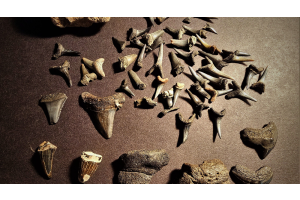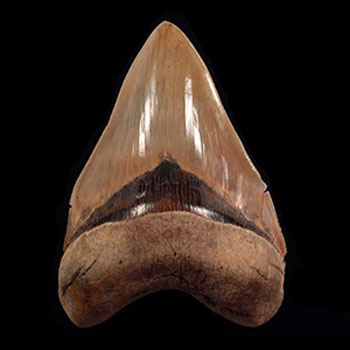
For fossil enthusiasts, few discoveries rival the thrill of finding a Megalodon tooth. These relics from an ancient ocean predator carry a history millions of years in the making and command attention for their size, structure, and rarity. Imagine the excitement when a man finds a tooth of Megalodon embedded in sediment—an unmistakable marker of prehistoric power. Have you ever seen a Megalodon tooth up close and wondered if it was the real thing? Yet, with their popularity, the market is filled with replicas and altered specimens. Knowing how to distinguish the real from the artificial isn’t just important—it’s essential to building a collection you can trust.
Let’s explore the signs that tell you a Megalodon tooth is the real deal.
Understanding the Size Factor
One of the first indicators to assess is size. Megalodon teeth are famously large, often measuring between 3 and over 7 inches in length. While size alone can’t confirm authenticity, it does set the groundwork for further evaluation. Authentic specimens will typically display proportional width to height, with a strong, triangular crown and robust root.
Replica teeth, even when scaled correctly, may feel unusually light or uniform in density. Real fossil teeth, mineralized over millions of years, tend to have a heavier, solid feel when held. This weight difference is a subtle yet useful starting point for evaluation.
Recognizing Natural Color Variations
Genuine Megalodon teeth display an impressive range of colors due to the minerals present during fossilization. Shades can vary from gray and black to brown, tan, or even bluish tones. The environment where the tooth fossilized plays a huge role in its final appearance—river finds often differ in color from ocean finds.
If every tooth you see for sale looks identical in shade and pattern, that’s a red flag. Authentic teeth rarely have perfect uniformity in color. Subtle gradients, mineral streaks, or a blend of hues within the enamel and root are common in real fossils and should be appreciated as part of their uniqueness.
Examining Serration Details
The serrations on a Megalodon tooth are a critical authenticity marker. In well-preserved specimens, you’ll notice fine, evenly spaced serrations running along the edges of the crown, tapering toward the tip. These serrations were functional in life, allowing the Megalodon to tear through prey efficiently.
Over time, fossilization and natural wear may soften or partially erode these serrations, but their placement and pattern will still be visible. Replicas often have serrations that appear too sharp, too perfect, or irregularly spaced. Under magnification, authentic serrations show minute mineral wear that can’t be easily faked.
Looking for Root and Bourlette Integrity
Between the enamel crown and the root lies the bourlette—a textured, often darker band that can help with identification. In genuine specimens, the bourlette may be intact or partially worn, but its surface will show a naturally aged texture.
The root itself should feel solid, with micro-pitting or subtle weathering. A suspiciously smooth root, glossy coating, or perfect edges may point toward an artificial reproduction. When a man finds a Megalodon tooth of Megalodon in a natural setting, these authentic wear features are often immediately apparent.
Common Fossil Locations and Age
Authentic Megalodon teeth are often found in regions like coastal North Carolina, South Carolina rivers, Florida, and offshore sites in Peru. Many specimens originate from Miocene and Pliocene deposits, dating back roughly 3.6 to 23 million years. Fossils from different locations can vary greatly in color, mineral content, and preservation quality due to distinct geological layers and environmental conditions.
Knowing where a tooth came from not only aids authentication but also connects it to a specific chapter in Earth’s prehistoric oceans.
Understanding the Role of Preservation
Even authentic Megalodon teeth can undergo restoration, especially if the fossil was damaged during recovery. Restoration can include filling chips, reattaching broken tips, or stabilizing cracks. While this doesn’t make the tooth fake, collectors should be informed about any restorative work before purchasing.
Restored areas can sometimes be identified by differences in texture, shine, or color compared to the rest of the tooth. Transparent disclosure from sellers is key, and reputable fossil dealers will clearly describe a tooth’s condition and any enhancements.
Checking Surface Texture and Gloss
Real fossil teeth often have a natural, matte to semi-gloss enamel finish depending on their preservation environment. Artificially produced teeth may have a glassy, overly reflective surface due to synthetic coatings. Running your fingers lightly over the enamel can reveal natural mineral texture—slightly uneven, with tiny pits or fossilized sediment traces embedded in the surface. These tactile signs are difficult to replicate perfectly.
Assessing the Tooth’s Provenance
A trustworthy seller will provide details about where and how the tooth was found. Geographic location, such as coastal North Carolina, South Carolina rivers, or regions in Peru, can influence color, mineral composition, and even the style of preservation. Understanding provenance doesn’t just confirm authenticity—it also connects the specimen to a specific chapter of Earth’s history. Documentation, photos of the find site, or previous ownership records can add to the tooth’s value and credibility.
Comparing with Verified Examples
If you’re new to collecting, comparing a suspected tooth with verified authentic specimens is one of the most effective ways to train your eye. Museums, fossil shows, and reputable online fossil dealers often have galleries of authenticated Megalodon teeth for reference.
Note differences in root thickness, enamel curvature, bourlette shape, and serration quality. Over time, you’ll develop an instinct for spotting inconsistencies in fake or altered specimens.
Considering Price as a Clue
While Price alone doesn’t confirm authenticity, unusually low prices for large, pristine Megalodon teeth should raise suspicion. Authentic, well-preserved specimens can command high prices due to rarity and demand. Conversely, an inflated price tag on a replica marketed as a rare find is another warning sign.
Cross-checking similar specimens from multiple reputable sellers helps establish a fair market range and prevents overpaying for an imitation.
Preservation Tips for Genuine Megalodon Teeth
Once you’ve secured an authentic specimen, proper care will help maintain its beauty for years. Store the tooth in a cool, dry environment away from direct sunlight, as prolonged exposure can cause surface fading. Avoid harsh cleaning chemicals—gentle brushing with a soft, dry brush or light rinsing with water is typically enough. For display, a stand that supports the tooth without putting pressure on the root or tip will help prevent accidental damage.
Conclusion
Identifying a genuine Megalodon tooth requires a combination of knowledge, observation, and hands-on inspection. By paying attention to size, color variation, serration detail, bourlette texture, provenance, and overall preservation, collectors can confidently separate authentic specimens from imitations. When a man finds a tooth of Megalodon in the wild or purchases one from a reputable source, it’s more than just acquiring a fossil—it’s securing a tangible piece of prehistoric history. And when we finally hold such a treasure in our hands, the connection to Earth’s ancient oceans becomes more than a fascination—it becomes a lasting passion.
Start your search for an authentic Megalodon tooth today and claim a remarkable piece of history that will inspire admiration for generations.