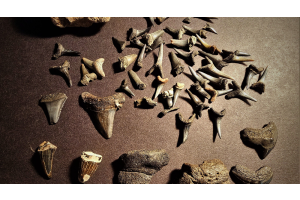
Exploring the rivers of coastal North Carolina is like stepping back into a prehistoric world. For fossil hunters, divers, and passionate collectors, these waterways offer more than just beautiful landscapes—they provide a rare opportunity to uncover treasures that have been buried for millions of years. While shark teeth from many eras are found in this region, nothing captures the imagination quite like a North Carolina Megalodon tooth. The thrill of discovering one of these massive fossils in a riverbed is unmatched, and the rarity of such finds only heightens their value.
The search, however, is not as simple as grabbing a snorkel and sifting through sand. These rivers, often steeped in geological history, conceal fossils within layers of sediment deposited across millions of years. With patience, determination, and the proper understanding of where to look, collectors can significantly increase their chances of uncovering these extraordinary fossils. We must highlight that the Megalodon tooth in North Carolina is not only a fossil—it’s a piece of natural history preserved in remarkable condition, often with striking colors that make each specimen unique.
The ancient formations of North Carolina
North Carolina’s rivers cut through rich fossil-bearing formations. Among the most significant are the Eocene Castle Hayne Formation, the Miocene Pungo River Formation, and the Pliocene Yorktown Formation. Each has yielded shark teeth that showcase a wide variety of prehistoric species. In particular, the northeast region of the state is celebrated for its rare copper-red fossils, which include those of Megalodon, Angustidens, Auriculatus, and the Great White.
Collectors highly seek after the copper-red coloring, which is unique to this region. It is caused by mineral-rich groundwater seeping through the sediments, altering the fossil’s enamel over millions of years. Teeth from this part of North Carolina are often better preserved than similar finds in neighboring Virginia, making them especially prized in the fossil community.
Why are these rivers so special?
The coastal rivers of North Carolina are not only scenic but also act as natural vaults for prehistoric treasures. Over time, erosion and shifting currents have exposed layers of sediment that hold ancient shark teeth. However, these rivers are stingy with their offerings—many divers spend hours in the water only to return home empty-handed. This scarcity is what adds to the immense value of a successful find.
For collectors, this challenge is part of the thrill of the adventure. Each recovered tooth feels like a reward for persistence and passion. Whether it’s a perfectly serrated Chubutensis or a massive Megalodon crown, the discovery holds both scientific and personal significance.
Tips for finding fossils in North Carolina’s rivers
If you are planning to explore these waters, preparation is essential. Here are a few strategies we emphasize for those eager to find their fossil treasures:
● Research the formations. Understanding which rivers cut through fossil-bearing layers greatly improves your chances of success.
● Equip yourself properly. Divers often use scuba or snorkeling gear, along with sifting tools, to navigate murky riverbeds.
● Be patient. These rivers are known for producing few teeth. Persistence, multiple dives, and repeated visits may be required.
● Look for coloration. The copper-red enamel often stands out against the darker river sediment, making it easier to spot high-quality teeth.
By combining preparation with a keen eye, fossil hunters can improve their odds of discovering remarkable specimens.
A collector’s dream: the rarity of copper-red teeth
The allure of a Megalodon tooth lies not just in its size but in its story. These fossils, often millions of years old, carry the legacy of an apex predator that once ruled the oceans. The unique copper-red variety found here is one of the most collectible fossil types in the world. They are limited in number, exceptionally well preserved, and rarely come to market in quantity.
This rarity ensures that when collectors add one to their collection, they are securing not just a fossil, but a geological masterpiece with cultural and scientific resonance. It is no surprise that the demand for these fossils far exceeds their availability, making each tooth an actual prize.
Our connection to these incredible fossils
At Buried Treasure Fossils, we share the same passion that drives divers and collectors into North Carolina’s rivers. We understand the challenge and reward of finding these remarkable teeth, which is why we carefully source authentic, high-quality fossils from this region. Our collections include rare Megalodon, Angustidens, and Auriculatus teeth, along with spectacular finds from the world-famous Lee Creek mine in Aurora, North Carolina. Though collecting at Lee Creek ended in 2008, our extensive catalogs preserve the legacy of that extraordinary site.
We take pride in offering authenticity and quality, ensuring that when collectors explore our fossils, they are viewing treasures that reflect the true spirit of discovery.
Conclusion: uncovering history beneath the water
Hunting for a Megalodon tooth in North Carolina is more than a pastime—it’s an adventure into deep time, a chance to connect with one of the most formidable predators the world has ever known. The rivers of this state continue to guard their secrets tightly, but for those who are patient and prepared, the rewards are extraordinary. Each tooth represents millions of years of history, preserved in remarkable condition for us to discover today.
If you’re ready to explore, collect, or simply appreciate these incredible fossils, we invite you to connect with us and start your journey. Contact us today to discover your next prehistoric treasure.