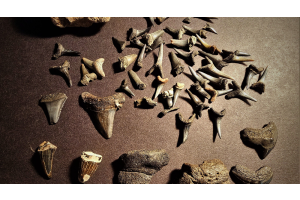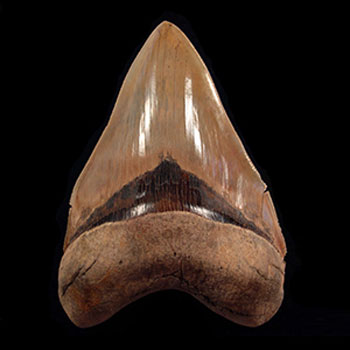
Deep beneath ancient ocean floors lie the fossilized remains of one of history’s most awe-inspiring predators—the Megalodon. While most people recognize this prehistoric shark by its colossal teeth, few realize how scientists determine which specimen is the youngest megalodon tooth found and what stories these ancient fossils tell us about life millions of years ago. Beyond their scientific importance, these fossils also captivate collectors worldwide, many curious about the megalodon tooth price and what makes each piece unique.
Understanding the Megalodon’s Magnificent Legacy
The Megalodon, whose name translates to “big tooth,” ruled Earth’s oceans roughly 23 to 3.6 million years ago during the Miocene and Pliocene epochs. Growing up to 60 feet long, this shark was not only massive in size but also unmatched in strength, with jaws powerful enough to crush whale bones. Fossilized teeth—some reaching more than seven inches long—are the primary remains through which scientists study this extinct giant. Because sharks’ skeletons are made of cartilage that doesn’t fossilize easily, teeth are often the only surviving evidence of their existence.
At Buried Treasure Fossils, we take pride in sharing authentic specimens that connect today’s collectors and students to the prehistoric world. Our passion for fossils runs deep, and understanding the science behind them makes collecting even more fascinating.
What Makes a Tooth “Young” in Geological Terms
When scientists refer to the youngest megalodon tooth found, they’re not talking about a modern-day tooth, but rather the most recently fossilized specimen in Earth’s geologic timeline. Megalodons went extinct about 3.6 million years ago, yet researchers continue to discover teeth that push the boundaries of when this species last swam the seas.
To determine a tooth’s geological age, scientists rely on several advanced methods. Each approach paints part of the picture, helping paleontologists identify the youngest known Megalodon teeth and understand where the species thrived toward the end of its reign.
Step 1: Studying Sediment Layers
The first clue often lies in the sediment surrounding the fossil. Marine paleontologists analyze the stratigraphy—the different layers of rock and sand where fossils are found. Since older sediments lie deeper underground, the relative position of a tooth can reveal its approximate age.
For instance, if a Megalodon tooth is discovered in a younger sediment layer, closer to the surface, it likely formed more recently than those found deeper below. Sites like the coastal cliffs of South Carolina, North Carolina, and Peru have proven invaluable for such studies. These layers help scientists narrow down time periods with remarkable precision.
At Buried Treasure Fossils, we source many of our authentic Megalodon teeth from regions like Florida, Chile, and Sharktooth Hill in California—famous for their distinct and well-dated sediment layers. Each tooth tells a story millions of years in the making.
Step 2: Radiometric and Carbon Dating Techniques
Next comes the process of radiometric dating—an essential tool for pinpointing a fossil’s exact age. While carbon dating isn’t used directly on ancient shark teeth (because they’re too old for the carbon-14 method), scientists analyze surrounding organic materials or volcanic layers for comparison. Using isotopes like uranium and strontium, they can estimate when sediments formed and, by extension, how old the fossilized tooth might be.
Some of the youngest megalodon teeth found have been dated to just under 3.6 million years ago, a fascinating discovery that aligns with the species’ global extinction timeline. Each new find helps refine our understanding of when these massive sharks disappeared from Earth’s oceans.
Step 3: Microfossil and Pollen Analysis
Another clever approach involves studying the microfossils trapped near Megalodon teeth—tiny remnants of plankton, pollen, or foraminifera that can be seen only under a microscope. Because certain microfossils existed only during specific geologic periods, their presence acts as a timestamp. By identifying these microfossils, scientists can determine the exact era in which a Megalodon tooth was buried.
This technique has been especially useful in coastal sites like Panama and Chile, where unique fossilized plankton species help narrow the age range of Megalodon specimens to their final millions of years on Earth.
Step 4: Chemical Composition and Isotope Studies
Beyond location and sediment, scientists also study the chemical makeup of the teeth themselves. Elements like oxygen and carbon isotopes reveal environmental data such as ocean temperature, salinity, and climate conditions when the tooth formed. For example, a tooth containing higher oxygen-18 levels indicates it developed during cooler oceanic periods—likely near the species’ extinction.
Through these techniques, researchers can confidently identify the youngest megalodon tooth found and learn more about how environmental shifts may have contributed to this apex predator’s disappearance.
The Thrill of Discovery: Where the Youngest Teeth Have Been Found
Some of the most recent Megalodon teeth ever discovered came from regions like North Carolina’s Aurora phosphate mine, Panama’s fossil beds, and southern Peru’s coastal cliffs. Each find provides fresh evidence of where Megalodons once thrived and how their territories shifted over time. Many scientists believe these areas may have served as ancient breeding grounds, explaining why so many juvenile teeth have been unearthed there.
What’s most remarkable is how each discovery connects people today—especially young learners—to the process of scientific exploration. At Buried Treasure Fossils, we believe fossils aren’t just collectibles; they’re windows into the prehistoric world that allow anyone to step into the shoes of a paleontologist.
The Role of Fossil Collecting in Modern Science
Fossil collectors play a vital part in the ongoing discovery of prehistoric life. Many rare finds, including Megalodon teeth, are uncovered by hobbyists who later collaborate with researchers. By following ethical collection practices and focusing on authenticity, collectors help preserve these ancient treasures for education and study.
That’s why we at Buried Treasure Fossils ensure that every tooth we offer is legally and responsibly sourced. Whether you’re a beginner exploring your first fossil or an experienced collector seeking museum-grade specimens, our collection offers a direct link to Earth’s ancient oceans.
Understanding the Fascination Behind Megalodon Tooth Price
While scientists study these fossils for their historical and biological insights, collectors are often curious about the megalodon tooth price. The value of a Megalodon tooth depends on several factors—size, color, location, and preservation quality. Large, intact teeth exceeding six inches in length can command premium prices due to their rarity, while smaller or partial teeth remain affordable for entry-level enthusiasts.
We’re proud to make fossil collecting accessible to everyone. Our catalog features teeth for under $50, as well as high-end, investment-grade pieces worth thousands. Each specimen is carefully authenticated, making it both an educational and collectible treasure.
Why the Youngest Megalodon Teeth Matter
Identifying the youngest megalodon tooth found helps paleontologists trace how species adapt—or fail to adapt—to changing environments. These discoveries shed light on oceanic temperature shifts, prey availability, and the eventual decline of one of history’s most powerful predators. For students and enthusiasts alike, each Megalodon tooth serves as a tangible connection to evolution, extinction, and the planet’s dynamic history.
By studying fossils, we not only learn about the past but also gain valuable insights into how current marine life might respond to climate changes in the future.
Conclusion: Explore the Prehistoric World With Us
The story of the youngest megalodon tooth found reminds us that every fossil carries a fragment of Earth’s vast history. Through scientific dating methods and careful analysis, we can reconstruct the lives of creatures that once ruled our oceans and vanished millions of years ago. Whether you’re drawn to the science behind these discoveries or curious about the megalodon tooth price, there’s something magical about holding a real piece of prehistoric life in your hands.
At Buried Treasure Fossils, we’re passionate about connecting people of all ages to the wonders of the natural world. Explore our exceptional collection of authentic Megalodon teeth and other rare fossils—and discover the thrill of uncovering ancient stories hidden within stone.