

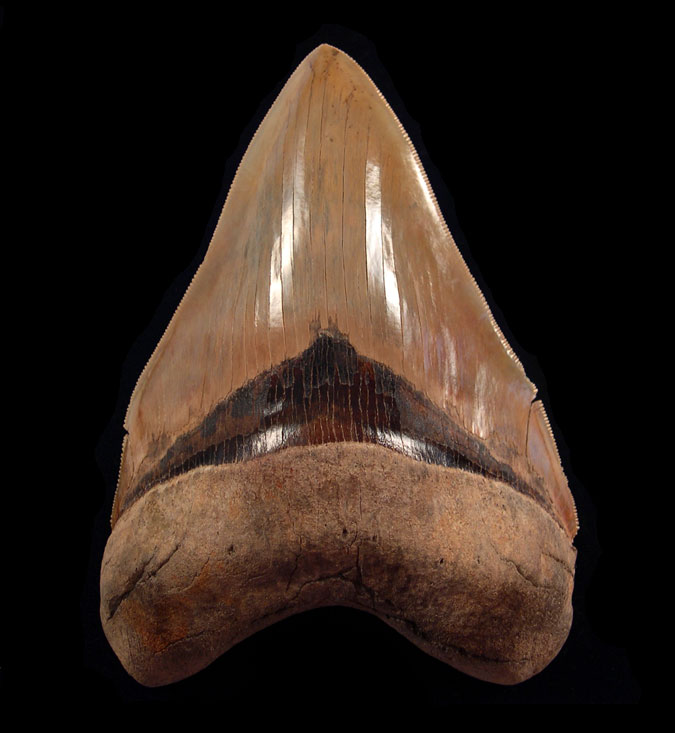
At our fossil shop, we often receive questions about the possibility of discovering an 8-inch megalodon tooth. As collectors and enthusiasts ourselves, we understand the excitement behind this inquiry. We have spent years curating and studying Megalodon teeth, and our experience allows us to share valuable insights about the size ranges and rarity of these remarkable fossils.
Using the information we maintain through our catalog and records, we can explain just how rare an 8‑inch Megalodon tooth would be in modern times.
A Glimpse Into the Size Spectrum
Megalodon teeth can vary widely in size, reflecting different stages of the species’ life cycle. According to documented records, these teeth typically range from only a few centimeters up to over 7 inches (17.8 cm) in length. Teeth measuring 2–3 inches often belonged to juveniles, while those between 3–5 inches likely came from maturing sharks.
Larger teeth, measuring 5–7 inches, are considered exceptional and belong to full‑grown adults. Teeth rarely exceed 6–6.5 inches in slant height, so any specimen larger than this size immediately attracts attention.
Larger Teeth and Their Place in Fossil History
The fascination with Megalodon teeth often centers around their size. Records show that teeth larger than 7 inches are scarce. While teeth in the 6–6.5 inch range are highly valued and not easy to find, those surpassing 7 inches stand in a category of their own.
These larger teeth likely belonged to the most mature sharks and are extremely difficult to recover. Because such fossils have endured millions of years underground, the chances of them remaining in pristine condition are low, making the discovery of a complete specimen all the more exceptional.
An 8‑Inch Tooth: Where Would It Fit?
By understanding these size categories, it becomes clear where an 8‑inch Megalodon tooth would fall. Since teeth rarely exceed 6–6.5 inches, any tooth above this size is already regarded as extraordinary. Teeth larger than 7 inches are described as extremely rare so that an 8‑inch tooth would be in a class of its own.
It would be considered an unparalleled specimen, surpassing even the most uncommon 7‑inch examples documented in catalogs. This helps illustrate why the prospect of finding an 8-inch megalodon tooth is so significant.
What the Catalog Reveals
A catalog of Megalodon teeth provides additional context for this rarity. Each specimen in the 6‑inch
category is carefully selected based on strict criteria. These include sharp serrations, complete root structure, intact enamel, strong bourrelet detail, and a natural condition without repair or restoration.
This careful process shows that 6‑inch teeth are already part of an elite group. When teeth exceed 7 inches, they are so scarce that many collectors may never encounter one. Because no 8‑inch tooth has ever been listed, the rarity of such a find becomes even more apparent.
Why No 8‑Inch Teeth Appear in Listings
Listings do not feature 8‑inch Megalodon teeth because no such specimens have been documented in
collections or inventory. The most prominent teeth referenced exceed 7 inches, but none approach the 8‑inch mark. This absence supports the understanding that 8‑inch Megalodon teeth are virtually unknown, even among the most experienced collectors. Catalogs featuring hundreds of documented specimens have never included a tooth at this size.
Understanding Rarity Through Context
Records help paint a clear picture of the rarity connected to size. Teeth up to 6 inches are uncommon but still obtainable in top‑quality condition. Teeth between 6 and 6.5 inches are even harder to acquire and are considered special. Teeth larger than 7 inches are described as extremely rare. Following this logic, an 8‑inch Megalodon tooth would be unmatched in rarity. It would be viewed as a one‑of‑a‑kind fossil, standing at the highest level of scarcity.
The Significance of Larger Teeth
Larger Megalodon teeth already hold particular significance for collectors and fossil enthusiasts. These teeth represent the most prominent individuals within the species, sharks that lived at the top of the food chain. Specimens near or above 7 inches capture interest because they are harder to find and highly valued. Considering how rare these teeth are, it is understandable why an 8‑inch tooth would be an incredible discovery. It would reflect the most mature individuals and would likely be one of the largest ever recovered.
A Comparison of Size and Rarity
The relationship between size and rarity is unmistakable. Teeth up to 6 inches are large and appreciated, though still within reach for many collectors. 6–6.5-inch teeth are much more challenging to acquire. Teeth larger than 7 inches are labeled as extremely rare. Based on these established categories, an 8‑inch tooth would surpass every size classification and would be unlike any Megalodon tooth previously offered in any catalog.
Why An 8‑Inch Discovery Would Be Extraordinary
An 8‑inch Megalodon tooth would be unlike anything documented to date. It would exceed the largest specimens recorded and would hold extraordinary scientific and collecting value. The absence of such a tooth in listings suggests how uncommon it is to find a fossil of this magnitude. Its size and condition would elevate it to one of the most remarkable Megalodon fossils ever known.
What This Means for Collectors and Enthusiasts
Megalodon teeth continue to captivate collectors worldwide because of their striking appearance and connection to prehistoric oceans. While 6‑inch teeth are already considered elite specimens, anything larger takes on even greater significance. A tooth measuring 8 inches would surpass every expectation. Since teeth larger than 7 inches are already scarce, a genuine 8‑inch tooth would be an unmatched treasure.
Final Perspective
The evidence gathered through Buried Treasure Fossils underscores the true rarity of an 8-inch megalodon tooth. Teeth rarely exceed 6–6.5 inches, and those larger than 7 inches are described as extremely rare. With no documented examples at 8 inches, it is safe to conclude that such a discovery would be the ultimate fossil find. An 8‑inch Megalodon tooth would surpass the upper boundary of size and rarity, making it a piece of natural history that few could ever hope to see.
Finding such a fossil would not only be a monumental achievement for any collector but also a lasting reminder of the incredible power and scale of life in Earth’s ancient oceans. It would stand as a timeless treasure, connecting the present to a world that existed millions of years ago.
"A single tooth can carry the story of an ocean that no longer exists; an 8‑inch Megalodon tooth tells that story louder than any roar."






