

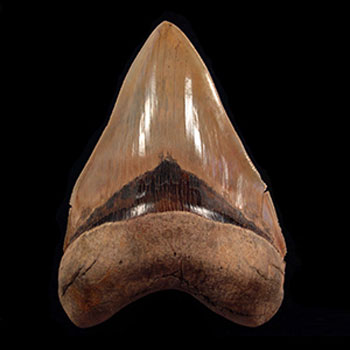
Hold one in your hand and you’ll feel it — the weight, the texture, the sharp edges that once sliced through the flesh of whales. A megalodon tooth isn’t just a fossil. It’s a time capsule from an ocean that no longer exists. And naturally, people want to know: how much is a megalodon tooth worth right now?
The short answer? It depends. The long answer is where it gets interesting — and valuable. Size, condition, color, and the story behind its origin all play a role. Two teeth of the same length can sell for very different prices if one has razor-sharp serrations and rare coloring, while the other looks worn from millions of years rolling in the surf.
We’ve handled thousands of these prehistoric treasures. Some are entry-level pieces perfect for a first collection. Others are once-in-a-lifetime finds that command jaw-dropping prices. If you’re thinking of buying, selling, or just daydreaming about owning one, you’ll want to know what drives the market.
The Predator Behind the Price
Before talking about dollars, let’s talk about the shark itself. The megalodon wasn’t just big — it was colossal. Up to 60 feet long, weighing as much as 75 tons, with a bite force that could crush bone like a breadstick. This apex predator dominated the oceans during the Miocene and Pliocene epochs, feeding on whales and other large marine mammals.
It left behind only teeth and vertebrae for us to find. The rest of its skeleton, made of cartilage, dissolved eons ago. But those teeth — oh, they’re special. Heart-shaped, serrated, and sometimes bigger than your hand. No wonder they’ve become one of the most sought-after fossils on the planet.
What Makes One Tooth Worth More Than Another
Size Matters (and Rarity)
Big teeth are rare. Truly big teeth — over 6 inches — are the stuff of legend. Most megalodon teeth you see are in the 3 to 5-inch range. Once you cross into the 6-inch territory, the number of surviving specimens drops dramatically, which causes the price to climb rapidly.
Condition Is King
Perfect enamel, a complete root, and crisp serrations can make the difference between “nice” and “museum-worthy.” Chips, cracks, or heavy wear lower value — though some collectors still like the “battle-scarred” look for its character.
Color Brings the Wow Factor
From jet black to copper red, tan, blue, and even lavender, a tooth’s color depends on the minerals in the sediment where it fossilized. Some color combinations are so rare that they instantly boost the price.
Provenance Tells a Story
Where a tooth is found can add both rarity and romance. West Java teeth are famous for their unusual colors. Meherrin River “red site” specimens have that fiery copper tone collectors crave. Sharktooth Hill teeth from California? Almost impossible to find in top condition — which is precisely why they’re prized.
Authenticity Isn’t Optional
Every tooth we offer is guaranteed authentic. In a market where fakes and heavily altered specimens pop up, knowing yours is the real deal is as important as the fossil itself.
Current Market Ranges
While prices shift with supply and demand, here’s the general landscape:
● 3–4 inches: $100–$400 depending on condition and color.
● 4–5 inches: $400–$1,000 for well-preserved specimens.
● 5–6 inches: $1,500 and up, with rare colors fetching higher.
● 6 inches and above: $3,000–$6,000+ for top-quality examples, and truly exceptional ones can break into five figures.
A lot of buyers start small and work their way up. Others go straight for the “holy grail” tooth that anchors a collection.
Why They Hold Their Value
Megalodon teeth aren’t like collectibles that flood the market and fade. They’re finite. Every tooth is millions of years old, and no new ones are being made. The combination of rarity, scientific importance, and natural beauty keeps demand strong year after year.
Collectors are aware that top-tier pieces often appreciate over time. In fact, we’ve seen certain colors and sizes double in value over the last decade.
For the Collector
Some buyers want a single statement piece for display. Others hunt for teeth from multiple locations to build a “world tour” of megalodon history. Then there are the size chasers — always looking for the next inch up.
We source all of them. Whether it’s a glossy 3.5-inch tooth for a beginner or a flawless 6.25-inch monster for a seasoned collector, we match people with fossils that fit their goals and budget.
How to Buy With Confidence
The market has its share of risks — repaired teeth, altered specimens, and outright fakes. That’s why where you buy matters as much as what you buy.
We work with trusted diggers and divers worldwide, verify authenticity, and provide accurate, detailed descriptions. Many of our premium teeth come with custom stands so they’re ready to display the moment you unwrap them.
Caring for Your Fossil
Here are some easy ways to maintain the amazing appearance of your megalodon tooth:
● To keep it from fading, keep it out of direct sunshine.
● Steer clear of abrupt temperature swings.
● Dust it lightly with a brush or soft cloth.
● If not on display, store wrapped in tissue
Why the Market is Addictive
Part of the appeal is the hunt — whether that’s wading into a Carolina river, diving off Florida’s coast, or scrolling through a curated fossil selection. Every tooth has its quirks, colors, and history. And every collector remembers exactly where they got their favorites.
It’s not just about ownership. It’s about holding a piece of an ocean predator that hasn’t swum in 3 million years.
Our Role in Your Collection
We live and breathe fossils. That means knowing which localities produce the rarest colors, which diggers have the best track records, and how to spot the fine details that separate a great tooth from a truly exceptional one.
When you buy from us, you get more than a fossil. You get our experience, our network, and our commitment to making sure the tooth you choose is one you’ll be proud to display for years — maybe decades.
So, How Much Is a Megalodon Tooth Worth?
In the end, how much is a megalodon tooth worth today is determined by a number of variables, including its size, authenticity, provenance, colour, and condition. A smaller, weathered specimen might run a few hundred dollars, while a colossal, flawless, rare-colored tooth can command tens of thousands.
What’s constant is the magic of owning one. It’s not just a fossil — it’s a story in stone, one that began millions of years ago in an ocean you’ll never see but can still hold in your hands. And when you’re ready to make that story part of your collection, we’re here to help you find the perfect fit.






