

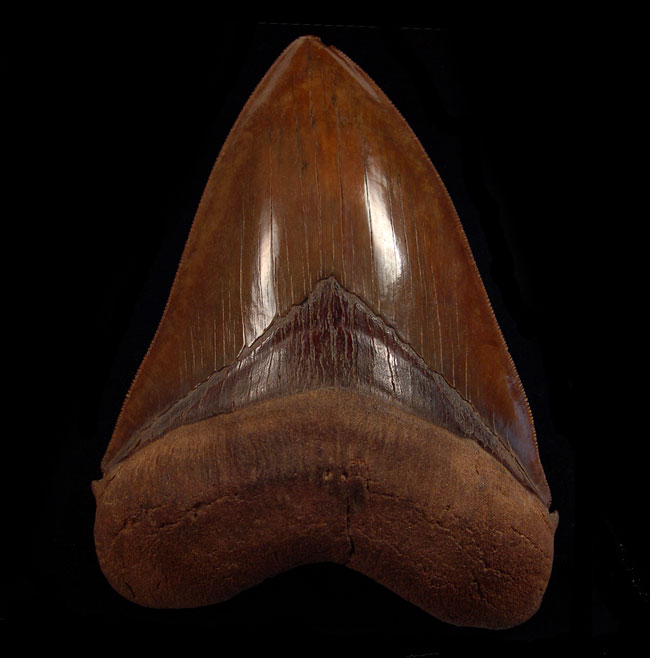
We have always been fascinated by Megalodon teeth because they represent one of the most powerful predators in history, and our work has allowed us to see them in extraordinary forms. When these fossils come from North Carolina, some of them can show a breathtaking copper-red coloration that immediately captures attention. As collectors and enthusiasts, we often ask what causes this transformation.
The answer lies in geological history, mineral-rich environments, and chemical processes that have been working over millions of years to shape these fossils into natural treasures. A megalodon tooth from North Carolina holds not only the power of prehistory but also the artistry of geology.
Geological Foundations in North Carolina
The copper-red fossils are deeply connected to the formations in which they have been preserved. In North Carolina, the Pungo River Formation of the Miocene epoch and the Yorktown Formation of the Pliocene epoch are the key sources. These formations have provided sediments that are capable of protecting and transforming Megalodon teeth over immense spans of time.
In the Meherrin River area, erosion has gradually exposed these ancient deposits, allowing teeth that were once hidden to become available for collection. The geological setting has therefore played an essential role in creating the conditions that produce such striking coloration.
Iron-Rich Sediments as the Source of Color
The copper-red hue has not appeared by chance. It has developed because the teeth were buried in sediments that are rich in iron. Over time, minerals have seeped into the fossil structures through groundwater, and iron has reacted to form oxides. These oxides are responsible for the reddish and copper-like tones that make certain specimens unique.
Without the influence of iron-rich sediments, the teeth would have remained in the more typical shades of black, tan, or gray. This process shows how environment and chemistry can work together to change the appearance of fossils dramatically.
Oxidation and the Role of Chemistry
Oxidation has been central to the process. As iron has interacted with oxygen within the surrounding sediments, it has produced pigments that are capable of penetrating and coloring fossilized material. Once these pigments became fixed within the enamel and dentin, the coloration turned into a permanent feature of the tooth.
Enamel has acted as a surface that could showcase the rich tones, while dentin has absorbed minerals more gradually, deepening the effect. Together, these structures have ensured that the color remains stable, even after the fossil is exposed by erosion.
Mineralization Across Time
The transformation from a shed Megalodon tooth into a fossil with a vivid copper-red color could not have happened overnight. Mineralization has taken millions of years to complete. During this process, minerals have slowly replaced or filled microscopic gaps in the tooth. In cases where enamel has remained strong, the coloration has appeared more uniform and bold. Where enamel has been worn or cracked, the process has been uneven, leading to variations in shade. Mineralization has therefore been both a preservative and a painter, hardening the tooth while also giving it color.
Preservation and Aesthetic Qualities
The beauty of a copper-red Megalodon tooth has always depended on more than color alone. When enamel has survived with its smooth surface intact, it has displayed the hues with greater clarity. Sharp serrations along the crown have added detail and definition, while the bourlette has provided contrast between the crown and the root. An intact root has been another rare feature that has increased the appeal of these fossils. Together, these factors have worked to highlight not only the size of the teeth but also their unique coloration. A megalodon tooth from North Carolina that retains these features becomes one of the most remarkable examples of natural preservation.
Why Copper-Red Fossils Are Uncommon
Copper-red Megalodon teeth remain uncommon because several conditions need to align. The teeth have had to rest in sediments that contained the right mineral composition. The enamel has had to stay intact so the minerals could be absorbed without being washed away. The burial environment has had to remain stable so that the minerals could stay in the tooth instead of being lost to groundwater. Even within the Meherrin River area, only a limited number of fossils have shown this vivid copper-red coloration, making each discovery rare and remarkable.
Natural Erosion and Exposure
For fossils to be admired, they must eventually be exposed. Natural erosion has made this possible. Rivers in North Carolina have slowly cut through the layers of sediment that held these fossils for millions of years. Seasonal changes, flooding, and shifts in riverbanks have uncovered teeth that were once locked away. When these fossils have finally surfaced, their copper-red colors will be revealed, allowing them to be collected, studied, and appreciated. Without these natural processes, these extraordinary specimens would have remained unseen beneath layers of earth.
Collector Appeal and Scientific Interest
Collectors have always been drawn to copper-red Megalodon teeth because of their rarity and appearance. A well-preserved specimen with vivid color, sharp serrations, and an intact root has been considered particularly valuable. For scientists, these fossils have provided an opportunity to understand the relationship between geology and fossil preservation. Each tooth has been able to tell a dual story: one of the prehistoric sharks that once roamed ancient seas, and another of the environmental conditions that transformed the fossil into something visually unique.
The Interplay of Chemistry and Time
The processes that lead to copper-red coloration demonstrate how chemistry and time can shape fossils in extraordinary ways. Iron-rich sediments have provided the source of color, oxidation has developed the hues, and mineralization has secured them permanently within the fossil. The enamel and dentin have acted as canvases, displaying the results of these processes with clarity. In North Carolina, this interplay has created a small number of fossils that continue to inspire fascination. Although the exact mineral compounds behind the hues are not fully identified, the role of iron oxides is clear.
A Rare Expression of Natural History
The transformation of Megalodon teeth into copper-red fossils reflects a remarkable balance of environment, chemistry, and preservation. Over millions of years, sediments, groundwater, and natural forces have combined to produce these rare specimens.
The conditions in North Carolina have been especially suited to this transformation, which is why the Meherrin River region has become known for them. Each copper-red fossil represents more than a relic of an ancient shark. It is also a record of geological history, a natural artifact shaped by forces that continue to influence the earth today.
Conclusion
Copper-red Megalodon teeth demonstrate how natural processes have worked together across vast spans of time to create fossils of exceptional character. Burial in iron-rich sediments, chemical oxidation, and gradual mineralization have combined to give them their vivid hues. Their rarity enhances their importance, making them admired by collectors and studied by researchers.
Every specimen that emerges from the Meherrin River or surrounding formations carries with it a story not only of prehistoric life but also of the geological artistry that preserved it. A megalodon tooth from North Carolina, therefore, stands as both a relic of ancient seas and a masterpiece shaped by time and chemistry.






