

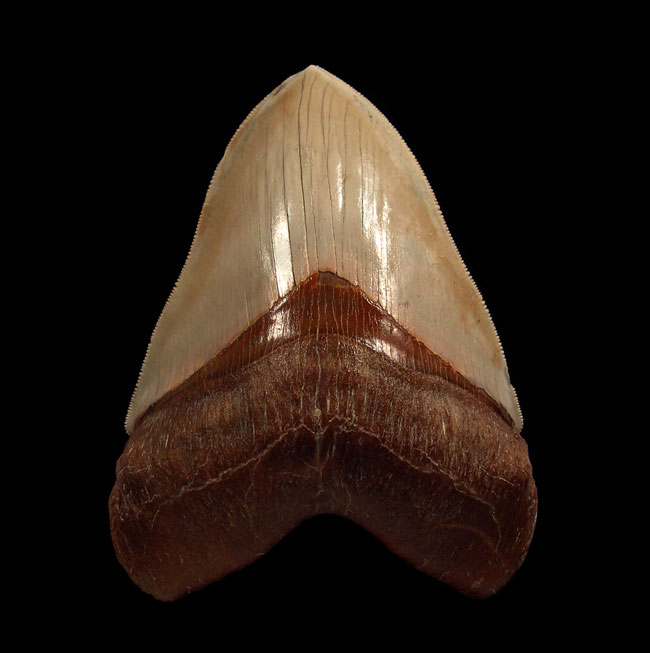
When we work with large fossil teeth, we are not simply handling remnants of ancient predators. What we see today has been shaped over millions of years by mineral content, preservation conditions, and subtle changes in color.
Our role in preparing and presenting these specimens allows us to show how such factors influence not only the structural condition but also the apparent size of these remarkable fossils. For collectors and researchers, even comparisons to the biggest megalodon tooth highlight how condition and preservation can shape perception.
Pathologic Teeth as Distinctive Specimens
Pathologic teeth are those that developed with unusual features during growth. They may have twisted tips, split crowns, compressed shapes, or dwarfed forms. These traits are not the result of damage after burial but represent natural growth irregularities.
Many examples of pathologic Otodus obliquus teeth found in Morocco’s phosphate mines are described as complete and free from restoration. Because of this, they allow us to study how mineralization and preservation have worked together to keep their rare pathologies intact.
The Influence of Color
Color is one of the most noticeable aspects of fossil teeth, yet it does not reflect the original appearance of the living animal. Instead, it results from the environment in which the tooth was buried. Minerals from the phosphate-rich layers of Morocco permeated the enamel and root, creating consistent tones that have lasted for millions of years.
Teeth that absorb more minerals often display darker shades, while those with less mineralization appear lighter. This difference can affect how large a specimen seems. Strong contrasts between crown and root make features more pronounced, so a split crown or twisted tip may look larger because shadows and highlights emphasize its shape. Color, therefore, serves both as a record of geological history and as a factor shaping visual perception.
Mineralization and Its Structural Role
Mineralization plays a critical role in fossil preservation. As organic components are gradually replaced by minerals, the tooth gains durability and strength. This process ensures that delicate ridges, enamel layers, and even complex pathologic forms remain intact.
Some specimens show how mineralization can preserve fine anomalies such as twisted tips that divide into several sections. At the same time, mineralization does not prevent distortion caused by geological forces. Several crowns and roots appear compressed either horizontally or vertically, leaving them dwarfed even though their overall form remains preserved. This shows how mineralization can safeguard details while still locking in any deformations created during fossilization.
Preservation Conditions in Morocco
The burial environment of the Moroccan phosphate mines has played a significant role in the survival of these teeth. Phosphate-rich sediment provided the right chemistry for fossilization, while relatively stable conditions allowed delicate features to remain visible.
Many specimens are preserved with both crown and root intact. This completeness enhances their overall size impression because the root adds bulk that a crown alone would not display. The phosphate deposits also protected unusual growth patterns such as splits or twists, ensuring they were retained rather than worn away. However, geological pressure occasionally compressed teeth within these layers. This compression reduced height or width, leaving some specimens looking smaller in one or more dimensions, even though they initially grew to larger proportions.
Apparent Size and Its Variations
Perception of size in fossil teeth depends on several interacting factors. A tooth that is fully mineralized, richly colored, and preserved with both root and crown intact will often appear larger because all of its dimensions are present. Conversely, a tooth compressed by geological forces may look shorter or narrower even though it remains complete.
Color can also influence how size is perceived. A crown with dramatic contrast or darker tones may seem more imposing, while lighter shades may soften the impression. Similarly, pathologic features such as split crowns or twisted tips can draw attention to unusual shapes, making the specimen appear larger or more striking than a non-pathologic example of the exact dimensions.
Examples of Pathologic Teeth
Several examples highlight how these factors combine to shape condition and apparent size. A split crown specimen shows how burial and mineralization preserved a dramatic anomaly that gives the tooth a broader visual impact despite its modest measurements. Another example reveals a crown and root compressed both horizontally and vertically.
This tooth is still complete, but its dwarfed appearance reflects the pressure it endured during fossilization. A third specimen with a twisted tip divided into three sections illustrates how strong mineralization preserved a fragile detail that could easily have been lost, allowing the crown to appear taller and more intricate than its size alone would suggest.
The Interplay of Factors
Color, mineralization, and preservation conditions work together rather than separately. Color emphasizes shapes and pathologies. Mineralization reinforces structure and maintains detail. Preservation dictates whether features survive whole, compressed, or distorted. Together, these processes determine whether a fossil tooth appears large, small, dramatic, or understated.
Why These Influences Matter
Studying these aspects provides insight into the geological journey of each specimen. Pathologic crowns that are preserved in their natural compressed or twisted forms tell an authentic story of growth and burial. Completeness enhances value both visually and scientifically, while color variations reveal the chemical history of the surrounding sediments. Each tooth is therefore more than an isolated fossil; it is a record of natural history that can still be read today.
Conclusion
Large fossil teeth, particularly pathologic specimens of Otodus obliquus, reveal how time and environment shape condition and apparent size. Color reflects mineral interaction, mineralization safeguards structure and anomalies, and preservation determines whether features remain intact or compressed. Together, these factors give each specimen a distinct presence and a lasting story.
When we recover and prepare such teeth, we are working with more than ancient anatomy—we are handling records of how geological forces have shaped remains into the remarkable fossils we see today. By observing their color, mineralization, and preservation, we are able to understand not only what the shark once produced but also how time transformed it into a specimen of enduring fascination. In this way, even smaller pathological teeth remind us of the grandeur of the biggest megalodon tooth ever found, underscoring how preservation conditions shape both perception and legacy.






