

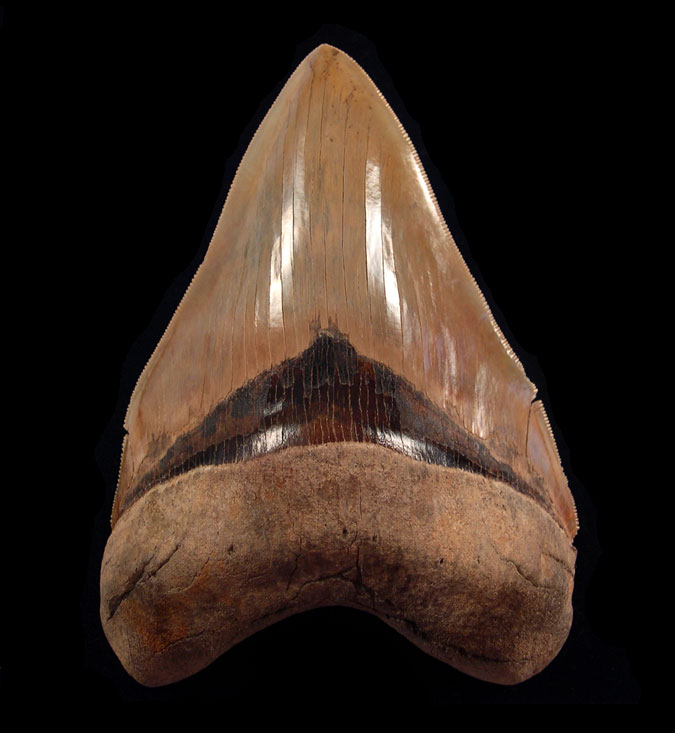
Imagine holding in your hand a massive, serrated tooth, one that once belonged to the largest shark ever known. It is not merely a fossilized remnant; it serves as a direct window into the ocean ecosystems of millions of years ago. A single megalodon tooth can act like a paleontological GPS, helping researchers piece together the ancient hunting grounds of this colossal predator.
For collectors and scientists alike, understanding a tooth’s size, quality, and location also influences its value, making the megalodon tooth price a reflection of both rarity and scientific significance.
A Tooth That Tells a Story
The megalodon, scientific name Otodus megalodon, was a truly enormous predator, reaching lengths up to 60 feet and weighing between 50 and 75 tons. Its enormous teeth are robust and triangular, featuring serrated cutting edges without side cusps, designed to tear through flesh and crush bone. These are among the most durable parts of its anatomy and thus the most commonly recovered fossils.
Interpreting Tooth Size and Quality
Megalodon teeth vary in size, but some exceed seven inches, though the majority cap at six to six and a half inches. Huge teeth tend to be prized and rare, with those over five inches receiving special attention. The tooth enamel quality and coloration also vary by region, factors that help paleontologists deduce both the environment in which the shark lived and the geological processes that preserved the tooth.
Tracking Origins by Location
Where a megalodon tooth is found offers a key clue about its original hunting grounds. The site’s geology, sediment fill, and age contribute valuable context. The fossil sellers list teeth from multiple known localities such as Florida, Georgia, North Carolina, South Carolina, California, Chile, Peru, and Indonesia, suggesting a truly global distribution of the shark in Miocene and Pliocene seas. Such widespread findings reflect megalodon’s cosmopolitan habitat across subtropical and temperate oceans.
What Teeth Reveal About Ancient Prey and Ecology
Life crushed beneath those massive jaws primarily included whales and other large marine mammals. With such force, capable of jaw pressures up to 18 tons per square inch, the megalodon could sever fins and puncture rib cages with its serrated blades. A tooth’s wear, serration completeness, and coloration can indicate whether it belonged to a mature predator targeting big cetaceans or perhaps to a juvenile feeding on smaller prey closer to coastlines.
Reconstruction of Ancient Migration and Range
By comparing teeth sourced from different formations and deposits, such as Shark Tooth Hill in California versus Bone Valley in Florida, scientists can map out the species’ range and migratory corridors. Fossils from Shark Tooth Hill, for example, come from the Round Mountain silt near Bakersfield, California, and are noted for being scarce and high-quality specimens. Specimens there are more challenging to locate than even those from the Carolinas or Florida. Consequently, each tooth contributes to the larger puzzle of where megalodon lived, hunted, and reproduced.
Linking Tooth Characteristics to Habitat
The coloration and preservation of a megalodon tooth often reflect the mineral makeup of the sediment where it fossilized. For instance, teeth from South Carolina may display dark gray enamel with sharp serrations and thick roots. Others, such as California’s Shark Tooth Hill meg teeth, exhibit tan enamel with red brown bourlette areas, often still embedded in matrix, including whale bone. These visual differences not only give aesthetic appeal but also act as markers of paleoenvironmental conditions.
Tooth as a Regional Marker
Collecting a tooth from a known locality can pinpoint where that shark lived or died. A glossy, jet black tooth over six inches likely originates from a Southeastern U.S. deposit, where high-quality larger specimens are notable. A creamy tan or golden specimen with museum-quality enamel may have come from Shark Tooth Hill, California, a site famed for delivering some of the rarest mid-Miocene megalodon teeth.
Piecing Together Hunting Grounds
When researchers compile large numbers of teeth from different regions, they begin to see patterns. Concentrations appear in Florida’s Bone Valley mines, North and South Carolina phosphate deposits, California Shark Tooth Hill, and even international sites like Chile or Peru. These help reconstruct ancient coastal upwellings, nursery zones, and prey-rich hunting grounds, painting a global map of megalodon’s ecological range. In the process, each tooth not only tells a biological story but can also influence the perceived megalodon tooth price among collectors and institutions.
A Single Tooth, a Global Narrative
Thus, a single megalodon tooth is far more than a fossil; it is a data point. Its size, wear, serrations, color, and location each carry clues about habitat, prey behavior, and geographical movement. High-quality examples, especially those above five inches from known formations, act as touchstones that anchor paleontological models and ancient ocean reconstructions.
Conclusion: More Than a Trophy
Holding a megalodon tooth is like having a piece of primordial ocean history. From the anatomical evidence encoded in its serrated edges to the sedimentary signatures preserved within, every tooth tells a chapter of a story that stretches across continents and eons. By studying even one tooth, its shape, size, coloration, and origin, scientists can map out the ancient hunting grounds of one of Earth’s greatest predators. For collectors, the megalodon tooth price is more than a number; it represents the fossil’s rarity, its preservation, and the ancient journey it took before being unearthed from the depths of t






