There’s something magical about holding a fossil that connects you directly to Earth’s deep past—a tangible reminder that our planet’s history is vast, mysterious, and full of awe. The Otodus megalodon from Lee Creek is one of those rare treasures that does more than fascinate collectors; it ignites curiosity in learners of all ages. At Buried Treasure Fossils, we see every fossil not just as a specimen, but as a story waiting to be told—a lesson in evolution, science, and imagination that educators can bring alive in classrooms and homeschooling environments.
A Giant from the Deep
Millions of years ago, long before humans walked the Earth, the Otodus megalodon ruled the prehistoric oceans. Reaching lengths of up to 60 feet, this colossal shark had jaws powerful enough to crush whales and other massive marine mammals. Its serrated teeth—some exceeding seven inches—are among the most iconic fossils ever discovered. When students learn about this ocean predator, they’re often amazed that such creatures truly existed, and even more fascinated to realize how we know what we do—from studying the very fossils left behind.
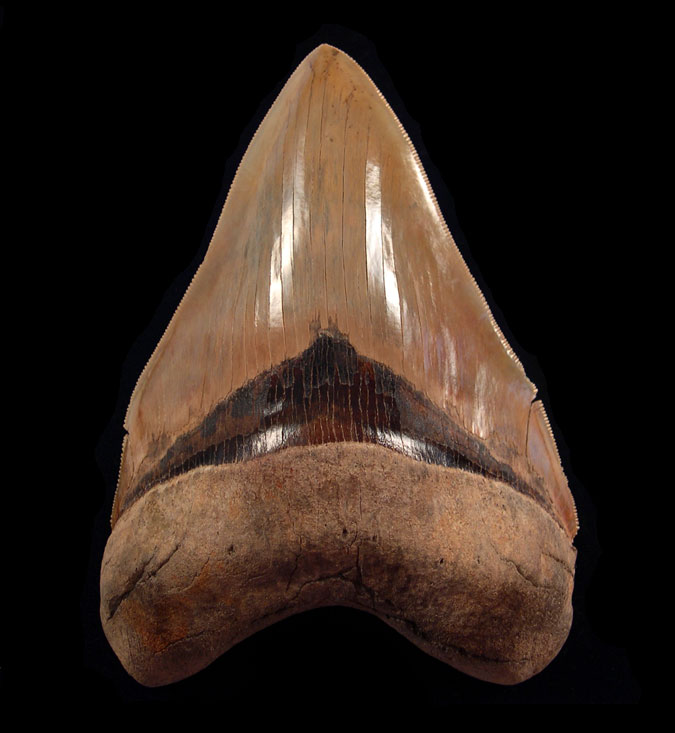
Our Otodus megalodon from Lee Creek, found in the Pungo River Formation in Aurora, North Carolina, represents one of the most scientifically valuable and visually stunning examples of these teeth. The Lee Creek mine, known for its vibrant phosphate-rich deposits, preserved fossils in extraordinary color and condition. While collecting there is no longer permitted, these fossils continue to educate, inspire, and connect us to a time when the oceans teemed with giants.
A Story Buried in Sediment
For teachers and homeschooling parents, fossils like those from Lee Creek provide a natural gateway into STEM education. They offer a hands-on way to discuss subjects like geology, biology, and environmental science. Each fossil has a story—one that starts millions of years ago and continues to unfold in our hands today.
When we study a megalodon tooth, we’re not just observing a piece of enamel; we’re interpreting clues about the shark’s diet, size, and behavior. The broad triangular shape and fine serrations suggest it hunted large prey. The chemical composition of the fossil tells us about the seawater where it lived. Even the cracks and coloration reveal how minerals replaced organic material over time.
For young learners, these discoveries model the scientific method beautifully—observe, question, hypothesize, test, and conclude. When children handle a fossil or even view high-quality images of one, they begin to think like paleontologists. They learn that science is not just a collection of facts but a process of discovery that requires curiosity, patience, and imagination.
Why Lee Creek Matters
The Lee Creek phosphate mine has long been a legendary fossil site among collectors and scientists. Its Miocene and Pliocene layers—dating back roughly 14.5 million years—produced some of the world’s most vibrant Otodus megalodon teeth. Known for their striking blues, browns, and creams, these fossils are as beautiful as they are informative. Each tooth provides a snapshot of prehistoric ocean life during a dynamic era of Earth’s history.
Unfortunately, the mine has been closed to public fossil collecting since 2008, meaning that every Otodus megalodon from Lee Creek specimen now comes from older collections. That rarity adds not just value, but historical importance. When teachers share the story of these fossils with students, they can weave in lessons about conservation, geology, and the importance of ethical fossil collecting—topics that help young minds think critically about how we interact with natural history.
At Buried Treasure Fossils, we’re proud to offer authentic specimens from this iconic location. Each one is carefully verified for quality and authenticity, ensuring that educators and collectors alike can trust that the fossils they acquire are genuine pieces of prehistoric life.
Teaching Evolution and Ecosystems Through Fossils
The Otodus megalodon from Lee Creek does more than capture attention—it helps students visualize evolution in action. As part of the shark lineage, megalodons demonstrate how species adapt, thrive, and eventually disappear as ecosystems change. Educators can use these fossils to introduce key scientific ideas like natural selection, extinction, and adaptation.
For example, by comparing megalodon teeth to those of modern Great White Sharks, students can trace evolutionary relationships and discuss how climate shifts and prey availability may have influenced the species’ decline. This exercise transforms abstract concepts into tangible examples, making lessons more engaging and memorable.
Homeschooling parents often tell us that fossils spark long-term interest in science. A single megalodon tooth can inspire discussions about ocean currents, food chains, and even carbon cycles. It becomes a starting point for exploring how all life forms—past and present—are interconnected.
The Art of Storytelling in Science
Every fossil has a story, but the Otodus megalodon from Lee Creek has one that bridges awe and inquiry. Teachers can use storytelling techniques to help students imagine what it was like when these ancient sharks dominated the seas. Visualizing a 60-foot predator cruising through Miocene waters helps learners grasp scale, time, and biology in a way no textbook image alone can.
Science education thrives when it’s emotional and narrative-driven. Students remember what they can picture and relate to. When they hold a fossil or hear how it formed, they connect personally with the subject matter. That connection—between curiosity and evidence—is what fuels lifelong learning.
At Buried Treasure Fossils, we believe that the joy of discovery should never be limited to scientists. Every classroom, every home learning space, can become a mini laboratory of wonder. Through authentic fossils, children experience science not as distant history but as an unfolding story they’re part of.
Building Critical Thinking Skills
Using fossils in education isn’t just about teaching prehistory—it’s about developing analytical skills. When students examine fossils, they make observations, interpret evidence, and draw conclusions. These are the same critical thinking steps scientists, engineers, and researchers use every day.
By studying fossils like those from Lee Creek, learners see firsthand how data and creativity work together. They realize that science is about exploration, not memorization. Whether it’s comparing fossil sizes, mapping ancient coastlines, or researching how shark species evolved, the process reinforces logical reasoning and creativity in equal measure.
For teachers and STEM educators, fossils provide a natural interdisciplinary bridge. They connect art (through drawing and visualizing ancient creatures), history (through Earth’s timeline), and even ethics (through discussions on responsible collecting and environmental stewardship).
Why Authentic Fossils Matter
At Buried Treasure Fossils, we’re passionate about authenticity because it builds trust and credibility in education. Every fossil we offer—whether it’s a megalodon tooth, a dinosaur claw, or a trilobite—is legally and ethically sourced. Many of our specimens come with detailed locality information, helping educators tie lessons to real-world geography and paleoenvironments.
For students, this authenticity makes all the difference. Knowing that the fossil they’re studying once belonged to a living creature millions of years ago turns a lesson into an experience. It bridges the gap between the past and present, showing how science helps us reconstruct lost worlds.
Inspiring the Next Generation of Scientists
When children learn about fossils like the Otodus megalodon from Lee Creek, they’re not just memorizing facts—they’re stepping into the role of explorers. They learn that discovery often begins with a question: What if? That curiosity drives innovation across every field, from paleontology to engineering.
Encouraging students to ask questions about fossils nurtures that scientific spirit. Whether they’re measuring tooth serrations, sketching shark reconstructions, or forming hypotheses about ancient ecosystems, they are doing real science. These small steps today can inspire the next generation of marine biologists, geologists, and environmental scientists tomorrow.
Conclusion: Bringing Prehistoric Wonder to Modern Learning
The story of the Otodus megalodon from Lee Creek isn’t just about the world’s largest shark—it’s about how we teach discovery itself. Through fossils, we help young minds understand evolution, ecosystems, and the enduring power of inquiry.
At Buried Treasure Fossils, we invite educators, parents, and collectors to join us in sharing that excitement. Explore our authentic collection, discover your own prehistoric treasures, and inspire your students to see science as an adventure—one fossil at a time.