For millions of years, one of the largest predators to ever roam Earth’s oceans ruled with unmatched dominance. This creature continues to spark curiosity today, not because it swims in modern waters, but because fragments of its past still remain. Among the many mysteries surrounding this ancient shark, one question draws the most attention: how can we piece together the story of its life from the remnants left behind? A megalodon shark skeleton may not exist in the same way as bones from land-dwelling animals. Still, teeth and fossilized remains help us imagine the extraordinary scale of this ocean titan.
To move from fascination to discovery, let’s dive into how scientists and collectors bring these fragments of the past together, shaping an image of a predator that still captures imaginations worldwide.
Why a Skeleton is Rare in the Sea
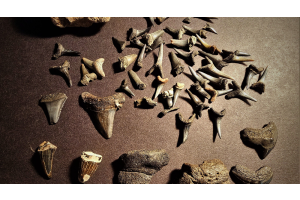
Sharks are different from many animals because their bodies are made mostly of cartilage rather than bone. Cartilage is lighter and more flexible, perfect for survival in the water, but it doesn’t fossilize as easily as hard bone. That’s why you’ll rarely hear about complete skeletons of massive sharks being found. Instead, what survives most often are teeth—rugged, mineral-rich, and built to withstand the pressures of a predatory life.
Still, even without a full frame to study, these teeth and the few remaining fossilized vertebrae provide enough evidence to reconstruct a picture of size, strength, and behavior. Each fragment is like a clue in a puzzle that has been millions of years in the making.
The Teeth That Tell the Story
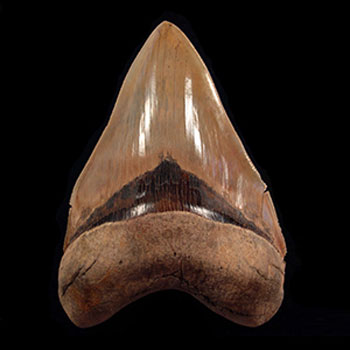
Among the fossils that surface, teeth are the most celebrated. Some are serrated and triangular, with edges sharp enough to slice through prey. These teeth are enormous, sometimes larger than a human hand, and they reveal the formidable nature of this predator. Fossil collectors treasure them not only for their scientific value but also for their striking beauty—each one unique in its preservation.
Teeth can be found in colors ranging from soft browns to deep blacks, shaped by the minerals of the seabed where they rested for ages. Owning or viewing one of these fossils feels like holding a piece of prehistory, a direct connection to an ocean that existed long before humans walked the Earth.
Reconstructing Size and Scale
Without a complete skeleton, scientists estimate the size of this shark through its teeth and occasional vertebrae discoveries. By comparing the dimensions of these teeth with those of living relatives, such as the great white, researchers have calculated that this predator could have grown over 50 feet long. To put that into perspective, imagine a creature longer than a school bus cruising silently beneath the waves.
These estimates help us picture an apex predator that fed on whales, large fish, and other marine mammals. Its presence shaped ecosystems, influencing the behavior and survival of different species.
The Role of the Jaw in Imagination
If there’s one fossil structure that captures attention as much as the teeth, it’s the megalodon shark jaw. When reconstructed, these jaws reveal a bite radius wide enough for an adult human to step inside comfortably. Museums often display such reconstructions, allowing visitors to stand in awe within the arch of teeth and imagine the raw force such a predator once commanded.
This jaw is more than a fossil—it’s an entry point into the imagination. It sparks wonder about oceans filled with giants, reminding us of how much the Earth has changed and how many stories remain buried in the seabeds across the globe.
Fossils as Treasured Artifacts
Collecting fossils isn’t only about science. It is also about artistry, preservation, and personal connection. Each fossil has traveled through millions of years, carried by tides, pressed into sediments, and transformed by minerals. When a collector finds a tooth or fragment, they are recovering not just a relic but a narrative that spans epochs.
Some people display these fossils in cabinets or frame them as conversation pieces. Others seek them for educational collections, teaching future generations about the wonders of natural history. Whether displayed in a home or a museum, these remnants bring a sense of timeless wonder into modern spaces.
The Allure of Ancient Oceans
Part of what makes these fossils so captivating is that they invite us to think about a world we can never fully return to. Imagine swimming in waters where shadows could suddenly darken the surface, announcing the arrival of a predator so vast it defied belief. Fossils remind us that Earth’s oceans have always been places of both beauty and danger, home to species beyond human imagination.
Studying these remains also helps scientists trace changes in climate, food chains, and migration patterns. Each fossil holds data, not only about a predator but about the oceanic world it inhabited.
From Curiosity to Collection
For many enthusiasts, fossils ignite a personal journey. The first time someone holds a shark tooth that’s millions of years old, the fascination often turns into a deeper interest. Collecting becomes a way of connecting to history on a tactile level—far more engaging than simply reading about it.
The appeal isn’t limited to experts; anyone can appreciate the beauty of a fossil. Whether displayed as a centerpiece or gifted to a fellow enthusiast, fossils carry stories worth sharing.
Why These Remnants Still Matter
The survival of shark teeth and occasional vertebrae is a reminder of how fragile yet enduring nature can be. While a megalodon shark skeleton is unlikely to ever be found in its entirety, the fragments we do have provide scientists and enthusiasts with enough information to continue the story. Each discovery reshapes our understanding, sparking new theories and inspiring fresh perspectives.
These fossils are not only scientific treasures but also cultural ones. They represent a chapter of Earth’s story where oceans were ruled by giants, and they remind us how much remains hidden beneath the surface, waiting to be uncovered.
Conclusion
The fascination with these ancient creatures goes beyond science; it touches imagination, curiosity, and even personal passion. Whether through teeth, vertebrae, or the grandeur of a reconstructed megalodon shark jaw, these remnants continue to connect us to the distant past. Holding a fossil in your hand is like carrying a fragment of time itself—something that has witnessed eras beyond comprehension.
If you’ve ever wanted to explore the mysteries of the ocean’s most legendary predator, now is the time to begin. From learning about their history to starting a collection of your own, these fossils open a gateway to both knowledge and wonder.
Take the next step—explore, learn, and perhaps even own a piece of prehistory. The story of the oceans is waiting, and you can be part of keeping it alive.