

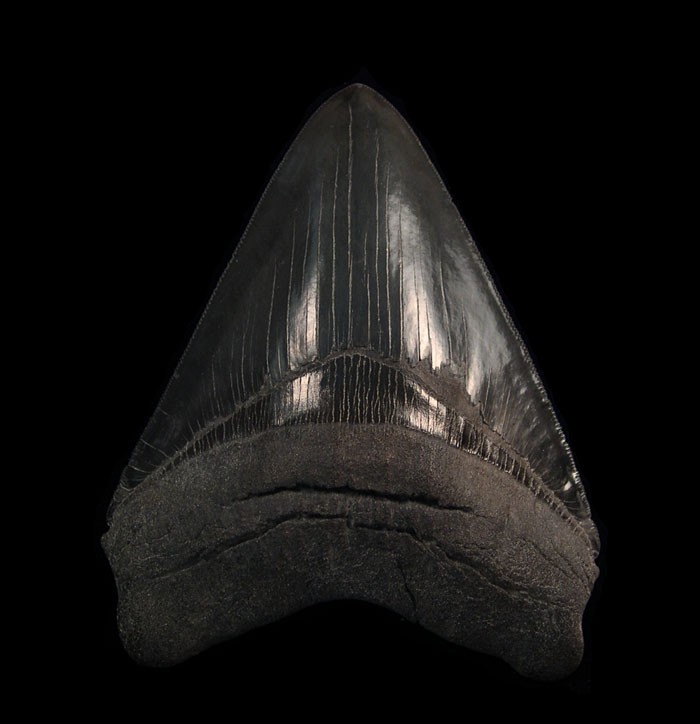
For millions of years, Otodus megalodon ruled Earth’s oceans as one of the most formidable predators to have ever lived. Its teeth, some stretching over seven inches long, are fossilized remnants of this apex marine giant—and among the most prized by fossil collectors. But not all Megalodon teeth are the same. Some of the most captivating specimens are those with a deep, jet-black hue. These Black Megalodon tooth fossils are not only visually striking but may also hold crucial information about our planet’s prehistoric upheavals.
Let’s dive into what makes these teeth black, where they’re found, and how they might reveal clues about ancient Earth-shaking events—from oceanic anoxia to mass extinctions and major geological transformations.
Why Are Some Megalodon Teeth Black?
Fossilization is a chemical conversion between buried organic matter and the sediment around it. The black coloration in Megalodon teeth doesn’t come from the shark itself but from the surrounding sediment in which the tooth fossilized over millions of years. As the tooth’s organic materials decayed, they were replaced by minerals like iron, manganese, and phosphate.
In coastal regions like South Carolina, Georgia, and parts of Indonesia, conditions favored the replacement of enamel and dentin with darker minerals. The result? Fossils that range from dark charcoal to an intense, glossy black. Each Black Megalodon tooth is essentially a mineral time capsule—one that absorbed the chemical signature of the ancient seabed it was buried in.
Sediment Shifts and Their Role in Coloration
The blackening of these teeth is more than an aesthetic coincidence. It often signals unique environmental conditions—such as the presence of low-oxygen sediment layers rich in organic decay or heavy mineral loads. These “reducing environments,” where oxygen is scarce, can create darker fossils because they favor the preservation and deposition of dark minerals.
These types of environments often correlate with large-scale sedimentary changes. For example, a shift in ocean currents, a sudden influx of nutrients, or a collapse in marine biodiversity could trigger an increase in organic matter, fueling the formation of anoxic zones. The presence of multiple Black Megalodon tooth specimens from a region may suggest prolonged periods of such conditions, offering insight into ancient sedimentary crises.
Clues to Oceanic Anoxia and Climate Change
One of the most dramatic contributors to dark fossil coloration is oceanic anoxia, a condition where oxygen levels in the ocean plummet, creating so-called “dead zones.” These episodes, often linked to climate change, result in mass die-offs and major alterations in sediment composition. Anoxic events are known to leave behind thick, black shale and mineral-rich deposits—ideal conditions for forming black fossils.
In fact, the widespread occurrence of black Megalodon teeth in places like the southeastern U.S. hints at extended anoxic intervals during the Miocene and Pliocene epochs. These periods, dating from 5 to 15 million years ago, were times of climatic instability. The fossil record shows not only large predators like Megalodon but also marine life across the food chain being impacted. Black teeth could mark the stratigraphic layers where these shifts occurred.
Could They Tie to Mass Extinctions?
While Megalodon did not vanish during a classic “mass extinction” event like the dinosaurs, its disappearance around 3.6 million years ago does align with significant environmental changes. These include falling sea levels, a drop in ocean temperatures, and the collapse of marine megafauna.
Black Megalodon teeth may provide important context here. Their presence in specific sediment layers, especially when correlated with other fossil types and mineral indicators, helps paleontologists understand the sequence of ecological stressors that might have contributed to Megalodon’s decline. If these teeth are consistently found in darker, mineral-rich sediments laid down during climate upheavals, they might be silent witnesses to the final chapters of the species’ existence.
A Geographic Pattern: The Black Zones
South Carolina, Georgia, and West Java are known hotbeds for Black Megalodon tooth specimens. These locations each have distinct geological traits, yet share commonalities that aid in black fossil formation—namely, coastal environments with rich organic deposits and slow-moving or stagnant water conditions in the past.
In Georgia, many of the black teeth also feature “root ears” and defined grooves, features commonly seen in Miocene-era fossils. In South Carolina, the thick, dark crowns and well-preserved serrations reflect rapid burial and ideal fossilization conditions. In Indonesia, the volcanic and mineral-rich soils contribute to especially dark bourlettes and roots. These regional differences offer a comparative lens through which to view ancient cataclysms—each black tooth a piece of the puzzle.
What Scientists Look For in Black Fossils
Researchers studying these teeth aren’t just admiring their beauty. They analyze:
● Mineral composition: To determine what elements replaced the original tooth material.
● Stratigraphic context: To understand the exact geological layer and age.
● Isotopic data: Which may reveal sea temperature, salinity, and carbon cycles.
● Microwear patterns: To deduce dietary changes possibly influenced by ecological stress.
All of this information is used to build a picture of what the marine world looked like during the height and fall of the Megalodon’s reign. And the darker the tooth, the more mineral-rich its story might be.
Teeth as Timelines: A Record of Earth’s Oceanic Past
Think of black Megalodon teeth not just as relics, but as ancient data points. They offer a glimpse into epochs marked by rising temperatures, shifting coastlines, and ocean-wide die-offs. These events, once locked in layers of sediment, become accessible through the preserved enamel and dentin of fossilized teeth.
Just as tree rings tell us about yearly climate shifts, these teeth—especially black ones—can outline entire eras of marine change. Their size reflects the apex predators they once belonged to, but their color and preservation reflect something even deeper: the state of Earth itself.
What Makes These Fossils So Valuable?
Collectors and scientists alike treasure these black fossils not just for their rarity or visual appeal, but because each tooth carries layers of geological context. A tooth with exceptional preservation, glossy black enamel, sharp serrations, and intact roots suggests not only a powerful predator, but also a rapid, mineral-rich burial environment.
These conditions are rarely coincidental. They often coincide with oceanic sediment shifts, such as underwater landslides, estuarine flooding, or even sea-level regressions—phenomena that drastically affect life and leave geochemical fingerprints. When we hold a Black Megalodon tooth, we’re not just holding a fossil—we’re holding evidence of planetary change.
Final Thoughts
So, do black Megalodon teeth hold secrets about Earth’s ancient cataclysms? The answer is yes—and the clues are embedded in their color, chemistry, and context. As silent witnesses to sediment upheavals, oxygen-starved oceans, and ecological collapse, these striking fossils carry more than just the legacy of a massive shark.
They help us piece together Earth's ancient environmental puzzles—layer by layer, tooth by tooth. And while we may never fully grasp the magnitude of every prehistoric shift, each Black Megalodon tooth adds a critical detail to our understanding of life, death, and transformation in the world’s oceans.






