Picture yourself on a quiet beach, waves rolling in, the scent of salt in the air. As your foot brushes the edge of a dune, something hard and jagged emerges from the sand. It’s not a shell or a stone—it's large, dark, and triangular. What you’ve found is something much more extraordinary: a fossilized tooth once wielded by a creature larger than a school bus.
A relic like this pulls us into the ancient world of the megalodon—a shark so immense that it continues to captivate fossil hunters, collectors, and scientists alike. Among its remains, few artifacts are as prized as the 8-inch megalodon tooth, a rare glimpse into a prehistoric era where size and strength ruled the seas.
What Made the Megalodon a Giant Among Predators?
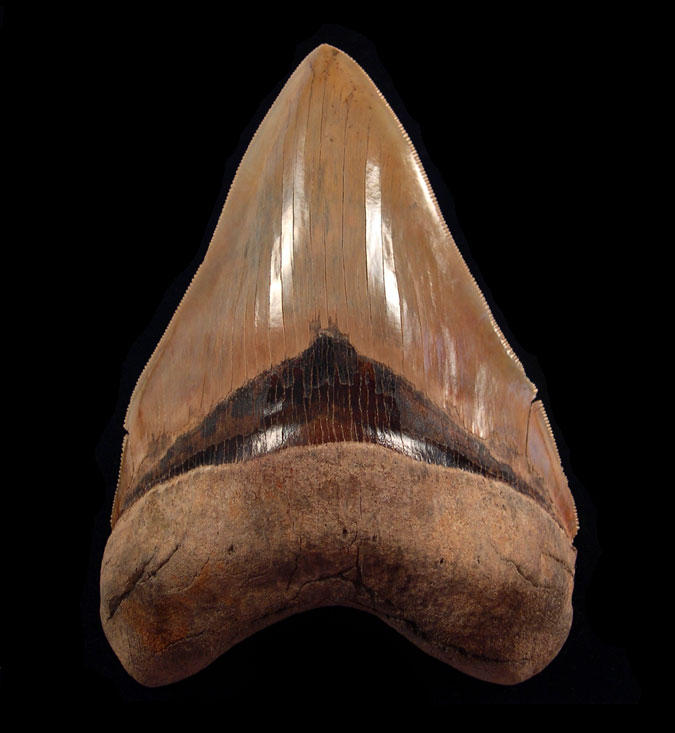
The megalodon wasn't merely a big fish—it was an oceanic apex predator that lived roughly 23 to 3.6 million years ago. With an estimated length of over 60 feet, this shark dwarfed most marine life that swam near it. Its teeth, unlike anything found in today's oceans, could measure over seven inches long, serrated and curved like nature’s own blades.
It preyed on ancient whales, large fish, and other sharks, biting through bone with ease. Each tooth was designed for gripping and slicing through thick skin and flesh. And considering the shark could shed thousands of teeth over a lifetime, it's no surprise fossil hunters are still finding them today.
But among the common sizes, only a few specimens exceed the mythical eight-inch threshold, making them treasured and talked-about finds.
How Rare Is an 8-Inch Tooth?
Most megalodon teeth found today measure around 4 to 6 inches in length. Once a fossil crosses the seven-inch line, it enters a very limited category. But when a tooth reaches or surpasses eight inches, its rarity and appeal skyrocket.
That size tells a story. Only the oldest, most mature sharks grew teeth that large. These weren’t average specimens of their species—they were likely dominant, territorial, and nearing the peak of their evolutionary potential. A tooth of this caliber is a direct symbol of strength, survival, and deep-sea mystery.
Collectors are aware of this, which is why these fossils hold both emotional and financial value.
Where Are These Massive Fossils Found?
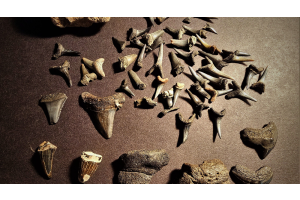
Although the megalodon swam all over the globe, some of the most exciting fossil discoveries come from specific areas where the ancient seabed is still accessible. These include the coastal and riverbed regions of South Carolina, North Carolina, Florida, and parts of Central America.
Divers and fossil hunters frequent these waters, sifting through silt and sediment with patience. A successful dive might yield dozens of small fragments, but finding an intact eight-inch specimen? That’s the result of expertise, time, and a bit of fossil fortune.
Some of these teeth are found embedded in riverbanks, while others are buried beneath layers of clay. No matter where they come from, each one is a quiet testament to the enormous creatures that once ruled the seas.
What Makes One Tooth More Valuable Than Another?
It's not only about size. Condition plays a major role in determining the worth of a megalodon tooth. The sharpness of the serrations, the completeness of the root, the richness of the enamel—all of these qualities factor into its desirability.
Color also adds to the uniqueness. Teeth fossilized in different minerals can appear deep gray, soft brown, or even bluish-black. These variations depend on the soil chemistry and the amount of time the fossil spent underground. Each one is visually distinct, even among teeth of the same size.
A large tooth with minimal wear and a clean finish can be considered museum-grade. That’s the kind of piece collectors dream of—and what makes an eight-inch megalodon tooth not only rare but genuinely breathtaking.
Can You Display It Without Damaging It?
A fossilized tooth this size demands attention—and proper care. Fortunately, these teeth are remarkably durable thanks to their mineralized composition. Still, they benefit from gentle handling and thoughtful storage.
Acrylic display stands are a popular choice, offering visibility while keeping the tooth secure. Some collectors prefer shadow boxes or wall mounts. In contrast, others design custom-lit shelves to highlight the tooth’s texture and ridges.
Avoid placing it in direct sunlight or humid environments. Although these teeth have survived for millions of years, preserving their condition remains important. With care, they can last for generations as educational tools, artistic displays, or historical treasures.
Why Do People Collect Fossils Like These?
Holding a megalodon tooth is a humbling experience. It’s not simply an object—it’s a story frozen in time. People collect fossils for various reasons, including scientific curiosity, historical appreciation, natural art, or an emotional connection to the Earth's prehistoric timeline.
Some are drawn to the mystery. Others are fascinated by science. But for many, it’s the sheer scale that inspires awe. You don’t need a paleontology degree to feel the wonder of standing face-to-face with a relic that once helped feed a 60-foot predator.
These objects help us feel connected to a planet we’ll never fully understand—and to creatures long gone yet never forgotten.
Is It a Good Investment?
While many buyers seek fossils for personal reasons, some also see them as valuable assets. As rare specimens become harder to find, their market value tends to appreciate.
A tooth measuring eight inches or more, especially if well-preserved, often finds a home with seasoned collectors, museums, or academic institutions. But even private buyers recognize the appeal of a one-of-a-kind artifact with lasting worth.
Unlike trendy collectibles or modern fads, fossils carry an innate timelessness. They’re not dependent on popularity—they’re real pieces of history, immune to changes in taste or trend.
What’s the Experience of Owning One Like?
Imagine the reaction when someone sees an eight-inch megalodon tooth on your desk or display shelf. The questions begin: Is it real? Where did it come from? How old is it? Every detail, from the sharp edges to the weight in your hand, becomes a story worth telling.
Owning such a piece gives you something rare—a connection. To the Earth, to the past, and to something infinitely larger than yourself. It’s not only about rarity or appearance—it’s about the reminder that once, beneath ancient waters, giants truly did exist.
Why Now Is the Time to Find Yours
Genuine megalodon fossils aren’t unlimited. The most impressive specimens are already held in collections or museums, and new finds of this size are increasingly scarce. The window to own a truly remarkable piece is always shifting.
And while fossils like these can seem like unattainable relics, opportunities still arise—for those who know where to look and what to appreciate.
Would you bring a part of prehistoric history into your world?
Start browsing through available fossils and discover what waits beneath the surface. The ocean may no longer belong to the megalodon, but its legacy is still within reach.