

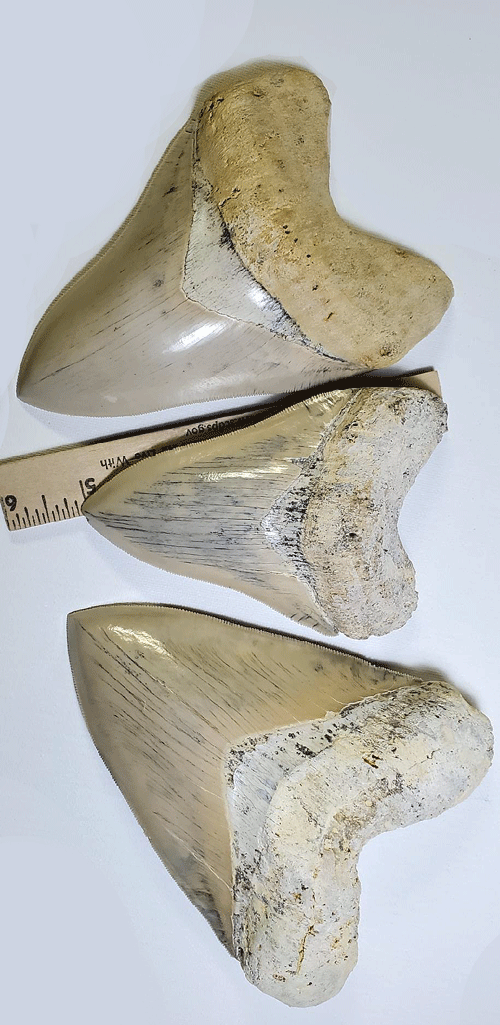
What if the key to understanding one of Earth’s most awe-inspiring sea predators was resting in the palm of your hand? That’s the intriguing possibility paleontologists face when they study a big Megalodon tooth. These fossilized remnants are more than just relics—they’re time capsules offering a glimpse into the world of the Megalodon, an enormous prehistoric shark that ruled the oceans millions of years ago. But how can just one tooth reveal so much?
Let’s dive into how researchers use these ancient teeth to piece together the story of the Megalodon’s life, diet, and ultimate extinction—and how you can tell if you're holding the real deal or just a clever imitation.
Why Are Megalodon Teeth So Valuable to Science?
While most of a Megalodon’s body was made of cartilage (which doesn’t fossilize well), its teeth were built to last. These massive, serrated structures are among the only surviving clues to this prehistoric predator’s existence. And because a single Megalodon could shed tens of thousands of teeth in its lifetime, scientists have a relatively rich fossil record to work with.
That’s why a big Megalodon tooth isn’t just an impressive collectible—it’s a crucial piece of evidence. Each tooth helps paleontologists estimate the shark’s size, analyze its diet, and understand how it hunted.
Estimating the Megalodon's Size from a Single Tooth
One of the most fascinating uses of a Megalodon tooth is as a measuring tool. By analyzing the dimensions of a tooth—especially the crown height—scientists apply specific formulas to estimate the size of the shark it came from. For example, a 6.5-inch tooth likely came from a Megalodon that was over 50 feet long.
This method allows paleontologists to estimate average sizes across various fossil sites and track how the species may have evolved over time. From just one fossil, they can make educated guesses about the ocean's most fearsome predator.
Reconstructing Diet and Behavior Through Serrations
The sharp, jagged edges on a Megalodon tooth—known as serrations—are more than just cool features. These fine lines functioned like steak knives, designed to slice through the thick hides and bones of whales and large fish.
When paleontologists study the wear and tear on these serrations, they can infer how the Megalodon attacked its prey. For example, heavily worn teeth may suggest frequent biting into bone, while pristine serrations could indicate a diet of softer-bodied animals. This level of detail paints a clearer picture of the Megalodon's place in the marine food chain.
What the Color and Texture Reveal
Megalodon teeth aren’t just uniform in size—they’re also diverse in color and composition. Over millions of years, minerals from surrounding sediment seep into the tooth, changing its color. This process, called mineralization, gives genuine Megalodon teeth their deep, rich hues—ranging from gray and black to shades of brown and even blue.
For paleontologists, the color and mineral patterns can reveal the geological conditions of the tooth’s resting place. This can help date the fossil and provide information about the ancient marine environment where the shark once swam.
The Disappearance of a Giant: Clues from Teeth
Why did the Megalodon vanish? It’s one of the most debated topics in paleontology. While a tooth alone can’t answer this complex question, it adds to the body of evidence.
Teeth collected across various time layers show a gradual reduction in size and population density, which could suggest declining health, changing ecosystems, or increasing competition. Isotopic analysis of the tooth's material can also offer insight into shifting water temperatures and migration patterns—key factors in the Megalodon’s disappearance.
In short, teeth help tell the story of a species that once dominated the seas, only to disappear under pressure from evolving environments and competing predators.
How Do You Know If a Megalodon Tooth Is Real?
With such scientific importance and public fascination, the market for Megalodon teeth is booming—and so are the fakes. If you're planning to buy Megalodon tooth fossils, it’s essential to know how to spot authenticity.
Look Closely at the Serrations
Each Megalodon tooth has serrations unique to its use and history. Real teeth have slight imperfections and wear patterns—too-perfect edges are a red flag. Authentic serrations are sharp, irregular, and sometimes worn down unevenly from prehistoric use.
Color Tells a Story
Authentic teeth have naturally blended hues with a marbled or mineralized appearance. Avoid anything that looks artificially painted or uniformly colored. If the surface looks sprayed or too glossy, it could be a modern replica.
Heft Matters
Pick up a real Megalodon tooth, and you'll feel the weight of history. Fossilized teeth are dense and heavy due to mineral replacement over time. Fakes made from resin or composite materials feel too light and lack the solid feel of the real thing.
The Enamel Should Show Its Age
Real enamel isn’t flawless. Expect a slightly rough texture, minor chips, or natural shine in patches. If the tooth is glossy all over and lacks textural depth, it might be a fake.
Documentation Enhances Credibility
Reputable sellers often provide detailed background on where the tooth was found and its condition. That documentation adds to the fossil’s historical value and helps ensure you’re getting the real thing. Sellers like Buried Treasure Fossils, active since 2000, work with verified sources and offer transparency in every purchase.
How Teeth Are Stored and Studied in Labs
Once a tooth is identified as authentic, it undergoes careful analysis in paleontology labs. Scientists may photograph it under a microscope to study wear patterns or use laser scanning to map its shape in 3D.
Some labs even conduct chemical tests to examine the isotopes within the tooth, revealing what kind of water the Megalodon lived in and what prey it consumed. This type of research allows us to compare Megalodon behavior across global fossil sites and understand broader patterns in prehistoric marine life.
Why the Public Fascination Endures
There’s something timeless about holding a massive tooth from a long-extinct predator. Whether you’re a collector, a student, or a curious observer, the appeal lies in the connection to a deep and mysterious past.
For many, owning a big Megalodon tooth is like holding a snapshot of ancient history. It's more than just an object—it's a symbol of one of Earth’s most powerful marine predators and the mysteries that still surround it.
The Final Word
Absolutely—if you know what to look for. A single Megalodon tooth can help estimate size, interpret diet, provide geological data, and even contribute to theories about extinction. It’s a powerful tool in the hands of experts and a fascinating treasure for enthusiasts.
But whether you're a researcher or a collector, remember that not all teeth are created equal. If you're planning to buy Megalodon tooth fossils, make sure you're investing in authenticity. The right tooth doesn’t just tell a story—it tells the story of an ancient giant.
So yes, a single Megalodon tooth can absolutely reveal the secrets of a prehistoric giant—if you're holding the real thing.






