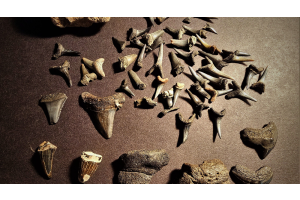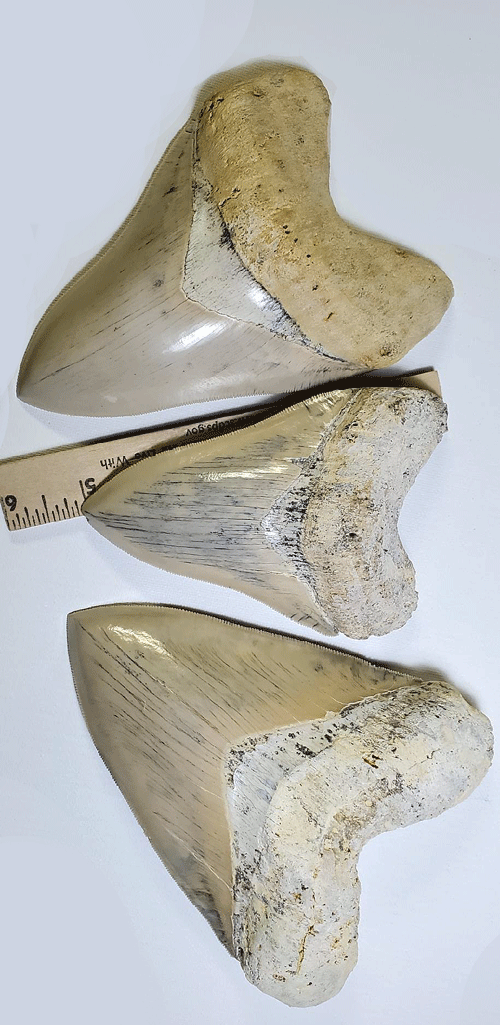
Understanding the evolutionary strategies of apex marine predators requires examining the mechanical signatures they left behind, and few fossils provide more direct behavioral evidence than serrated shark teeth. Within the first layers of sedimentary preservation, specimens such as a big megalodon tooth allow us to assess not only tooth architecture but also edge wear, mineral replacement patterns, and micro-damage indicators often evaluated by scholars seeking to buy megalodon tooth specimens for research or collection. These physical traces make it possible to reconstruct predator-prey dynamics that shaped ancient marine ecosystems.
Microwear Analysis as a Tool for Behavioral Reconstruction
Microwear studies—microscopic evaluations of surface abrasion, edge rounding, and micro-chipping—offer a unique opportunity to quantify feeding behavior in extinct species. As we continue supporting researchers through our extensive fossil catalog at Buried Treasure Fossils, we consistently encounter tooth specimens exhibiting a range of wear signatures, each reflecting specific ecological interactions. Through scanning electron microscopy (SEM), confocal laser imaging, and micro-CT analysis, scientists can assess patterns that correlate to prey type, strike force, and feeding frequency.
For prehistoric elasmobranchs, especially Otodus megalodon, serrations functioned as cutting elements critical for processing large marine vertebrates. Observing microwear on these serrations helps determine whether a Megalodon diet leaned more heavily toward soft-tissue predation, cartilage-rich marine mammals, or bone-dense prey such as ancient whales. The presence and degree of serration smoothing directly correlate with the resistance encountered during feeding events.
What Serration Sharpness Reveals About Feeding Precision
In modern predatory sharks, such as Carcharodon carcharias, serrations act as efficient slicing mechanisms designed to reduce drag while cutting through dense tissue. Similar logic applies to the Megalodon, but its tooth morphology displays an amplified version of this functionality. When we examine the serrations of fossilized specimens, several consistent trends emerge.
Highly preserved teeth with sharp, unrounded serrations typically indicate minimal contact with hard skeletal material. Such specimens suggest that the tooth was lost early in its functional life—perhaps after a single predation event involving softer tissue. In contrast, heavily dulled serrations with micro-fractures reveal repetitive strikes against resistant bone structures. Researchers have identified micro-striations oriented parallel to the cutting edge, which likely formed during lateral sawing motions—a technique frequently proposed in biomechanical models of Megalodon feeding.
A big megalodon tooth exhibiting extensive serration rounding demonstrates not only the mechanical stress encountered by the predator but also provides empirical support for the hypothesis that Megalodon regularly targeted and dismembered large marine mammals with robust skeletal frameworks. This wear pattern aligns with the fossil record of whale bones showing bite marks consistent with serrated cutting edges.
Macroscopic and Microscopic Chipping as Bite-Force Indicators
Tooth chipping is a widely used metric in paleobiology for assessing bite mechanics. Megalodon’s enamel shows a characteristic pattern of compressive micro-fractures, especially near serrated edges. The distribution of these fractures aligns with computer-simulated models estimating the species’ bite force to exceed 100,000 N, making it one of the strongest calculated bite forces among marine predators.
When we analyze the micro-fracture clusters, a striking trend emerges: chips occur most frequently at serration junctions. This suggests that the serrated geometry concentrated stress during feeding strikes. Variability in chip size likely reflects differences in prey size and resistance. In our fossil offerings, we regularly observe enamel fracture patterns consistent with high-impact feeding, which provide valuable data for researchers modeling Megalodon’s functional morphology.
Microwear and Ecological Niche Partitioning
One of the most fascinating insights from serration microwear involves Megalodon’s potential ecological niche. Differences in wear indicate variability in diet across geographic ranges. Some teeth display abrasion signatures suggesting sand ingestion—possibly from predation near benthic zones—while others show minimal abrasion, indicating mid-water column hunting.
Regional prey availability could have influenced these patterns. For instance:
● Atlantic basin specimens often show microwear suggesting predation on archaeocete whales
● Pacific finds sometimes exhibit smoother serrations, hinting at more cartilage-centric diets
These variations support the idea that Megalodon occupied a broad ecological niche, adjusting feeding behavior based on local prey abundance. Such flexibility aligns with the species’ widespread distribution across Miocene and Pliocene oceans.
Serration Wear as Evidence of Ontogenetic Shifts
Ontogenetic dietary shifts are documented in numerous modern sharks, and serration wear patterns offer a method for determining whether Megalodon followed a similar pattern. Juvenile Megalodon teeth typically exhibit finer serrations and smaller crown sizes, often displaying microwear consistent with smaller prey items such as fish or small marine mammals. Adults, on the other hand, possess large crowns with coarse serrations demonstrating repetitive high-force wear indicative of larger vertebrate prey.
These conclusions are reinforced by nursery site discoveries showing isolated microwear patterns distinct from those found in open-ocean fossil deposits. As we review tooth specimens in our collection, such ontogenetic markers help researchers contextualize Megalodon growth stages.
How Buyers and Researchers Benefit from Well-Preserved Serrations
Scholars seeking specimens to analyze often look for teeth with intact serrations capable of preserving microwear signals. When you decide to buy megalodon tooth fossils from us, we ensure that each specimen is accurately described, including details on serration integrity, enamel condition, and locality. These factors are crucial for:
● Microwear studies
● Morphometric comparisons
● Feeding biomechanics research
● Paleoenvironmental reconstructions
Preservation quality directly influences what behavioral conclusions can be drawn, making authenticity and accuracy essential.
Implications for Understanding Megalodon’s Role as an Apex Predator
Serration microwear adds to the growing body of evidence that Megalodon occupied the highest trophic level in its ecosystem. The consistent presence of bone-related wear supports the view that the species regularly consumed large vertebrates, shaping marine mammal evolution through predation pressure. Such behavior parallels modern apex predators whose feeding strategies influence prey morphology, distribution, and population dynamics.
This interpretation is strengthened when examining bite-marked marine mammal fossils that match Megalodon serration spacing. Combined microwear and trace fossil evidence creates a cohesive picture of a predator exerting immense ecological influence.
Conclusion: What Serration Microwear Ultimately Tells Us
The study of serration microwear on a big megalodon tooth reveals detailed insights into Megalodon’s feeding mechanics, prey selection, ecological flexibility, and predatory impact on ancient oceans. For marine biologists and paleontology researchers, these teeth function as data-rich artifacts that translate mechanical damage into ecological narratives. If you’re looking to deepen your research or expand your fossil collection with scientifically relevant specimens, we offer authenticated fossils you can buy. That maintain the structural integrity needed for microwear examinations. Explore our selection and take the next step toward uncovering more about Earth’s most powerful prehistoric predator.