When it comes to fossils, few specimens capture the imagination quite like the massive teeth of the Megalodon. These serrated relics, some measuring over 6 inches, are not just prized collectibles but powerful clues to the size, habits, and dominance of one of the largest predators to ever live. As fossil specialists, we often get asked: how big was the megalodon tooth, and what does that tell us about the shark itself? The answer lies in careful observation, measurement, and understanding of ancient marine ecosystems.
What Qualifies as a Large Megalodon Tooth?
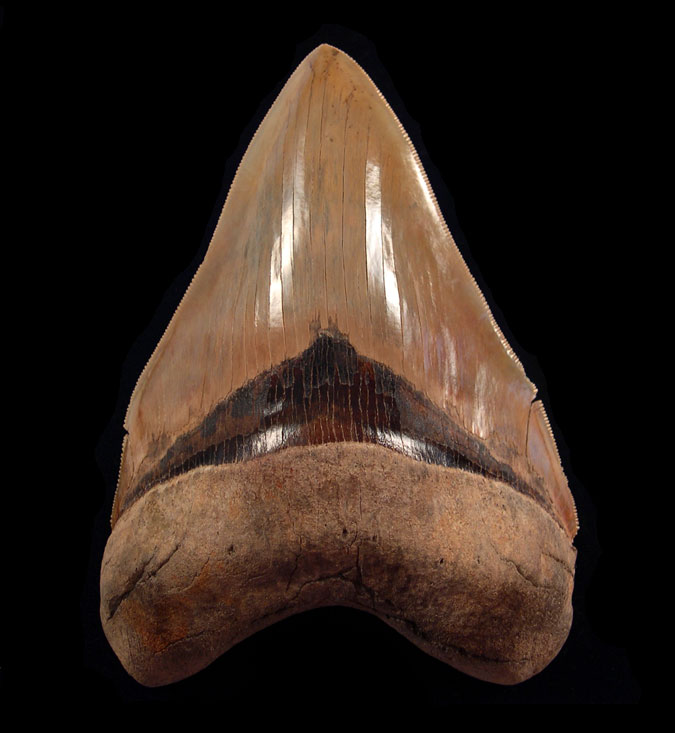
A Megalodon tooth crosses into “giant” territory once it exceeds the 6‑inch mark in slant height, a diagonal measurement from the tip of the tooth to the corner of the root. Most recovered teeth measure between 3 and 5 inches. Specimens beyond 6 inches are extremely rare and tend to come from mature sharks preserved in ideal fossilization conditions.
To put that into perspective, a 6‑inch Megalodon tooth is roughly the length of an adult human hand. These teeth were not just large for appearance; they were essential tools for prey capture and processing. With roots often spanning more than 4 inches wide, the entire tooth structure was engineered for slicing through thick bone and cartilage.
Tooth Size and Body Length: How Big Was the Megalodon Tooth?
Researchers have developed reliable models to estimate the size of Megalodon sharks based on tooth measurements. Using a general scaling equation, scientists estimate that for every inch of tooth height, the shark was approximately 10 feet long. This means a 6‑inch tooth suggests a shark of about 60 feet in length.
This scaling method helps us visualize how enormous these animals were. When people ask, How big was the megalodon tooth, they’re often trying to imagine the creature behind the fossil, and rightly so. A single tooth provides a window into the overall size of the predator, especially since skeletons made of cartilage rarely fossilize. These teeth remain the most consistent physical evidence we have to reconstruct Megalodon's anatomy.
Not All Teeth Were Created Equal
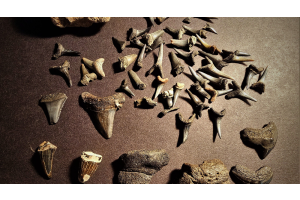
It’s important to remember that not every Megalodon tooth was the same size. Like modern sharks, Megalodon had multiple rows of teeth, up to five, each with a specific role. The largest, often central teeth in the upper jaw, are the ones that reach or exceed the 6‑inch mark. Lateral teeth and those from the lower jaw tend to be smaller and narrower.
This variation in size and shape has led to a wide range of fossil specimens. Even in a single jaw, you might find teeth ranging from under 2 inches to more than 6. So when evaluating fossil specimens, it’s essential to consider the position the tooth likely held in the mouth. Asking how big the megalodon tooth was without that context can lead to misleading assumptions about the shark’s age or size.
Size, Strength, and Feeding Behavior
The immense size of Megalodon's teeth directly supports its role as an apex predator. These sharks fed on large marine mammals, including whales, dolphins, and seals. Their massive teeth, with serrated edges and thick roots, were perfectly adapted for puncturing through blubber and bone with both precision and power.
A larger tooth doesn’t just suggest a bigger shark; it also indicates a predator capable of taking down much larger prey. Size was a clear advantage. The broader the tooth, the wider the bite radius, and the greater the bite force applied. When analyzing how big the megalodon tooth is, paleontologists can make educated inferences about diet, hunting strategies, and dominance within ancient marine ecosystems.
Environmental Influence on Tooth Size
Geography and habitat played important roles in determining how large these teeth could grow. The biggest specimens often come from warm, shallow coastal waters filled with marine life, the ideal hunting zones for such a massive predator. Areas such as the Southeastern United States, Peru, and Morocco have yielded some of the largest and best‑preserved Megalodon teeth discovered so far.
Shifts in sea levels and water temperatures over millions of years likely affected how big these sharks could grow. Fossils from nutrient‑rich regions often show larger specimens, reinforcing the idea that food supply influenced the question of how big the megalodon tooth was.
Rarity and Collectibility of Large Megalodon Teeth
Teeth over 6 inches are exceptionally rare. These fossils are not only biological giants but also geological treasures. The right combination of shark maturity, tooth position, environment, and mineral conditions must align for a tooth to fossilize and remain intact for millions of years.
This rarity increases their desirability among collectors. Size, condition, and symmetry all affect value. A tooth that reaches or exceeds the 6‑inch mark, with full root structure and intact serrations, is not just a remarkable scientific specimen but also a prized collectible. Large teeth are tangible evidence of the shark’s dominance and a key attraction for fossil enthusiasts.
Why Size Still Matters Today
Understanding tooth size goes beyond curiosity; it holds real significance for both science and collecting. Accurate measurements help verify fossil authenticity, estimate shark length, and establish geological context. They also provide data that helps researchers trace evolutionary changes and ecological patterns in ancient oceans.
More importantly, large Megalodon teeth connect us to a time when 60‑foot predators ruled the seas. Holding one in your hand is not just about owning a fossil; it’s about grasping a piece of prehistory that tells a story of strength, adaptation, and survival at a scale almost beyond imagination.
Conclusion: Measuring the Legacy of a Giant
So, how big was the megalodon tooth? Some of the largest ever found reach 7.25 inches, though these are exceptionally rare. Most premium specimens approach or exceed 6 inches, a size that points to sharks between 55 and 60 feet in length. These measurements offer more than statistics; they help us visualize the full power and scale of a long‑extinct predator.
As fossil specialists, we understand how much a single Megalodon tooth can reveal about this ancient shark. Whether you are an experienced collector or simply fascinated by marine history, the size of these fossils provides meaningful insight into their rarity, biology, and the world they once ruled. Buried Treasure Fossils continues to share this connection between science and the collector’s passion, ensuring that every fossil tells its story of the ocean’s greatest giant.
Explore our collection of authentic Megalodon teeth and contact us today to add a true giant to your fossil collection.