

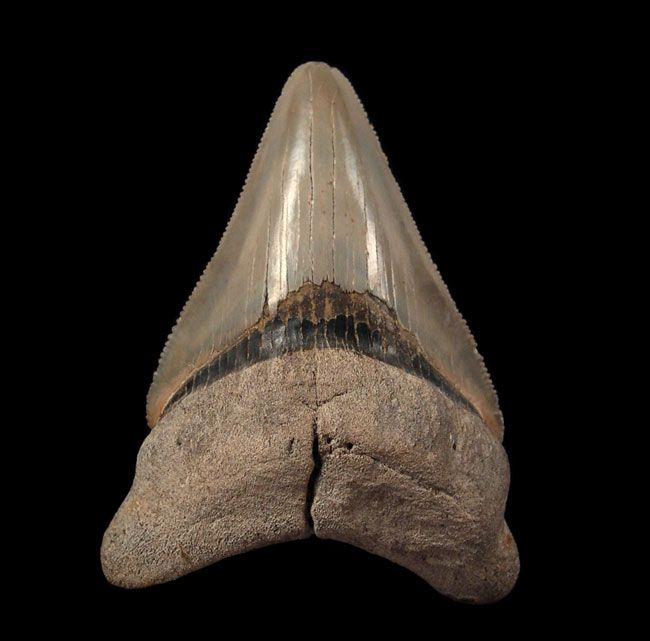
Millions of years ago, oceans teemed with creatures of extraordinary scale. Among them was the megalodon, a massive predator whose presence is still felt today through the remnants it left behind. One of the most striking relics is the Aurora Megalodon tooth, a fossilized treasure that tells a story of power, survival, and deep history. Unlike bones that often crumble with time, these teeth endure, allowing us to connect with a world long gone.
Before we dive into the depths of its meaning, it’s worth noting how a single fossil can spark awe and curiosity. Teeth from this species are more than fragments; they are time capsules preserved within the Earth.
Tracing The Origins Of An Ocean Giant
Megalodons once dominated the seas from about 23 to 3.6 million years ago. With lengths reaching up to sixty feet, they overshadowed nearly every marine creature in their environment. Their teeth—some spanning more than seven inches—served not only as tools of survival but also as symbols of unmatched strength in the marine chain.
The discovery of these fossils in areas like Aurora, North Carolina, links us to their ancient habitats. The layers of sediment where they rest preserve evidence of an ocean world shaped by constant change. Each fossil recovered provides researchers with a clearer picture of how these predators lived, hunted, and eventually vanished.
The Geological Treasure Beneath The Surface
Aurora, known for its rich fossil beds, is a remarkable site where countless shark teeth have been unearthed. This location once lay beneath warm, shallow seas, creating the ideal environment for marine life to thrive and for remains to fossilize over time.
The sediment acted as nature’s vault, slowly mineralizing organic material into the fossils we see today. For collectors and researchers alike, teeth from this area hold both scientific importance and cultural fascination. They stand as tokens of resilience, shaped by geological processes that spanned millions of years.
Why These Fossils Inspire Awe
The size of a megalodon tooth alone is enough to capture attention. Holding one creates an instant connection to an era when creatures larger than buses ruled the seas. The enamel and serrated edges remain visible, even after millions of years, highlighting the remarkable preservation of natural history.
Beyond their scientific significance, these teeth appeal to enthusiasts who view them as more than just fossils. They are pieces of art sculpted by time, carrying both mystery and beauty. The fascination lies not only in their age but also in what they represent—raw survival and dominance in the natural world.
The Middle Of The Story: Collecting With Care
The journey of these fossils does not end with discovery. Collectors often seek them as part of personal collections or displays, recognizing their historical significance. Whether showcased in a cabinet or studied under a microscope, each piece carries a unique narrative.
Owning an Aurora Megalodon tooth is like holding a page from Earth’s grand storybook. Yet, with this opportunity comes responsibility. Ethical collecting ensures that these fossils are preserved for future generations, striking a balance between personal interest and the importance of scientific research.
The Scientific Value Of Fossil Teeth
For paleontologists, megalodon teeth are more than impressive relics; they are vital clues to understanding the evolution of marine life. By analyzing the size, structure, and wear patterns of ancient marine organisms, scientists can infer their diet, hunting behavior, and environmental conditions.
Even the most minor variations among teeth tell stories—perhaps of migration routes, prey preferences, or adaptation to changing climates. These insights allow us to reconstruct not only the life of a single predator but the ecosystems that supported it.
Modern-Day Connection To An Ancient Predator
Despite the species’ extinction, its influence lingers in the way we perceive marine predators today. Many compare modern sharks to megalodons, measuring today’s giants against the scale of the ancient hunter. The fascination reminds us that life on Earth is ever-changing, and survival often depends on adaptation to shifting environments.
For enthusiasts, the connection extends beyond science. Fossil teeth create a bridge between the present and the prehistoric, grounding us in the shared history of the natural world.
Caring For A Fossilized Relic
Once a fossil tooth enters a collection, proper care ensures it remains preserved. Simple practices—such as keeping it away from extreme humidity, handling it gently, and displaying it in protective cases—allow these treasures to maintain their original form.
Collectors often find joy in learning not only the history but also the best ways to preserve their finds. Caring for such relics is an act of respect, honoring the endurance of natural history across millions of years.
The Closing Reflection: A Legacy Carved In Stone
From ocean predator to preserved fossil, the megalodon's journey is one of resilience. Each tooth reflects a chapter of life long gone, preserved in mineralized beauty. To encounter an Aurora Megalodon tooth is to witness a blend of history, science, and wonder in a single form.
As we reflect on these fossils, we also recognize the ongoing relationship between humans and the natural past. Through study, collection, and preservation, we keep the memory of these marine giants alive, ensuring their story continues to inspire future generations.
Are you ready to connect with the mysteries of Earth’s prehistoric oceans? Begin your journey by exploring fossil collections and discovering the stories each relic carries. Let curiosity guide you, and bring home a piece of natural history that speaks of survival, transformation, and the passage of time.






