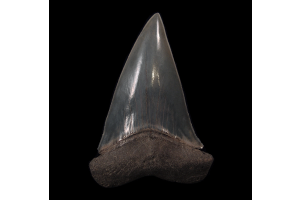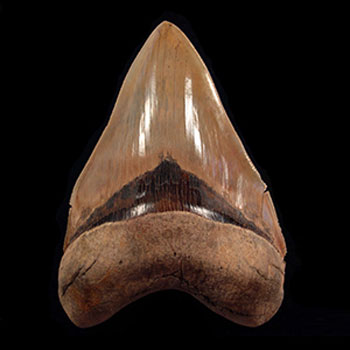
Millions of years ago, one of Earth’s most formidable predators, the Megalodon, was roaming the vast oceans. Although this colossal shark has long vanished, its legacy is still alive through its fossilized teeth. These fossils continue to captivate collectors, researchers, and enthusiasts across the world.
In our work, we have seen how much value these remarkable fossils can hold. Their worth is not only tied to fascination with prehistory but also to how rare these teeth truly are. For us, rarity has always been the central factor that increases their appeal and global demand.
A Glimpse into an Ancient Predator
The Megalodon, which is believed to have reached up to 60 feet in length, was one of the largest marine predators in history. With a cartilaginous skeleton, almost all that has survived today are fossilized teeth and vertebrae. These heart-shaped teeth with serrated edges serve as a tangible connection to an age when giant sharks dominated the seas.
What makes these fossils even more fascinating is that they represent the only surviving evidence of one of the ocean’s most powerful creatures. A single megalodon tooth can reveal size, feeding patterns, and the predatory reach of the Megalodon. This scientific importance also contributes to their worth, showing that rarity is not only about availability but about the stories these teeth are still able to tell.
Rarity: A Central Pillar of Value
Size Matters: Large Teeth Rarely Resurface
The size of a Megalodon tooth can strongly affect rarity. Most recovered examples measure between 3 and 5 inches. Megaldoon teeth that are exceeding 6 inches are exceptional finds. An intact 6-inch specimen is considered extraordinary within the fossil community. Even small increases in size can add to desirability and market price. Collectors and researchers often describe these rare, large specimens as once-in-a-lifetime discoveries, since conditions for preservation and survival were so limited.
Preservation: The Most Complete Specimens Shine Brightest
Teeth in remarkable condition, with sharp serrations, intact enamel, strong roots, and vibrant coloration, are scarce and are highly sought after. A fossil that is displaying all of these features is considered museum quality, and rarity can push its value into the thousands of dollars. Collectors recognize that most fossilized teeth have been exposed to currents, shifting sands, and natural wear over millions of years, so when one surfaces in pristine condition, it immediately becomes exceptional.
Color and Provenance: Unique Stories, Unique Worth
Coloration is determined by the minerals in the surrounding sediment during fossilization. Specimens with unusual hues, such as copper-red from North Carolina’s "red site" or tan-orange from West Java, are uncommon and can be highly prized. Location can also add to a tooth’s value. Teeth that are recovered from remote regions or restricted waterways are rarer due to their origin and can often sell for higher prices. Each specimen tells its own story through its color and place of discovery, and rarity ensures that no two teeth are exactly alike.
Age, Preservation, and Geological Context
Dating back 4 to 20 million years, Megalodon teeth owe their rarity to preservation conditions that allow only a small portion to survive. Teeth with intact tips and roots that have escaped erosion and environmental damage are limited in number. When such preservation is combined with large size or rare coloration, its worth can rise significantly. The geological context also adds meaning, since teeth uncovered in specific sediment layers can confirm time periods and provide evidence about marine environments of the past.
Market Impact: When Supply Meets Demand
Documentation and Authenticity Build Trust
Replicas and altered fossils are circulating widely, which makes authentication essential. Certificates of authenticity and verified provenance can significantly increase trust and add to a fossil’s worth. Buyers often rely on expert examination to confirm serrations, enamel consistency, and mineral coloration as proof of originality. Without documentation, value is reduced because rarity must always be paired with authenticity.
Collector Preferences Drive Demand
Collector interest can evolve over time. Large specimens with unusual coloration are often considered especially desirable. Exhibitions, documentaries, and scientific studies can renew fascination, fueling global demand for legally sourced rare fossils. Rarity ensures that competition between collectors is fierce, which drives prices upward. The thrill of owning something so ancient, unique, and nearly impossible to replace fuels enthusiasm for these remarkable fossils.
Value That Goes Deeper than Price
Rare Megalodon teeth can hold more than monetary significance:
● Historical Connection: These fossils represent a direct link to prehistoric marine ecosystems and the dominance of ancient predators.
● Aesthetic Fascination: Their triangular crowns, serrated edges, and striking hues are capturing attention in ways only fossils of such rarity can provide.
● Personal Meaning: Collectors often feel a tooth can carry more than price. It is seen as a story, a symbol, and a tangible reminder of the prehistoric world.
Cultural fascination also plays a role. Megalodon teeth often appear in museums, educational exhibits, and private collections where they are admired as symbols of strength and endurance. For some, owning one of these fossils is less about trade and more about a personal connection to the ancient oceans. This emotional dimension highlights why rarity is so influential in determining worth.
Preserving Rarity through Responsible Collecting
Because these teeth are so highly valued, sourcing practices must be responsible. Some fossil sites are now restricted, and careful, permitted collecting is helping ensure these specimens can remain available for future study and appreciation. Ethical collecting also protects natural environments while ensuring that rare specimens are handled with care. Collectors often emphasize that finding a Megalodon tooth is not only about possession but about respecting the history it represents.
In Summary
The rarity of Megalodon teeth is the defining element that increases their worth. When traits such as size, preservation, coloration, provenance, and authenticity are combined, the result can be a fossil of exceptional importance.
A rare Megalodon tooth is more than a remnant of an extinct predator. It is a scientific artifact, a visual marvel, and a piece of history that continues to inspire curiosity and admiration across the world. As collectors often say, “Every Megalodon tooth carries millions of years in its silence, reminding us how small we are compared to the oceans of time.”