

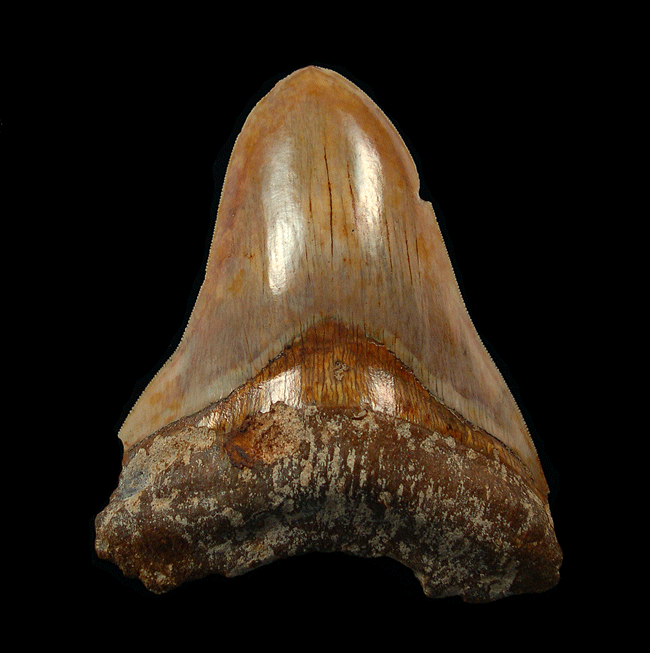
If you've ever dreamt of owning a genuine piece of prehistoric history, few treasures can rival the allure of a fossilized Megalodon tooth. Among the wide variety of fossilized shark teeth available, the specimen we’re highlighting today from Buried Treasure Fossils is truly in a league of its own. This spade-shaped Megalodon lower jaw tooth from West Java, Indonesia is more than just a fossil—it’s a tangible link to a world that existed millions of years ago.
For collectors, enthusiasts, and fossil lovers like us, this isn’t merely about adding another tooth to a display—it’s about acquiring something truly rare and remarkable. With its perfect blend of shape, coloration, preservation, and authenticity, this exceptional fossil is also a close contender for the largest megalodon tooth ever in this form.
Let’s take a closer look at what makes this Megalodon tooth such a compelling and highly sought-after specimen.
A Glimpse into the Miocene Epoch
The Miocene Epoch—spanning from about 23 million to 5.3 million years ago—was an age of immense oceanic diversity. It was during this time that the Megalodon (Carcharocles megalodon) reigned as the undisputed ruler of the seas. With an estimated length of up to 60 feet or more, the Megalodon’s sheer size made it one of the largest marine predators in Earth's history.
What remains today are its iconic fossilized teeth—massive, triangular, and often serrated like knives. And among these relics, some stand out. This spade-shaped lower jaw tooth from West Java is one such gem, representing not just the predator’s dominance, but also the passage of millennia that led to its near-perfect preservation.
This specific tooth is a product of natural geological processes that span millions of years. Its preservation, untouched by restoration or repair, adds to its value and authenticity. When we hold a tooth like this in our hands, we’re holding more than a fossil—we’re holding time itself.
The Signature Spade Shape: Uniquely Beautiful
Most Megalodon teeth are broadly triangular, but this one from West Java displays a spade-shaped profile, setting it apart from typical specimens. This distinct form, which widens at the base and tapers to a powerful point, suggests it originated from the lower jaw. The curvature, bulk, and natural symmetry add to its intrigue, making it an excellent conversation starter for any fossil collection.
The spade shape isn’t just a curiosity—it’s a rarity. Very few Megalodon teeth exhibit this unique geometry, which enhances both the aesthetic and collectible value of the piece. The broader base also gives the tooth an imposing presence, drawing the eye immediately when displayed.
Whether you’re a long-time collector or just beginning your journey into fossil ownership, there’s something incredibly compelling about a fossil that is so distinct in its visual appeal.
Enamel That Gleams with Ancient Beauty
When it comes to fossil quality, enamel preservation is one of the first aspects collectors look for—and this tooth delivers beyond expectations. The surface boasts a rich, glossy brown crown, naturally colored over millions of years through mineralization in the sedimentary environments of West Java. It's not just the color but the luster of the enamel that stands out. Even under natural light, it radiates a subtle sheen that brings out its stunning detail.
Complementing the crown is the golden brown bourlette—the enamel band located near the root. This feature is a collector’s favorite due to its vibrant, contrasting hue, offering a deeper dimension to the tooth's coloration. The gradual blend between the brown crown and golden bourlette adds visual depth that’s hard to replicate.
There’s no artificial polishing or enhancement here—just pure, ancient enamel that’s been remarkably preserved.
Razor Sharp Serrations & Impressive Root Structure
One of the most captivating features of this Megalodon tooth is its razor-sharp serrations. These tiny saw-like edges line both sides of the tooth and remain remarkably intact. It’s rare to find teeth that retain their serrations so cleanly, especially after millions of years. These serrations once played a critical role in the Megalodon’s ability to bite through thick bone and flesh—now, they serve as a sharp reminder of the creature’s evolutionary perfection.
The root of the tooth also deserves attention. While it shows some natural pitting—a common trait seen in West Java Meg teeth—it remains nearly complete. The pits don’t detract from its value but rather authenticate its geological origin. In fact, such pitting is often used to distinguish true West Java specimens from other regional finds.
Together, the sharp serrations and sturdy root frame the tooth’s spade-shaped body perfectly, rounding out a fossil that’s visually stunning and structurally solid.
A True Fossil, Not a Restoration
Authenticity is everything when it comes to collecting. What sets this tooth apart is the absence of any repair or restoration. That’s right—no filler, no paint, no composite material. What you see is what nature preserved.
This tooth has not been artificially enhanced, reconstructed, or modified. It is offered as-is, completely authentic and natural, and we stand behind that guarantee. That’s something we value deeply at Buried Treasure Fossils, and it’s why so many collectors trust us when searching for true specimens.
From the Depths of West Java
Indonesia, and particularly West Java, is known for its incredibly rich fossil beds. The tropical climate, combined with the island’s complex geological history, makes this region an ideal location for fossil formation. The unique sediment types and mineral deposits in the area contribute to the vibrant coloration and distinct surface textures seen in Megalodon teeth from this region.
Fossils from West Java are especially prized because they tend to display bold and varied colors—from deep browns to amber hues—and often exhibit a signature look that collectors learn to recognize instantly. This tooth is no exception. Its coloration, preservation, and form are direct reflections of the region’s fossil-rich layers.
This specimen embodies the geological magic of West Java and brings a piece of that legacy directly to your hands.
Why This Fossil Deserves a Place in Your Collection
There are fossils, and then there are fossils like this one—pieces that don’t just sit on a shelf but command attention. The combination of shape, color, serrations, enamel, and authenticity makes this Megalodon tooth one of the most desirable specimens we’ve come across.
Whether you’re building a new collection, looking for a centerpiece, or expanding an existing display, this tooth checks every box. And given its incredible characteristics, it's worthy of consideration among the contenders for the largest megalodon tooth ever discovered in this spade-shaped lower jaw format.
Make This Treasure Yours
At Buried Treasure Fossils, we believe in helping collectors connect with the prehistoric world in the most authentic way possible. This West Java Megalodon tooth is more than a fossil—it’s a story, a time capsule, a statement. It reminds us of Earth’s distant past and the majestic creatures that once swam its oceans.
Ready to add this extraordinary piece to your collection? Explore this authentic, one-of-a-kind Megalodon tooth and own a piece of ancient history that will inspire wonder for generations.
Disclaimer: This blog is for information purposes only and does not support any unethical fossil collection practices.






