

When you hold a fossilized shark tooth in your hand, you’re not just having a piece of bone—you’re holding a story. Each ridge, curve, and serration is a silent record of life in the oceans millions of years ago. Among the most famous teeth ever discovered are those of the Megalodon, the prehistoric giant that ruled the seas, and the Great White Shark, the apex predator still patrolling our oceans today. At first glance, both teeth look sharp and menacing, but a closer inspection reveals profound differences that tell us much about how these two predators lived, hunted, and thrived.
So, why do Megalodon teeth and Great White teeth look so different? The answer lies in their size, shape, diet, and even the age of the teeth themselves. These differences offer fascinating insights into the way each shark adapted to its world.
The Giants of the Sea: Megalodon’s Legacy
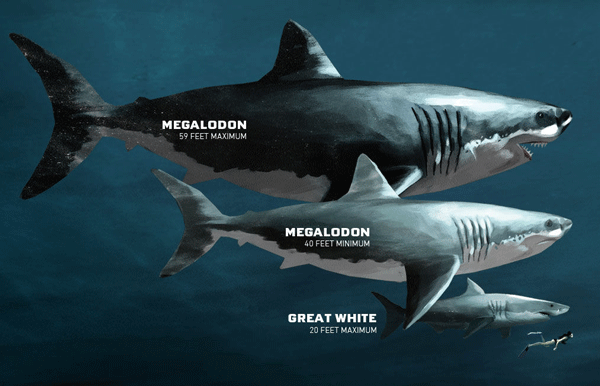
The Megalodon, which lived between 23 and 3.6 million years ago, was one of the largest predators the Earth has ever seen. Estimates suggest it could grow up to 60 feet long, three times the size of today’s Great White. Naturally, such a colossal predator required equally formidable teeth.
Megalodon teeth are massive, often exceeding seven inches in length. They are broad, triangular, and thick, with a weight and density that instantly conveys power. Unlike the sleeker teeth of modern sharks, Megalodon teeth were designed less for slicing and more for crushing. These giants preyed on whales, seals, and large marine animals, and their teeth needed to withstand the immense pressure of biting through bone.
When you hold a Megalodon tooth, you are quite literally touching a weapon designed for prehistoric domination. Its size and structure reflect a predator that hunted massive prey in ancient oceans filled with giants.
The Sleek Hunter: Great White Shark’s Edge
Megalodon tooth vs Great White Shark is alive and thriving today, prowling oceans across the globe. Though they average between 15 and 20 feet in length (with some growing slightly larger), they are nowhere near Megalodon’s colossal size. Their teeth mirror this difference in scale and purpose.
Great White teeth are smaller, sharper, and more blade-like, typically ranging from 1.5 to 2.5 inches long. Their triangular shape is narrower than that of a Megalodon tooth, and the edges are finely serrated, perfectly adapted for cutting through flesh and blubber. Unlike Megalodon’s crushing bite, the Great White relies on speed, precision, and razor-sharp cuts to immobilize its prey, which often includes fish, sea lions, and seals.
A Great White tooth is like a surgeon’s scalpel compared to Megalodon’s hammer. Where Megalodon used brute force, the Great White uses finesse.
Shape Tells the Story
One of the most striking differences between the two is shape.
Megalodon teeth are broad and thick, reflecting the need to grasp and crush large, struggling prey. Their roots are also much wider, designed to anchor the massive teeth firmly in the jaw.
Great White teeth, however, are slimmer and more pointed, optimized for slashing rather than crushing. Their slender design makes them lighter and more efficient for quick bites in fast-paced hunts.
In short, the shape of each tooth tells us exactly how these sharks attacked their meals. Megalodon’s teeth are about endurance and strength, while Great White teeth are about precision and speed.
Size Matters: A Comparison of Scale
There’s no avoiding the jaw-dropping size difference between these teeth. A fossilized Megalodon tooth can easily fit into the palm of your hand and feel like a heavy stone. By contrast, a Great White tooth, while sharp and intimidating, looks small beside it.
This size difference isn’t just about intimidation, it reflects how the two sharks fit into their ecosystems. Megalodon was at the very top of the food chain, hunting whales and other enormous creatures. Great Whites, while apex predators themselves, hunt medium-sized prey and rely on ambush tactics rather than overpowering brute force.
The teeth are physical proof of how size influenced hunting strategies and survival.
Age and Fossilization: Ancient vs. Modern
Another fascinating difference lies in the age of the teeth themselves.
Megalodon teeth can be as old as 23 million years, relics from a time long before humans appeared. These fossils are often found in rivers, ocean sediments, and coastal cliffs, beautifully preserved thanks to the minerals that replaced the original tooth material over millions of years.
Great White teeth, though still collectible and sometimes fossilized, are much younger. They can range from modern specimens shed by sharks today to fossils that are a few thousand years old.
This contrast in age makes Megalodon teeth feel like time capsules from Earth’s deep past, while Great White teeth remind us of the continuity of nature, apex predators that still thrive in our oceans.
Function Defines Form
At the heart of these differences is the simple principle: form follows function. Megalodon’s teeth were built for taking down giants, while Great White teeth are designed for agility and efficiency.
Megalodon = power, durability, and size.
Great White = speed, sharpness, and adaptability.
Both represent evolutionary perfection within their respective eras. Their teeth weren’t just tools—they were survival strategies honed over millions of years.
Holding History in Your Hands
Whether you’re holding a Megalodon tooth vs Great White Shark, you’re experiencing something extraordinary. Megalodon teeth connect us to an age of prehistoric giants, while Great White teeth give us a living connection to one of today’s most iconic predators.
Collectors, scientists, and enthusiasts alike value these teeth not only for their rarity and beauty but also for what they represent. They are reminders of the vastness of Earth’s history, the incredible adaptability of life, and the mysteries still hidden in our oceans.
Conclusion: Two Sharks, Two Stories
Though separated by millions of years, Megalodon tooth and Great White Shark share a fascinating legacy, each leaving behind teeth that tell very different stories. Megalodon teeth speak of sheer size and power, crafted for a world of marine giants. Great White teeth, on the other hand, reveal a predator of precision and speed, still ruling the oceans today.
So, the next time you see a shark tooth, whether a fossilized relic or a modern specimen, look closer. You’re not just looking at a piece of enamel. You’re looking at the blueprint of a predator’s life, a glimpse into the ocean’s untold stories, and a reminder of the incredible diversity of nature’s design.
If this glimpse into shark evolution has sparked your curiosity, why not hold history in your own hands? We offer authentic Megalodon and Great White teeth, each one a rare piece of natural history, ready to inspire awe in your collection. Explore our selection today and discover the thrill of owning a fossil that carries the story of Earth’s oceans across millions of years.






