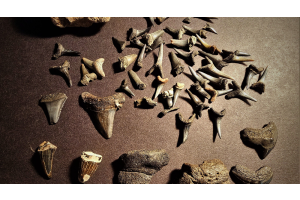
Not all treasures lie hidden in chests beneath the waves, some are scattered across beaches and buried in layers of ancient rock, waiting to be discovered by curious eyes. Among the most extraordinary of these treasures are fossilized shark teeth. They tell a story of survival, dominance, and extinction that spans millions of years. While bones and delicate marine remains often vanish into geological time, shark teeth endure, making them among the most common and fascinating fossils ever found.
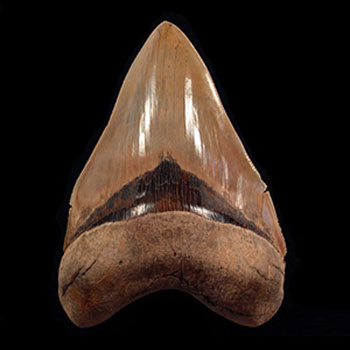
But beyond their sheer abundance lies something even more compelling: the teeth of the Megalodon, the colossal apex predator that once ruled Earth’s oceans. These teeth, some as large as a human hand, represent the legacy of a creature so immense that its very name, Megalodon, meaning “large tooth”, testifies to its most iconic feature.
In exploring why shark teeth fossilize so frequently, we also uncover the incredible story of the 7 inch Megalodon tooth for sale and the role its powerful jaws played in shaping prehistoric marine life.
Why Shark Teeth Fossilize More Often Than Bones
One of the first questions paleontologists often address is why shark teeth appear in the fossil record far more frequently than shark skeletons. The answer lies in biology and geology.
Sharks have skeletons made primarily of cartilage, a flexible material that decays rapidly after death. Unlike bones, cartilage does not fossilize easily, leaving very little behind for scientists to study and examine. Teeth, however, are different. Composed of dentin and coated in enamel, the hardest substance in the animal kingdom, they resist decay, pressure, and chemical erosion. This resilience makes teeth ideal candidates for fossilization.
In addition to their durable composition, sharks constantly shed teeth throughout their lives. A single shark may lose and replace tens of thousands of teeth during its lifetime. With millions of sharks living in prehistoric oceans, this created a massive supply of teeth settling into seabeds over millions of years. Once buried in sediment, these teeth had the perfect environment for fossilization, where minerals gradually replaced organic material, preserving them for eternity.
The Megalodon: Giant of the Prehistoric Seas
If shark teeth dominate the fossil record, none capture more attention than those of the Megalodon. Known scientifically as Otodus megalodon, this shark reigned as one of the largest predators in Earth’s history.
Size and Power: The megalodon is believed to have reached lengths of up to 60 feet and weighed between 50 and 75 tons. To put this in perspective, that’s about three times longer than the largest Great White shark and heavier than ten modern elephants combined.
Diet: Its diet likely included large marine animals, including whales, seals, and giant fish. Fossil evidence suggests Megalodons used their massive teeth to shear flesh, crush bones, and even disable prey by biting off fins.
Bite Force: Researchers estimate that Megalodon could shut its jaws with an incredible 18 tons of force per square inch. In comparison, the Great White shark’s bite, although formidable, maxes out at 1.8 tons per square inch.
With teeth measuring up to 7 inches long, Megalodon’s bite was both a weapon and a symbol of evolutionary dominance. These teeth are among the most sought-after marine fossils today, prized not only for their size but also for the prehistoric story they tell.
Why Teeth Outnumber Other Marine Fossils
Beyond their biological durability, several factors explain why fossilized shark teeth are especially abundant compared to other marine fossils:
Constant Tooth Replacement
Sharks possess multiple rows of teeth, often described as conveyor belts. As old teeth fall out, new ones move forward to take their place. This continuous replacement ensures sharks never lack weapons for feeding, while also producing countless fossilization candidates.
Global Distribution
Sharks inhabit nearly every ocean on Earth, past and present. With their worldwide presence, the deposition of teeth in sediments occurred across multiple continents and marine environments. This broad distribution increases the likelihood of discovery today.
Sediment-Rich Burial Grounds
Many ancient shark habitats overlapped with shallow seas rich in sediment. These conditions are ideal for rapid burial, which is crucial for fossilization. Teeth buried quickly in these sediments were shielded from erosion and decay.
Resilient Composition
Unlike shells, corals, or delicate bones, shark teeth are naturally designed to withstand stress. Their hard enamel enabled them to survive for millions of years amid shifting geological forces.
The Cultural and Scientific Value of Shark Teeth
Fossilized shark teeth, particularly 7 inch Megalodon tooth for sale, hold immense value for both science and collectors.
Scientific Importance: Teeth are the primary evidence scientists use to study extinct sharks. From them, researchers infer size, diet, and even migration patterns. The wear patterns on teeth reveal feeding strategies, while their chemical composition provides clues about ancient ocean temperatures.
Cultural Fascination: For centuries, fossilized shark teeth were mistaken for dragon tongues or mystical stones. Today, they captivate collectors who see them as direct connections to Earth’s deep past. The sheer size of Megalodon teeth makes them especially prized.
Comparing Megalodon and Modern Sharks
While the Great White shark is often considered today’s oceanic apex predator, it pales in comparison to the Megalodon.
Size: Great Whites typically reach 20–30 feet, barely half the estimated size of Megalodon.
Diet: While Great Whites hunt fish, seals, and smaller whales, Megalodon targeted some of the largest marine mammals that existed during its era.
Bite Force: With a bite force nearly ten times stronger, Megalodon was capable of crushing whale bones with ease.
Despite these differences, modern sharks share one important link with their giant ancestor: the evolutionary advantage of their teeth. Just as Megalodon relied on its massive dental arsenal, today’s sharks survive by constantly replacing teeth adapted for piercing, slicing, or crushing prey.
The Enduring Legacy of Fossilized Shark Teeth
The abundance of fossilized shark teeth reminds us that nature often preserves its strongest and most enduring elements. These fossils are more than relics; they are time capsules that bridge the ancient and modern worlds, preserving a link between past and present.
Each fossilized tooth tells the story of survival in prehistoric oceans, where predators and prey engaged in battles of strength and adaptation. Among them, Megalodon’s teeth stand out as symbols of ultimate dominance, leaving an indelible mark on both science and human imagination.
As we continue to unearth these treasures, we not only piece together the mysteries of Earth’s oceans but also celebrate the resilience of life itself, etched forever in stone.
Conclusion
Fossilized shark teeth dominate the marine fossil record because they combine abundance, durability, and global distribution. They outlast cartilage, shells, and even bones, becoming the most enduring reminders of Earth’s ancient seas. At the heart of this story lies the 7 inch Megalodon tooth for sale, whose colossal teeth exemplify the might of one of nature’s greatest predators.
Every fossilized shark tooth discovered is more than just a fragment of biology, it is a preserved moment in time, a silent witness to millions of years of oceanic history. From the smallest shark to the giant Megalodon, these teeth prove that even in extinction, nature’s greatest survivors continue to leave their mark.
Discover our authentic Megalodon and other fossilized shark teeth. Explore our carefully curated collection and find the perfect piece of prehistoric history to add to your own.