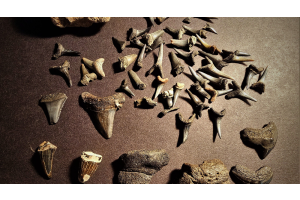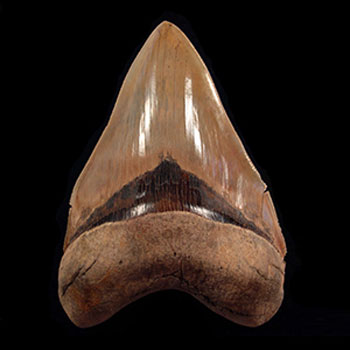
The awe-inspiring Megalodon tooth is more than just a fossil. It is a tangible connection to an ancient ocean predator that once dominated the seas with unimaginable size and power. Although the Megalodon has been extinct for millions of years, its fossilized teeth continue to be discovered across the globe, allowing us to marvel at the grandeur of prehistoric marine life. At Buried Treasure Fossils, we take immense pride in offering authentic Megalodon teeth to collectors, educators, and enthusiasts who appreciate these rare remnants from Earth’s distant past.
Megalodon teeth are remarkable not only for their size but also for their durability. Due to the unique way sharks replace their teeth continuously over their lifetimes, an individual Megalodon may have lost tens of thousands of teeth throughout its existence. This natural cycle of tooth replacement has resulted in an abundant fossil record, with countless teeth preserved in the ocean floor and coastal sediments over time.
Here are a few aspects to consider:
The Global Journey of Megalodon Teeth
One of the most astonishing facts about Megalodon is its global presence. This prehistoric shark was not confined to one corner of the Earth. Instead, it roamed the warm oceans worldwide. Its massive size, reaching up to 60 feet in length, likely prevented it from entering shallow coastal waters, but its presence was felt everywhere else. That means Megalodon teeth can be discovered in a wide variety of locations around the world.
From the coasts of Europe to the shores of Australia, and particularly throughout the Americas, Megalodon teeth have made their mark. In the United States, collectors often focus their attention on hotspots like North Carolina, South Carolina, Georgia, and Florida. These coastal states are rich with underwater fossil beds where countless teeth have been unearthed. One particularly exciting location is Shark Tooth Hill in California. Renowned for its rich fossil deposits, Shark Tooth Hill has produced numerous impressive finds over the years and continues to attract fossil enthusiasts from around the country.
Recognizing a Megalodon Tooth
Identifying a Megalodon tooth is a thrilling experience. These teeth are heart-shaped with serrated edges, giving them an unmistakable appearance. Their size alone often commands attention, but other characteristics make each tooth unique. Color variations, overall condition, and completeness are all important factors that contribute to the uniqueness and appeal of each fossil.
Collectors at every level can appreciate Megalodon teeth. While the largest and most pristine examples are highly sought after, smaller specimens offer an accessible entry point for newcomers to fossil collecting. Whether used for educational displays, private collections, or simple admiration, these teeth are captivating reminders of the planet’s deep-time history.
From Myths to Reality
Long before these fossils were linked to prehistoric sharks, ancient civilizations created stories to explain their mysterious origins. Megalodon teeth, with their stone-like appearance and unfamiliar shape, were once thought to be magical objects. Some referred to them as dragon tongues or even moon rocks. It was not until the late 1600s that scholars correctly identified them as the fossilized teeth of a long-extinct shark species.
The transformation of these teeth from legend to paleontological wonder highlights how much they have captured the human imagination. Today, when you acquire a Megalodon tooth from Buried Treasure Fossils, you are securing a piece of that rich narrative. You are holding an artifact that once belonged to a sea-dwelling predator of incredible scale and strength.
What Fossils Reveal About Megalodon
Even though most of a Megalodon’s body was composed of cartilage, which does not fossilize well, its teeth and a few spinal centra have survived through the ages. These rare remnants are incredibly valuable for understanding this ancient creature. In fact, one notable discovery in the 1700s involved a prehistoric whale fossil showing clear bite marks that could only have come from a Megalodon. Such clues have helped build a clearer picture of how these sharks lived and interacted with their environment.
The fossilization process plays a key role in the preservation of these magnificent teeth. Over time, the calcium and organic materials within the tooth are gradually replaced with minerals from surrounding sediment, a process called petrification. This transformation turns the tooth into stone, allowing it to survive for millions of years. Much like counting rings in a tree trunk, scientists can examine certain spinal fossils to estimate the age and growth patterns of these animals.
A Treasure Worth Sharing
Every Megalodon tooth offers a story, a glimpse into a prehistoric world where ocean giants reigned. At Buried Treasure Fossils, we understand the fascination these ancient relics inspire. We are passionate about helping collectors and educators alike discover authentic specimens that bring the past to life. Whether you are beginning your fossil collection or adding to a growing display, there is something undeniably captivating about holding a Megalodon tooth in your hand.
The thrill of discovery continues to this day, with many collectors still unearthing these incredible fossils around the world. And while the Megalodon may have disappeared from our oceans long ago, its legacy lives on through these fossilized treasures. They remain one of the most iconic and desirable fossils on the planet.
Start Your Fossil Journey Today
At Buried Treasure Fossils, we are proud to offer genuine Megalodon teeth that let you connect with a lost chapter of Earth’s history. These fossilized wonders are perfect for educators, collectors, and anyone fascinated by the mysteries of our planet’s ancient oceans. Each specimen tells a story that has been millions of years in the making, waiting to be discovered and appreciated.
Discover your own piece of prehistoric power today. Explore our collection and let history surface.
Disclaimer: This blog is intended for informational purposes only. It does not encourage or endorse any unethical or illegal practices related to fossil collection. Please always adhere to local laws and regulations and practice environmental responsibility.