

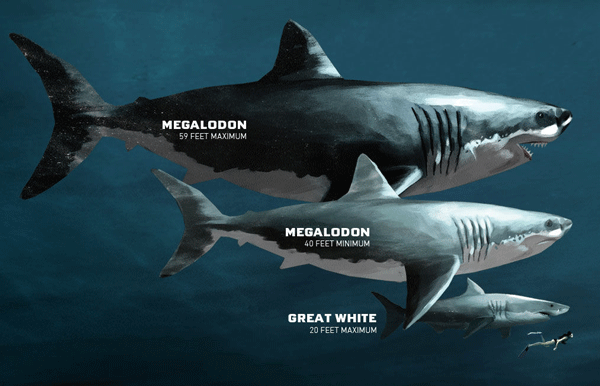
From the ancient depths of Earth’s oceans, fossils of shark teeth have surfaced to tell us thrilling stories of life long before humans walked the planet. These stories are etched into the jagged edges and curves of fossilized teeth—silent yet powerful relics of marine predators that once ruled the seas. Among the most fascinating of these ancient remnants are the teeth of two apex sharks: the megalodon and the great white. Although both species instill fear and awe in the hearts of their prey, their teeth reveal vastly different tales of evolution, adaptation, and survival.
The megalodon, an extinct giant that may have reached lengths of over 60 feet, swam Earth’s oceans millions of years ago. In comparison, the great white shark still roams our seas today, continuing its legacy as a formidable predator. But what sets a megalodon tooth apart from a great white tooth? Let’s dive into their captivating differences.
A Fossilized Legacy Beneath the Surface
When we first encounter a fossilized shark tooth, it’s hard not to be struck by its sheer power and aesthetic. A megalodon tooth is massive—some specimens measure more than 7 inches long—and it radiates a kind of prehistoric might. These teeth are often thick, triangular, and serrated, making them ideal for crushing bone and devouring enormous prey, such as whales. Holding one is like gripping a fragment of an ancient ocean colossus.
Great white shark teeth, while significantly smaller (rarely exceeding 3 inches), are marvels of modern design. Sleek, razor-sharp, and shaped like surgical blades, these teeth reflect a predator built for swift, precise strikes. Designed to slash through the softer bodies of fish and marine mammals, great white teeth speak to a very different lifestyle—one centered around speed and efficiency.
Right around the middle of any serious comparison, we notice how both types of teeth—megalodon vs great white tooth—reflect the unique hunting strategies and evolutionary paths of their respective owners. Although similar in shape at first glance, their differences reveal profound adaptations rooted in distinct evolutionary timelines.
Uncovering the Ancient Seas Through Their Teeth
The primary clue to understanding these creatures lies not just in their tooth size, but in their shape, density, and wear. Megalodon teeth have a broader base and thicker enamel. Their serrations are more worn, often dulled by years of crushing bone. Their structure suggests a diet filled with large, bony animals—perhaps early whales and enormous fish species.
White shark teeth, on the other hand, have finer, sharper serrations designed for slicing. These predators don’t need to crush; instead, they cut through their prey cleanly. Many great white teeth found today still carry their natural sheen, since they’re relatively young compared to megalodon fossils.
Both teeth offer a kind of evolutionary time capsule. The megalodon great white shark tooth comparison isn’t just a fascination—it’s a window into how different marine environments influenced predator development over millions of years.
Adding Ancient Power to Your Collection
For collectors and marine fossil enthusiasts, deciding between the two can be more than a preference—it’s a statement. If you’re drawn to the raw power and sheer size of prehistoric giants, a megalodon tooth is the ultimate prize. It’s not just a fossil; it’s a piece of a long-lost world that echoes with the roar of ancient waves and the shadows of giants.
Yet, don’t underestimate the modern marvel. A great white shark tooth embodies living evolution. It represents a predator that has survived for centuries, adapting and thriving through oceanic shifts. And its smaller size makes it more practical for displays, jewelry, and educational collections.
At Buried Treasure Fossils, we understand the passion that drives collectors to seek out these artifacts. That’s why we take pride in offering authentic, high-quality shark teeth that capture the awe and majesty of Earth’s marine history.
Beauty, Science, and Storytelling in One Tooth
Shark teeth aren’t just scientific tools—they’re also works of natural art. A megalodon tooth, with its fossilized texture, weathered surface, and sheer mass, exudes primal strength. In contrast, a white tooth gleams with refined menace—a modern blade honed for the hunt.
Beyond aesthetics, there is also emotional value. Each tooth serves as a time machine, a storybook of survival, extinction, and resilience. Owning either one allows us to connect with the Earth’s distant past, with oceans teeming with creatures that are now long gone. It’s a bond between collector and creature, between past and present.
Conclusion: A Tooth That Tells a Tale
Whether you’re a seasoned collector or just beginning your fossil journey, exploring the megalodon vs great white tooth distinction can open a portal to Earth’s most mysterious and majestic marine creatures. The megalodon great white shark tooth comparison is not just about size—it’s about understanding the oceans’ history, the art of evolution, and the silent strength of fossils.
Both teeth present something truly extraordinary: one encapsulates the epic tale of a colossal, long-extinct titan that once roamed the earth, while the other proudly persists, gracefully navigating the depths of today’s vibrant oceans. Together, they weave a narrative as vast and formidable as the seas that cradle them.
Are you eager to explore genuine shark teeth and acquire a breathtaking piece of history for your collection? Reach out to us today, and let’s embark on an unforgettable journey into the ancient ocean together.






