

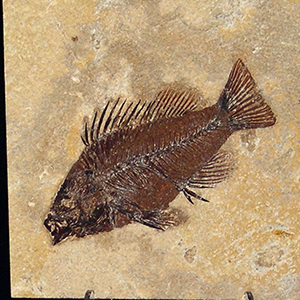
The Green River Formation in the western United States is one of the most remarkable fossil sites in the world. Dating back to the Eocene epoch, nearly fifty million years ago, this site holds a treasure trove of exquisitely preserved fish. These fossils provide more than just a glimpse of ancient aquatic life; they reveal entire ecosystems and shed light on how lakes, rivers, and surrounding environments functioned in deep time. For scientists and collectors alike, green river fish fossils are not only beautiful specimens but also windows into an ancient world.
A Window into the Eocene World
When we think of fossils, dinosaurs often come to mind, but fish fossils can be just as revealing. During the Eocene, the Earth was a warm, humid place, and much of North America looked dramatically different from what it does today. Vast lakes spread across Wyoming, Colorado, and Utah, forming the Green River system. It was here that countless fish lived and died, their remains settling into fine-grained sediments that hardened into rock over millions of years.
These lakes acted like natural archives. With limited disturbance, each layer recorded seasonal changes, water chemistry, and biological interactions. The exceptional preservation of the fossils has allowed paleontologists to study not only bones but also delicate details like scales and fin rays. This level of detail makes the Green River Formation one of the most studied fossil beds for understanding ancient freshwater ecosystems.
Why Preservation Matters
Not all fossil sites are equal. Many provide only fragments—teeth, bones, or impressions. The Green River Formation, however, is famous for producing entire skeletons, often with remarkable clarity. Layers such as the “split fish layer” and the “18-inch layer” have produced some of the most striking specimens.
The fine limestone preserved even the smallest fish, frozen in time as though they had just swum across the lake. Because of this, scientists can reconstruct not only the anatomy of species but also their behaviors. For example, mortality plates—fossil slabs containing several fish together—suggest events like mass die-offs caused by sudden changes in water conditions or algal blooms. Without such preservation, these ecological mysteries would remain unsolved.
Introducing the Ancient Cast of Characters
The diversity of species found in the Green River Formation gives us a vivid picture of the lakes’ food webs. Each species tells part of the story:
● Knightia eocaena: Perhaps the most common fossil fish, this herring-like species was small but abundant. Its schooling behavior and presence in large numbers suggest it was a key prey item for larger predators.
● Diplomystus dentatus: With its upturned jaw, this fish was adapted to feeding near the water’s surface, possibly on smaller fish like Knightia.
● Mioplosus labracoides: A perch-like predator, Mioplosus had sharp teeth and a reputation for being a voracious hunter. Its fossils sometimes show evidence of having prey in their stomachs.
● Phareodus encaustus: Larger and more robust, Phareodus was another predator that likely competed with Mioplosus for food.
● Priscacara: A spiny-finned perch relative, often found in both solitary specimens and groupings, giving clues about social behavior and ecological roles.
Together, these species reflect an intricate balance of predators and prey, much like modern lake systems.
Ancient Ecosystem Dynamics
Studying these fossils reveals more than just what fish lived in the lakes; it helps reconstruct the environment as a whole. For instance, the abundance of Knightia suggests high productivity, possibly driven by nutrient-rich waters. The presence of predators like Mioplosus and Phareodus points to a food chain capable of supporting multiple top-level consumers.
Additionally, the formation provides evidence of changing conditions. Certain layers indicate periods when oxygen levels in the lakes dropped, leading to mass die-offs. Other layers contain plant material, insects, and even bird fossils, suggesting that the lakes were part of a thriving and interconnected ecosystem. By piecing these details together, paleontologists can create models of how ancient climate shifts impacted life.
Lessons Hidden in Layers
One of the greatest secrets held by these fossils is how they record climate patterns. The Eocene was a time of global warmth, sometimes called a “greenhouse world.” The sediments in the Green River Formation reflect shifts in rainfall, evaporation, and volcanic activity. Fossils of fish respond directly to these changes, as they are sensitive indicators of water quality and temperature.
By studying growth rings in fossilized bones, scientists can even estimate seasonal changes, much like tree rings record climate data. These details not only enhance our understanding of the past but also help predict how modern ecosystems may respond to today’s warming trends.
A Link Between Science and Art
While researchers value fossils for their scientific insights, collectors often appreciate them for their beauty. Many green river fish fossils are displayed in museums and private collections worldwide. Some are mounted in frames, showing their natural elegance as if they were works of art. This intersection of science and aesthetics reminds us that fossils are both evidence of ancient life and timeless natural treasures.
Because specimens often remain all-natural with no repair, they provide an authentic connection to the past. Their preservation allows them to stand as both teaching tools and decorative pieces, bridging education and appreciation in a unique way.
The Role of Modern Preparation
Extracting fossils from the dense limestone of the Green River Formation is no easy task. Specialists use delicate tools to reveal the bones and scales without causing damage. The 18-inch layer, in particular, is extremely hard, making preparation time-consuming but rewarding. The result is a specimen with crisp details, from jaw structures to fin rays, that look nearly alive.
This careful work is essential not only for display but also for research. Without precise preparation, many of the subtler ecological clues—such as stomach contents or patterns of mortality—would remain hidden within the rock.
Fossils as Time Capsules
When we look at a slab containing multiple Knightia or a solitary Mioplosus frozen mid-motion, we are witnessing a moment that occurred tens of millions of years ago. Each fossil is a time capsule, offering a direct link to ancient ecosystems. These moments allow us to reconstruct predator-prey dynamics, seasonal die-offs, and long-term climate impacts in ways that bones from other contexts cannot.
The secrets still held by these fossils continue to inspire new research. Advances in technology, such as isotope analysis and high-resolution imaging, mean scientists are finding even more hidden details—chemical traces of ancient water chemistry, microfossils embedded in sediment, and evidence of dietary habits invisible to the naked eye.
Why These Secrets Still Matter Today
Understanding ancient ecosystems is more than a matter of curiosity. It gives us tools to recognize patterns that are still relevant. The Green River lakes thrived during a time of global warmth, much like what our planet is experiencing again. By studying how those ecosystems adapted—or collapsed—we gain insights into resilience and vulnerability in modern lakes and rivers.
In this way, fossils are more than relics. They are lessons carved into stone, offering guidance on how life responds to environmental change. From food web structures to climate resilience, green river fish fossils continue to serve as silent teachers for our present and future.
Final Thoughts
The Green River Formation is not just a fossil site; it is a record of life, death, and survival during a dynamic chapter of Earth’s history. The fish preserved there—from tiny Knightia to formidable Mioplosus—tell stories about ecosystems that thrived fifty million years ago. These fossils hold secrets of climate, biodiversity, and ecological balance that remain valuable today.
Whether studied under a microscope by scientists or admired on the walls of collectors, green river fish fossils remind us of the delicate connections that shape life. They stand as enduring evidence that even the smallest creatures can leave the biggest clues about the world that came before us.






