At Buried Treasure Fossils, we are passionate about delivering authentic, premium fossils from some of the most renowned sites around the world. Among our finest offerings is an extraordinary Megalodon tooth from Aurora, a stunning specimen unearthed from the legendary Lee Creek Mine in Aurora, North Carolina. This incredible lower jaw PRINCIPAL ANTERIOR tooth stands out as a collector’s prize, carrying with it the natural marks of an ancient predator that ruled the oceans more than 14 million years ago.
In this blog, we explore the exceptional features of this fossil, its origin in the Miocene-era Pungo River Formation, and why it remains one of the most sought-after fossil shark teeth for serious collectors and enthusiasts alike.
A Fossil from the Depths of Prehistoric Waters
The Megalodon, a prehistoric shark estimated to reach lengths of over 50 feet, once dominated the oceans. Its teeth, known for their massive size and iconic triangular shape, are among the most prized fossils in the world. Our featured Lee Creek Megalodon tooth is no exception. It comes from a layer deep within the Pungo River Formation—a marine deposit dating back 14.5 million years to the Miocene epoch.
This formation, located in the historic Lee Creek phosphate mine, has produced some of the finest fossil shark teeth ever discovered. Although the mine is now closed to collectors, its legacy lives on in exceptional specimens like this one.
Exceptional Color and Bourlette Detail
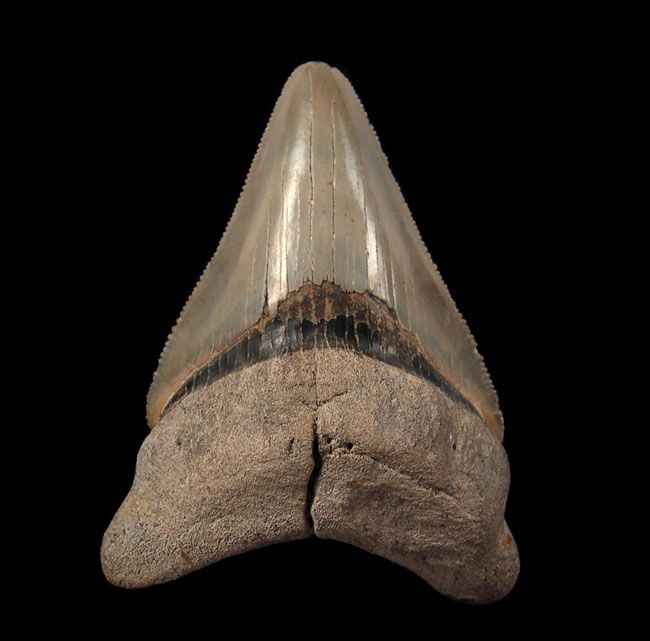
What immediately sets this tooth apart is its coloration. The crown features a warm, tan hue that draws the eye, and it's beautifully contrasted by an excellent brown bourlette—a feature that enhances the aesthetic and historical appeal of the tooth. The bourlette, nearly complete and remarkably well-preserved, is often a distinguishing marker for collectors assessing the quality of a Megalodon tooth.
This kind of coloration is rare and unique to specific geological conditions present in the Pungo River Formation. At Buried Treasure Fossils, we understand the importance of such characteristics to serious collectors, and we are proud to offer a specimen that exemplifies both beauty and authenticity.
Sharp Serrations and a Story-Telling Tip
The serrations along the blade remain sharp and well-defined, providing a glimpse into the functional strength of this formidable predator. However, what makes this tooth particularly intriguing is its tip—broken off not by time or erosion, but lost during a feeding frenzy. This kind of wear adds depth to the story this fossil tells, a real-world connection to the Megalodon’s life in prehistoric waters.
Rather than detracting from the specimen, this feature enhances its value to collectors who appreciate the dynamic history that fossils represent. It reminds us that this tooth once played an active role in a massive predator’s feeding behavior, reinforcing the authenticity of its origins.
Root Perfection and Natural Character
The root of this Lee Creek Megalodon tooth is a study in preservation. Exhibiting a clean, tan color with few hydration cracks, it remains completely intact—an increasingly rare feature in fossils of this age. Especially notable is the cool groove running along the root lobes, a naturally formed detail that enhances its aesthetic character.
At Buried Treasure Fossils, we carefully evaluate every specimen for such rare features. This tooth, untouched by restoration or repair, is guaranteed to be 100% authentic, exactly as it was found. It’s an ideal addition for those seeking fossils that have not been altered and retain their full integrity.
Why the Lee Creek Mine Still Matters
The Lee Creek Mine has long been recognized as one of the most productive fossil sites in the United States. Located in Aurora, North Carolina, this site is famous for yielding large and colorful fossil shark teeth, particularly those from the Megalodon species. While access to the mine has been restricted in recent years, fossils recovered from its heyday continue to captivate collectors worldwide.
Owning a Megalodon tooth from the Lee Creek Mine, Aurora is not just about acquiring a fossil—it's about preserving a piece of history. These teeth are increasingly scarce, and each one carries the story of a site that once provided a window into the prehistoric ocean ecosystem.
Authenticity You Can Trust
We at Buried Treasure Fossils take pride in offering fossils that are not only beautiful but genuine. The Lee Creek Megalodon tooth featured here is a fine example of our commitment to authenticity. It has not been repaired, restored, or enhanced in any way. Every crack, groove, and edge tells the true story of its ancient origin.
Collectors who purchase from us can rest assured that what they see is what they get—fossils that have stood the test of time and emerged from the earth in exceptional condition.
A Tooth for Serious Collectors
This lower jaw PRINCIPAL ANTERIOR Megalodon tooth is not a common find. It holds special appeal for those who value rare placement, superior preservation, and rich geological history. Whether you are building a world-class collection or seeking a standout specimen for display, this fossil checks all the boxes.
Its origin in the Miocene layers of the Pungo River Formation gives it a pedigree that few other teeth can match. Add to that its coloration, near-complete bourlette, sharp serrations, and unique root features, and you have a fossil that deserves a place of pride in any collection.
Conclusion: A Fossil That Connects Past and Present
Fossils like this one bridge the gap between the ancient world and our present-day curiosity. They remind us of the grandeur and mystery of life long before humans walked the earth. At Buried Treasure Fossils, we are honored to bring these stories to light—one exceptional tooth at a time.
If you're searching for a standout Megalodon tooth that offers history, beauty, and authenticity, this Lee Creek specimen is a rare and rewarding addition to your collection.
Explore more legendary finds with us at Buried Treasure Fossils. Let the prehistoric past live on through your collection—one fossil at a time.
Disclaimer: This blog is intended for informational purposes only. It does not encourage or endorse any unethical or illegal practices related to fossil collection. Please always adhere to local laws and regulations and practice environmental responsibility.