

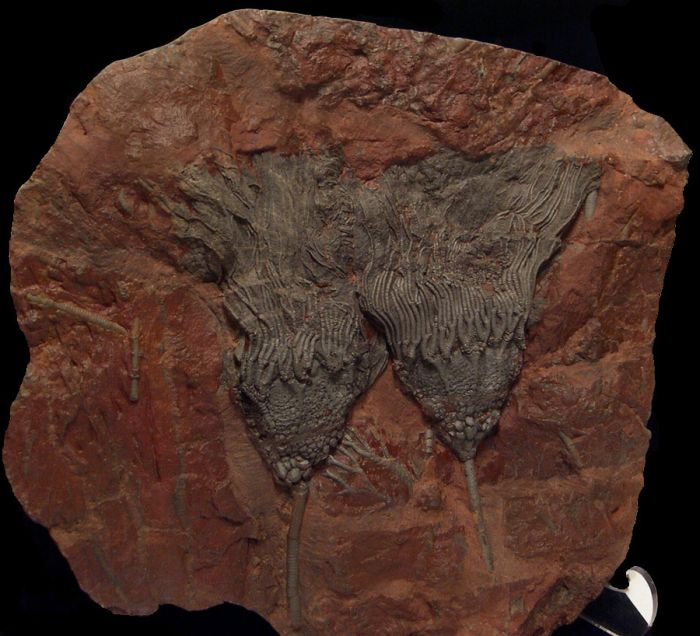
There is something extraordinary about holding a fossil that has survived for hundreds of millions of years. It connects us directly to the Earth’s distant past, a time when prehistoric oceans teemed with life forms that no longer exist today. Among these, crinoids—often called “sea lilies”—stand out for their elegance and complexity. With their delicate stems and ornate calyxes, they resemble flowers of the deep sea, yet they were marine animals related to starfish and sea urchins. Their fossilized remains tell a story of resilience and natural artistry that has captured the fascination of collectors and museums alike.
We must now highlight that Moroccan crinoid fossils for sale are among the most exceptional specimens available, both scientifically valuable and visually breathtaking.
The Story of Moroccan Crinoids
Morocco, and particularly the Alnif region near Djebel Issoumour, is renowned worldwide as a treasure trove of paleontological wonders. Over the years, this area has yielded numerous beautifully preserved crinoid fossils dating back to the Upper Silurian period, approximately 420 million years ago—the sedimentary conditions here—fine-grained limestone and unique geological processes—allowed for exquisite fossilization. Unlike many crinoid fossils that appear fragmented, Moroccan specimens often preserve intricate details: from bulbous calyxes to stem fragments that still retain their original patterning. This makes them rare and highly sought after by serious collectors.
What Defines “Museum Quality”?
The term “museum quality” is often used, but what does it truly mean when applied to fossils? In the case of Moroccan crinoid specimens, it goes far beyond simple preservation. These pieces showcase:
● Exceptional detail: Every ridge, fold, and contour of the calyx is clearly visible.
● Size and completeness: Extra-large specimens, such as Scyphocrinites elegans, often feature double or paired fossils on a single matrix, adding rarity and aesthetic appeal.
● Stability and integrity: Fossils that remain firmly embedded in their natural limestone base, making them excellent for long-term display.
● Aesthetic presentation: These fossils are not only scientifically essential but also visually striking, often resembling natural sculptures crafted by the passage of time.
For collectors and enthusiasts, such features elevate Moroccan crinoids beyond the ordinary, making them truly worthy of the museum-quality label.
Why Morocco Produces the Finest Crinoid Fossils
Morocco’s paleontological riches result from a unique combination of geology, history, and skilled preparation. Fossils here are extracted from limestone layers that formed in ancient seas, where conditions for fossilization were nearly perfect. But beyond natural processes, Moroccan fossil preparators have honed their craft over generations. Using specialized tools, they carefully expose delicate details without damaging the specimens. This combination of natural preservation and artisanal skill ensures that Moroccan crinoid fossils stand out globally.
The Beauty of Scyphocrinites elegans
One of the most celebrated species from Morocco is Scyphocrinites elegans. Known for its large, bulbous calyx and extraordinary three-dimensional preservation, this species is often described as a true masterpiece of nature. Double specimens—two crinoids preserved side by side—are especially prized. When mounted on a limestone matrix, these fossils measure impressive sizes, sometimes exceeding 9 to 13 inches. Their remarkable completeness makes them not just fossils, but statement pieces—perfect for display in homes, offices, or galleries.
Collecting Fossils as Art and Science
Acquiring a Moroccan crinoid fossil is not merely about owning a specimen; it is an invitation to embrace a captivating fragment of our planet’s ancient heritage. Each fossil acts as a remarkable bridge, uniting art and science in a harmonious dance of history. With their intricate structures and stunningly delicate forms, these fossils serve as both exquisite decorative pieces and tangible records of long-extinct marine ecosystems that once flourished on Earth’s distant past.
In the realm of museums, these ancient wonders enhance educational exhibits, captivating visitors with their stories and the mysteries of the prehistoric world. For private collectors, Moroccan crinoid fossils symbolize both a unique investment and a source of ongoing inspiration. Their breathtaking beauty rivals that of finely crafted sculptures, yet their actual value lies equally in their role as essential scientific data, offering insights into the complex tapestry of life that existed millions of years ago. Each fossil is a testament to the enduring legacy of nature, waiting to inspire awe and curiosity in all who encounter it.
Why Collectors Value Moroccan Crinoids
Collectors worldwide pursue Moroccan fossils for several compelling reasons:
1. Historical significance: At 420 million years old, they represent an era that predates the dinosaurs.
2. Rarity: The completeness and detail found in Moroccan crinoids are unmatched.
3. Display potential: Their aesthetic appeal makes them ideal centerpieces.
4. Investment value: Museum-quality fossils tend to appreciate over time.
Together, these qualities explain why Moroccan crinoid fossils have become cornerstone pieces in both personal and institutional collections.
Buried Treasure Fossils: Bringing Ancient Wonders to You
At Buried Treasure Fossils, we understand the allure of owning something both ancient and awe-inspiring. Our collection features museum-quality Moroccan crinoid fossils, carefully selected for their scientific significance and visual appeal. By offering authentic, well-preserved specimens, we ensure that collectors—whether beginners or seasoned enthusiasts—gain access to fossils that inspire curiosity and admiration. When you explore our offerings, you’re not just purchasing a fossil; you’re acquiring a tangible link to Earth’s ancient past.
Conclusion: Owning Timeless Masterpieces
To hold a Moroccan crinoid fossil is to have a fragment of an ancient ocean, preserved in stone for over 400 million years. Their rarity, beauty, and scientific value make them treasures beyond measure. These crinoid fossils for sale are not only decorative artifacts but also timeless educational pieces that enrich any collection. Whether displayed in a museum, gallery, or private study, they embody the very definition of “museum quality.”
If you are ready to explore these natural wonders, contact us today and discover how you can add a piece of prehistoric elegance to your own collection.






