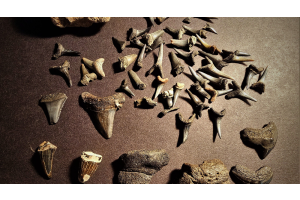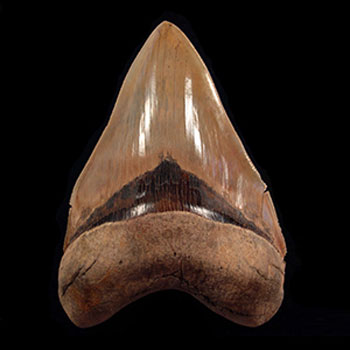
At Buried Treasure Fossils, we specialize in connecting fossil enthusiasts, educators, and collectors with some of the most awe-inspiring remnants of prehistoric life. Among our most prized and sought-after items is the Megalodon shark tooth—a fossilized remnant of a colossal predator that once ruled Earth’s oceans. This tooth, often larger than a human hand, offers a tangible link to a creature that lived millions of years ago and stood at the pinnacle of the marine food chain.
The Megalodon was not just large—it was an oceanic titan. Estimated to have reached up to 60 feet in length and weighing between 50 and 75 tons, it remains one of the largest and most powerful predators in Earth’s history. While the Megalodon is long extinct, the legacy of this prehistoric giant lives on in the form of its fossilized teeth, which are found in sedimentary deposits around the globe.
Let’s explore what made the Megalodon so formidable, why its teeth are such valuable collector’s items, and how you can own a piece of this extraordinary legacy through Buried Treasure Fossils.
What Made the Megalodon a Prehistoric Giant?
The name "Megalodon" means “large tooth,” and rightfully so. Some teeth exceed 7 inches in length, dwarfing those of modern sharks. But these teeth were only part of the story. The Megalodon’s jaws were estimated to be over 9 feet wide, capable of exerting a bite force of up to 40,000 pounds per square inch—strong enough to crush the skull of a whale. Its massive body and power-packed bite allowed it to prey on whales, giant sea turtles, and large fish, making it the apex predator of its time.
Megalodon sharks lived during the Miocene and Pliocene epochs, roughly 3.6 to 20 million years ago. Fossil evidence shows that they thrived in warm coastal waters across the world. Their bones, primarily cartilage, did not fossilize well, but their durable teeth have stood the test of time, giving us most of what we know today about this marine behemoth.
Why So Many Megalodon Teeth Exist
Despite its extinction millions of years ago, the Megalodon continues to make waves in the fossil world. One reason is that sharks are unique among vertebrates in their dental regeneration. The Megalodon, like all sharks, constantly shed teeth throughout its lifetime—losing thousands of them over a lifespan that may have ranged from 25 to 40 years. These teeth would sink to the ocean floor and, over time, fossilize under layers of sediment and minerals.
This process means that millions of Megalodon teeth may still exist today, buried beneath ancient seabeds that are now part of our coastal landscapes. These teeth can range in color from glossy black to tan, brown, gray, and even blue, depending on the minerals absorbed during fossilization.
Where Can Megalodon Teeth Be Found?
Thanks to its global dominance, Megalodon teeth have been found on every continent except Antarctica. Some of the most fruitful discovery sites are in the United States—particularly along the East Coast and in parts of California. Areas like North Carolina, South Carolina, Georgia, and Florida have proven to be rich with prehistoric marine deposits that yield well-preserved fossil teeth.
One of the most iconic locations for fossil discoveries is Shark Tooth Hill near Bakersfield, California. This site is renowned for its abundance of fossilized shark teeth, including those from the Megalodon and other ancient species. The fossil-rich soil of this site provides a snapshot of ancient marine ecosystems that thrived millions of years ago.
Interestingly, Megalodon teeth are rarely found close to today’s shorelines. Due to their massive size, these sharks likely favored deeper waters where they could more easily maneuver and hunt larger prey.
Recognizing a Megalodon Shark Tooth
Megalodon teeth are instantly recognizable to anyone familiar with fossils. They are large, heart-shaped, and possess finely serrated edges—perfect for slicing through flesh and bone. These serrations were key to the Megalodon’s predatory abilities, allowing it to deliver devastating bites to its prey.
A Megalodon shark tooth that exceeds 6 inches is considered rare, and those reaching 7 inches are especially prized. The largest ever discovered measures 7.48 inches, setting a benchmark for fossil collectors. At Buried Treasure Fossils, we offer authentic Megalodon teeth in a variety of sizes, including several impressive specimens over 6 inches in length.
The condition, size, coloration, and serration of a Megalodon tooth all influence its value as a fossil. Whether it has feeding damage, mineral staining, or a unique color, each tooth carries its own story of survival and fossilization.
Fascinating Facts About Megalodon
● Massive Appetite: The Megalodon likely consumed over a ton of food daily. Fossil records show evidence of Megalodon teeth embedded in the bones of ancient whales, suggesting a preference for large, fatty prey.
● Global Distribution: Teeth have been found in places as diverse as Morocco, Chile, the United States, and Indonesia—proof of the shark's global reign.
● Teeth Replacement Rate: It’s estimated that Megalodon replaced its teeth every one to two weeks, potentially producing more than 20,000 teeth in a lifetime.
● Misconceptions About Survival: While some myths claim the Megalodon still roams the deep ocean, no evidence supports this. All signs point to extinction occurring over 3 million years ago—possibly due to changes in sea temperatures and declining prey populations.
These facts only deepen the fascination with this ancient predator and help explain the continued demand for its fossilized remains.
Why Collectors Value Megalodon Teeth
There’s something awe-inspiring about holding a tooth that once belonged to the largest predatory shark in history. For fossil collectors, scientists, and hobbyists alike, owning a Megalodon shark tooth is a way to connect with Earth's prehistoric past.
These teeth are not just scientific artifacts—they are artistic marvels. With their massive size, unique coloration, and natural symmetry, they make stunning display pieces. At Buried Treasure Fossils, we understand the excitement and reverence that comes with each of these specimens. That’s why our collection features carefully selected, 100% authentic Megalodon teeth from trusted sources.
What Makes Buried Treasure Fossils Unique?
When it comes to prehistoric marine fossils, we are committed to offering only the best. At Buried Treasure Fossils, our selection of Megalodon teeth is one of the most comprehensive and carefully curated you’ll find. We offer pieces that range from small and beautifully preserved to exceptionally large and display-worthy.
Each fossil is handpicked for its condition, authenticity, and visual appeal. Whether you're just beginning your fossil collection or looking to add a rare showpiece, you’ll find something remarkable in our inventory.
We don’t just sell fossils—we share the story of our planet’s deep past through objects that have survived time itself.
Bring a Piece of Prehistory Into Your World
The Megalodon may have disappeared from our oceans, but its story lives on through the teeth it left behind. These fossilized treasures offer an exciting glimpse into an age when giant predators roamed beneath the waves, shaping marine ecosystems as we know them today.
At Buried Treasure Fossils, we invite you to explore our collection and discover a fossil that speaks to your sense of wonder, adventure, and curiosity. Whether you're an experienced collector or simply captivated by the mysteries of the past, a Megalodon tooth is a priceless addition to any collection.
Browse our collection of authentic Megalodon teeth and experience the power of prehistoric oceans—only at Buried Treasure Fossils.
Disclaimer: This blog is intended for informational purposes only. We do not support or promote any form of unauthorized fossil excavation. While the authenticity of each specimen is verified, natural wear, restoration, or repair may be present due to the fossil’s age and geological history.