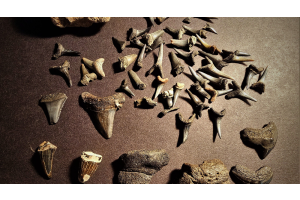
The waves crash against the shore with a rhythm older than memory, each tide pulling back a little more of Earth’s story. Fossils scattered along sandy stretches remind us that oceans once held creatures so vast and awe-inspiring that they still capture our imagination today. Among those treasures, seekers often whisper about the Venice Beach megalodon teeth—fossilized remains of a predator that reigned millions of years ago. These relics, small enough to hold yet immense in history, are more than souvenirs; they are fragments of a world lost beneath the depths of time.
And while it may feel like the ocean reveals its secrets slowly, the patience of a collector or explorer is always rewarded. Let’s step into this story of time, tide, and teeth.
The giant behind the fossil
The megalodon, whose name means “big tooth,” once ruled the seas. Estimated to grow over 50 feet long, this shark was an apex hunter unlike any other. Its teeth were thick, serrated, and built for crushing bone. Each one tells us how dominant this creature was, hinting at an ocean alive with giants.
Today, holding a single fossilized tooth gives us a glimpse into that raw strength. The size and detail etched into the enamel carry whispers of epic hunts and the endless chase across prehistoric oceans.
Fossils as time capsules
Fossils are more than stones; they’re storytellers. When you hold one, you’re connecting with a creature that swam Earth’s waters millions of years ago. The minerals that replaced the tooth’s original structure preserved every ridge and edge, turning bone into stone and memory into history.
Collectors often marvel at the range of colors, from smoky grays to warm tans. Each hue reflects the environment in which the fossil rested, shaped by minerals absorbed from sand, clay, or silt. It’s a process both delicate and relentless, spanning countless ages.
Why Venice Beach calls to fossil hunters
Florida’s Venice Beach is often referred to as the shark tooth capital of the world. Along its shores, tides wash up treasures hidden in the seabed. For those with keen eyes and patience, a walk along the surf can turn into a journey back to prehistoric times.
The Gulf of Mexico, rich in sediments, has preserved countless fossils. Over time, currents carry them to shore, creating opportunities for curious explorers to discover these fragments of history with their own hands.
From shorelines to collections
Finding a fossilized tooth in the sand feels like striking gold. The moment often sparks curiosity that grows into a lifelong fascination. Some begin by gathering small pieces, only later seeking rare or larger fossils for their collections.
Collectors value not only the size of the fossil but also its condition, color, and history. A tooth from a massive megalodon, for example, represents more than an artifact—it embodies the very spirit of the ocean’s past.
Venice Beach megalodon teeth are prized discoveries
Among fossil hunters, the allure of Venice Beach megalodon teeth is undeniable. Each tooth discovered carries a unique blend of science and wonder. For some, it’s a personal connection to the mysteries of evolution. For others, it’s the excitement of holding something that predates humanity by millions of years.
This fascination fuels a thriving community of collectors who admire these fossils as both natural works of art and pieces of prehistoric history.
What makes each fossil unique
Every fossilized tooth is a one-of-a-kind piece of history. The sharp serrations may still be visible, or they may have been worn smooth by time. The color, shaped by minerals in the soil or seabed, can vary dramatically, making each specimen visually distinct.
Some teeth reveal precise details of their structure, while others carry marks of erosion that remind us of their long journey through oceans and sands. Together, these qualities add depth to the story each fossil tells.
Collecting with curiosity and respect
As interest in fossil collecting grows, so does the importance of responsible exploration. Ethical collectors respect the environment, taking care not to disturb fragile ecosystems while searching for fossils. Many also seek out fossils through trusted sources, ensuring authenticity and proper preservation.
This balance of curiosity and responsibility enables both seasoned collectors and newcomers to appreciate the thrill of discovery while respecting the ancient history they hold.
Bringing history home
For many, adding a megalodon tooth to a collection is more than acquiring an object. It’s a way of connecting with the ocean’s deep past. Displayed on a shelf, it becomes a conversation starter, sparking wonder in anyone who sees it.
Whether large or small, polished or rugged, each fossil invites us to imagine the life of the giant it once belonged to, bridging the gap between present and prehistoric time.
Venice Beach megalodon teeth and the story they tell today
The fascination with Venice Beach megalodon teeth persists because they represent something rare: a tangible piece of the past that has survived in our hands. Their presence reminds us of how much remains hidden beneath the waves, waiting to be discovered.
As you walk the shoreline, consider how each fossil carries not only history but also a story of endurance. Time, tide, and nature have all shaped these treasures into something enduring and meaningful.
Conclusion
The ocean has always held mysteries, and among them, the fossilized teeth of the megalodon are among the most captivating. Collecting them allows us to bridge the gap between ancient seas and modern curiosity. From the thrill of spotting one in the sand to the careful appreciation of a collector’s display, these fossils remind us of our connection to Earth’s long story.
When you’re ready to experience that connection for yourself, take a step toward exploring collections and adding a piece of history to your life. Fossils are waiting to be discovered—and they may carry more meaning than you ever expected.
Start your journey today and bring the ocean’s history into your hands.