

The ocean holds a memory far older than human history, and some of its secrets lie hidden in the fossilized remains of ancient predators. Among these, one relic inspires both awe and curiosity—the tooth of the mighty megalodon. This prehistoric shark once reigned supreme, its bite leaving behind fossils that continue to spark wonder and awe. For anyone asking how big the megalodon tooth was, the answer opens a window into a creature that dwarfed the sharks we know today.
Before diving into details, it’s worth noting that these teeth are not simply remnants of a bygone predator. They serve as a record of survival, evolution, and scale, telling us more than bones ever could about the ocean’s most extraordinary hunter.
The fossil as a storyteller
Fossilized teeth are more than hardened remains—they are time capsules. Unlike bones, which often decompose or scatter, shark teeth have a higher chance of preservation. Sharks continuously shed teeth throughout their lives, and megalodons were no different. Each lost tooth that fossilized became a durable marker of the species’ presence.
These teeth reveal size, hunting habits, and even the structure of the jaw. From the ridges of enamel to the broad triangular shape, each feature tells scientists something about how this shark once fed and thrived.
Measuring a predator through its teeth
Unlike dinosaurs, where skeletons give clear clues about size, sharks leave few complete remains. Their bodies, made largely of cartilage, vanish with time. What endures are the teeth. By studying these, scientists piece together the puzzle of the megalodon’s size and strength.
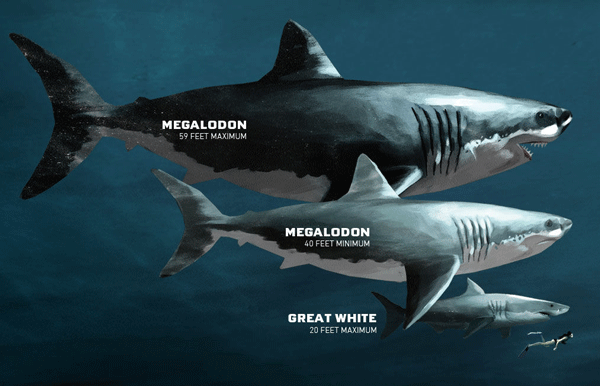
A tooth measuring more than six inches is a rarity, yet these have been uncovered around the world. The larger the tooth, the larger the shark it belonged to. Using scaling formulas, researchers estimate that megalodons could grow up to sixty feet in length, rivaling the size of modern whales.
Compared to today’s great white shark
One way to understand the size of megalodon teeth is to compare them to those of modern sharks. The great white, often feared today as the apex predator of the sea, has teeth that average two to three inches in length. In comparison, a megalodon’s tooth could be double or even triple that size.
This difference in size is not merely numerical; it is also substantial. It translates into hunting ability, diet, and dominance. While great whites are impressive predators capable of taking down large seals, megalodons likely hunted whales, dolphins, and other massive sea creatures. The tooth’s structure—a thick base and serrated edges—was designed to crush bone and slice flesh with unmatched efficiency.
Fossil hunting and discovery sites
Teeth from these ancient sharks have been found across the globe, from the coastlines of North America to South America, Europe, Africa, and Asia. These widespread discoveries highlight the vast range of the megalodon.
Collectors and paleontologists alike prize these fossils. Some are found embedded in rock, while others are dredged from riverbeds or coastal cliffs. Each discovery adds another piece to the puzzle of the shark’s existence.
The symbolic weight of a fossilized tooth
Holding a megalodon tooth in hand is like holding a fragment of the ocean’s memory. Its triangular shape and enamel sheen remind us of the predator that once ruled the seas millions of years ago. These teeth are not only scientific artifacts but also symbols of nature’s scale.
For many, they inspire reflection on the forces of survival and extinction. Why did such a giant vanish? Climate changes, shifting food chains, and new predators likely all played roles. The fossil, then, represents both dominance and fragility in the natural order.
From awe to curiosity in modern culture
Beyond the scientific world, megalodon teeth hold a place in culture and imagination. They are displayed in museums, private collections, and even worn as jewelry pieces, often shaped into pendants or keepsakes. Their popularity comes from the sense of connection they provide—a tangible link to a creature that once dwarfed every predator of its time.
This fascination also explains the recurring myths about megalodons still existing in the hidden depths of the ocean. While no evidence supports such survival, the tooth continues to fuel stories, films, and speculative theories.
How teeth reveal lifestyle and diet
Examining the wear and structure of megalodon teeth helps scientists understand what this shark ate and how it hunted. Serrated edges indicate slicing ability, while the wide base suggests pressure strong enough to break bones. Some teeth even show microscopic wear patterns that suggest repeated contact with hard surfaces, likely bones of large prey.
These details reveal a predator specialized in hunting whales and other marine mammals, reinforcing the image of a shark that truly shaped marine ecosystems.
A middle ground between mystery and science
For centuries, fossilized shark teeth were mistaken for dragon tongues or mystical stones. It wasn’t until modern science intervened that their true origins became clear. This shift in understanding demonstrates how human perception evolves in tandem with new evidence.
The megalodon tooth bridges the gap between mystery and science, between myth and fact. It transforms from an object of wonder to a measurable piece of natural history, reminding us how far knowledge can progress with study and curiosity.
Returning to the central question
Many still wonder: how big was the megalodon tooth compared to anything we know today? The answer is both straightforward and profound. The largest specimens measure over seven inches, with an average size of three to five inches. That scale makes them larger than the palm of an adult hand and significantly bigger than the teeth of today’s sharks.
In the middle of the fossil record lies the truth of an ocean that once belonged to giants. By comparing these dimensions, we see a predator that dwarfs modern apex species.
Lessons from the fossil record
The fascination with megalodon teeth teaches more than size comparison. It highlights adaptation, survival, and the eventual decline of even the greatest predators. No species, however dominant, is free from the forces of change. Climate shifts, evolving prey, and competition from emerging species contributed to the decline and eventual disappearance of this shark.
The tooth reminds us that nature’s balance is ever-changing. What once seemed invincible can become a memory preserved in stone.
Conclusion: holding history in your hands
To hold a megalodon tooth is to feel the weight of history, evolution, and imagination. These fossils are more than relics; they are reminders of the ocean’s vast narrative. For anyone who has ever wondered how big the megalodon tooth was, the fossil’s sheer size offers an unforgettable answer.
If you’ve ever wanted to explore history tangibly, fossil collecting provides a chance to do so. Each tooth carries its own story, waiting to be discovered. Take a step into the past, let curiosity guide you, and embrace the thrill of holding a piece of prehistory.
Start your journey today and discover the stories hidden beneath the surface of time.






