

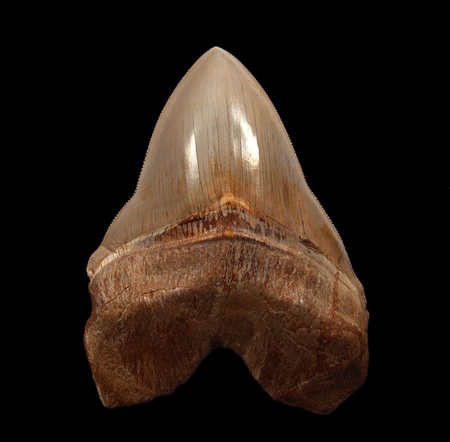
Among the fossil world’s most coveted treasures, the teeth of the Megalodon stand as a gleaming testament to prehistoric grandeur. They’re not just remnants of an ancient predator; they are milestones in the story of human fascination with Earth’s deep history. For collectors, one extraordinary specimen, a single, record-breaking Megalodon tooth, did more than fetch a staggering price. It ignited a feverish hunt, transformed market values, and elevated these fossilized giants from mere curiosities to crown jewels of paleontology.
This isn’t just about a shark. It’s about a creature so massive that its jaws could crush a car, a predator that ruled the oceans for millions of years, and the tangible proof of its existence,our most expensive Megalodon tooth fossil, that continues to inspire awe and drive collectors into bidding wars.
The Apex Predator of the Ancient Seas
Before diving into the remarkable tale of the most expensive Megalodon tooth ever sold, it’s worth understanding just what kind of creature left these relics behind. The Megalodon (Otodus megalodon) was no ordinary shark; it was the ultimate apex predator of the Miocene and Pliocene epochs. Stretching up to an estimated 60 feet in length, it dominated global oceans for roughly 20 million years before vanishing around 3.6 million years ago.
Its teeth, often the only parts that survive the ravages of time, are larger than any known shark species, sometimes exceeding seven inches from tip to root. This sheer scale alone sets them apart, but when you combine size with condition, color, and origin, you have the makings of a fossil-collecting legend.
The Tooth That Redefined Value
The turning point in Megalodon collecting came when an exceptionally rare specimen shattered records. This tooth, surpassing seven inches, wasn’t just big, it was perfect. Serrations sharp as the day they were formed, flawless enamel, an intact root, and a coloration so unusual it seemed almost painted by nature. The hammer came down at auction, and the price soared into uncharted territory.
That sale didn’t just break a record; it set a new standard. Overnight, collectors and dealers recalibrated their expectations. The Megalodon tooth market, once accessible to casual enthusiasts, began its climb into the realm of high-end collectibles, drawing comparisons to fine art and rare gemstones.
Why Size Commands the Spotlight
When it comes to Megalodon teeth, size is the first, and often most decisive, factor in value. While teeth measuring three to four inches are relatively common and still fascinating, they pale in comparison to specimens exceeding six inches. Anything over seven inches is not just rare, it’s historic.
Collectors understand the mathematics of rarity: the bigger the tooth, the fewer there are, and the more collectors want them. A seven-inch tooth from a Megalodon is a tangible link to a predator that was truly at the extreme end of nature’s blueprint. It’s not just a fossil, it’s a conversation stopper, a centerpiece, and in some cases, a life-long quest fulfilled.
Condition: The Silent Price Booster
Even the largest tooth won’t command top dollar if time has worn it down. Condition is king in fossil valuation, and for the most expensive Megalodon tooth, that means:
Serrations: Crisp, intact cutting edges are a rarity after millions of years.
Enamel: Smooth, glossy enamel without chips or flaking signals superior preservation.
Root: A complete, undamaged root significantly enhances value.
A pristine specimen is like finding a centuries-old manuscript without a single tear or stain, breathtakingly improbable, and instantly more valuable.
Coloration: Nature’s Artistic Signature
While many Megalodon teeth present in shades of black, gray, or brown, some emerge with colors so rare they seem otherworldly. Blues, reds, and the elusive golden tans are the natural byproducts of unique mineral compositions in the sediment where the teeth fossilized.
Collectors will pay a premium for such colors, and when rarity in hue combines with exceptional size and condition, the price can skyrocket. A golden-tan, seven-inch Megalodon tooth in mint condition is the kind of piece that could start a bidding war among even the most seasoned fossil hunters.
Location: Where the Ocean’s Secrets Sleep
The geological origin of a Megalodon tooth adds another layer to its value. Certain regions—like South Carolina’s rivers, the coastal cliffs of Peru, or the deep waters off North Carolina—are renowned for producing teeth with distinctive qualities. The sediment, mineral content, and preservation conditions of these locations yield teeth that can be sharper, stronger, or more vibrantly colored than those found elsewhere.
Collectors often seek out pieces from famous fossil beds, knowing that provenance is as important in paleontology as it is in fine wine or art.
From Ocean Floor to Display Case: The Journey of a Treasure
Every Megalodon tooth that ends up in a collector’s hands has already traveled an extraordinary journey. After falling from the shark’s jaw, the tooth settled into sediment, often in deep or turbulent waters. Over millions of years, minerals slowly replaced the organic material, transforming it into a fossil.
Some remained hidden in inaccessible places, while others were eventually uncovered by erosion, dredging, or careful excavation. The rarity of perfect specimens is underscored by how easily teeth can be damaged by natural forces before they are ever found.
Caring for a Megalodon Tooth
For those lucky enough to own a prized Megalodon tooth, proper care is essential to preserve its beauty and value:
Avoid direct sunlight to prevent color fading.
Maintain stable humidity to prevent cracking.
Handle with care—even a fossil millions of years old can be damaged by a simple drop.
Display safely in protective cases to guard against dust, oils, and accidental impact.
Well-preserved teeth not only retain their monetary worth but also continue to inspire awe for generations.
Conclusion: A Legacy Written in Stone
The story of our legendary most expensive Megalodon tooth fossil that broke all records is more than a tale of dollars and size. It’s about how a single fossil can shift perceptions, inspire new levels of dedication, and become a benchmark for an entire field of collecting. Today, that tooth remains a touchstone for enthusiasts and a reminder of the extraordinary creatures that once swam our oceans.
In the end, the value of our Megalodon tooth fossil is measured not just by its price tag, but by the wonder it inspires. Whether it’s a modest four-inch specimen or a seven-inch titan with perfect serrations, each tooth is a frozen moment from a time when sharks the size of buses hunted the seas.
For collectors, the chase continues, and somewhere out there, buried beneath layers of sediment, our next record-breaking tooth collection waits to be found.






