

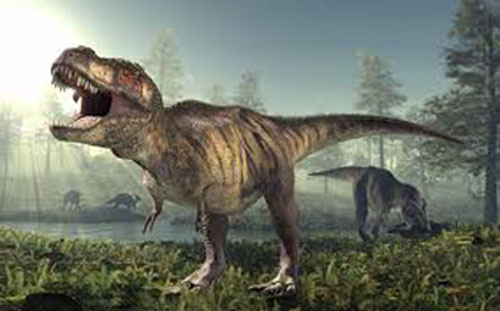
There are fossils, and then there are treasures that command silence when unveiled. Few relics ignite the imagination quite like the remains of Tyrannosaurus rex, the infamous apex predator of the Late Cretaceous. More than just bones locked in ancient rock, the teeth and skeletal fragments of T. rex embody an extraordinary mix of natural history, raw power, and collector prestige. To own one is not simply to possess a fossil, it is to cradle a fragment of prehistory’s most legendary hunter.
The T. rex was no ordinary carnivore. Stretching over 40 feet long, standing 13 feet high at the hips, and weighing nearly 7 tons, this predator reigned supreme at the end of the Age of Dinosaurs. Its most iconic feature? Teeth the size of daggers, sometimes reaching 12 inches in length, including the root. These “banana teeth,” as paleontologist Bob Bakker famously described them, were not just tools for eating. They were weapons engineered for destruction, powered by a bite force exceeding 10,000 pounds—the greatest bite ever measured in a land animal.
For fossil collectors, T. rex teeth and bones represent the crown jewels of prehistoric relics. This guide explores what makes them so desirable, how to evaluate their quality, and why authenticity and provenance are most important.
Why T. rex Fossils Are Collector’s Gold
Rarity Beyond Compare
Unlike smaller Cretaceous creatures, T. rex remains are exceptionally rare. Most discoveries originate from the Hell Creek Formation in Montana and the Dakotas, which dates back between 68 and 66 million years ago. These deposits yield teeth, bone fragments, and occasionally claws, but complete skeletons remain vanishingly scarce. Every tooth or bone fragment carries a story of survival against time, erosion, and chance.
Power Encased in Fossil Form
A T. rex tooth isn’t just an ancient relic, it’s a tangible echo of power. Its round, reinforced shape was built to withstand shattering forces as the predator crushed bone, a reminder of why T. Rex ruled unchallenged. Collectors prize this unique morphology, often preferring teeth with visible serrations, enamel sheen, and intact root structures.
Historical and Cultural Value
Owning a T. rex specimen is not just about paleontology, it’s about connection. These fossils sit at the crossroads of science, history, and culture, inspiring awe in museums and private collections alike. From Hollywood’s Jurassic Park to natural history exhibits, the fascination never fades.
Understanding T. rex Teeth: What Collectors Should Know
Shapes and Sizes
T. rex teeth are often described as “banana-shaped,” thick and conical, unlike the blade-like teeth of other theropods. Their rounded cross-section prevented breakage during bone-crushing bites. Sizes vary, but large teeth can exceed 4 inches in crown length and up to 12 inches including the root.
Serrations and Surface Features
Collectors value teeth with visible serrations (denticles), which demonstrate the cutting power of the tooth. Enamel preservation adds even more allure, particularly when it retains its natural dark, glossy sheen.
Root vs. Crown
A complete tooth, with both crown and root intact, is exceedingly rare and commands a premium. More commonly, collectors find crowns alone, which still hold immense value due to their beauty and scientific significance.
T. rex Bones: More Than Just Fragments
While teeth are often the star attraction, T. rex bones also hold tremendous collector appeal. From vertebrae and rib segments to claw phalanges, each piece serves as a puzzle fragment of a giant.
Vertebrae: Showcasing the size and structure of this towering predator.
Ribs: Evidence of the T. rex’s immense chest cavity, necessary for powerful lungs and muscle attachments.
Claws: Rare finds that demonstrate the raptor-like heritage of this species.
Even small fragments have value, especially when verified as authentic T. rex. They represent tangible connections to a creature whose fossilized remains are treasured worldwide.
Evaluating Quality: What to Look For
Not all fossils are equal, and discerning collectors know what separates a high-grade specimen from an ordinary fragment. Here are the key considerations:
Condition – Teeth with minimal restoration, sharp serrations, and strong enamel command the highest interest.
Size – Larger specimens, particularly those exceeding 3 inches in crown length, become increasingly rare and more valuable.
Completeness – Full teeth with root and crown are collector gems. Bones with identifiable features (such as joints) also rise in appeal.
Color and Patina – Natural coloration, resulting from millions of years of mineralization, adds uniqueness. Common hues include rich browns, blacks, and deep, earthy tones.
Provenance – Verified origin, such as Hell Creek Formation, and legal collection status are essential.
Legal and Ethical Collecting
Due to their rarity and high demand, T. rex teeth fossils are often subject to strict collection rules. The most reputable specimens come from private lands in the northwestern U.S., where landowners grant permission for excavation. These fossils are sold legally and often accompanied by certificates of authenticity.
For collectors, it is vital to prioritize legality and ethics. Specimens collected from public lands without permits are considered illegal. Working with trusted dealers ensures authenticity and protects the reputation of the collection.
Why Authenticity Matters
The market for dinosaur fossils, particularly T. rex, is highly competitive. Unfortunately, that also means fakes and composites exist. Collectors must verify:
Documentation: Certificates of authenticity and clear excavation records.
Expert Evaluation: Many specimens are verified by paleontologists or specialists in fossil identification.
Reputable Sources: Trusted dealers with long-standing reputations reduce risks of counterfeit or misidentified fossils.
Authenticity isn’t just about financial value, it’s about preserving scientific integrity and ensuring collectors own a genuine piece of natural history.
Displaying and Preserving Your T. rex Fossils
Once in hand, proper care and display elevate the fossil from artifact to centerpiece.
Storage: Maintaining controlled humidity and temperature prevents damage.
Display Cases: Acrylic or glass cases highlight the specimen while protecting it from dust and handling.
Lighting: Soft, indirect lighting enhances natural coloration without risking heat damage.
Documentation: Keeping provenance papers with the fossil maintains collector value.
The Prestige of Owning a T. rex Fossil
Beyond their scientific and historic importance, T. rex fossils carry undeniable prestige. For many collectors, adding one to their collection is the ultimate milestone, a fossil that instantly elevates the status of any display.
Imagine holding a tooth that once clamped down with the most powerful bite in Earth’s history. Or running your fingers across bone that supported the frame of a predator larger than a bus. That connection is both humbling and exhilarating.
Final Thoughts: A Collector’s Crown Jewel
Collecting fossils is about far more than ownership, it is about storytelling. A T. rex tooth for sale or bone isn’t merely an object; it is a physical chapter of Earth’s deep past, a relic of dominance and survival etched in stone. From the dense, serrated teeth to the immense skeletal fragments, each specimen brings us closer to understanding the power of this prehistoric giant.
For collectors, the allure lies in rarity, authenticity, and the prestige of cradling a fossil that shaped our vision of dinosaurs forever. Owning our T. rex fossil is owning a legend, a true crown jewel for any serious collection.






