

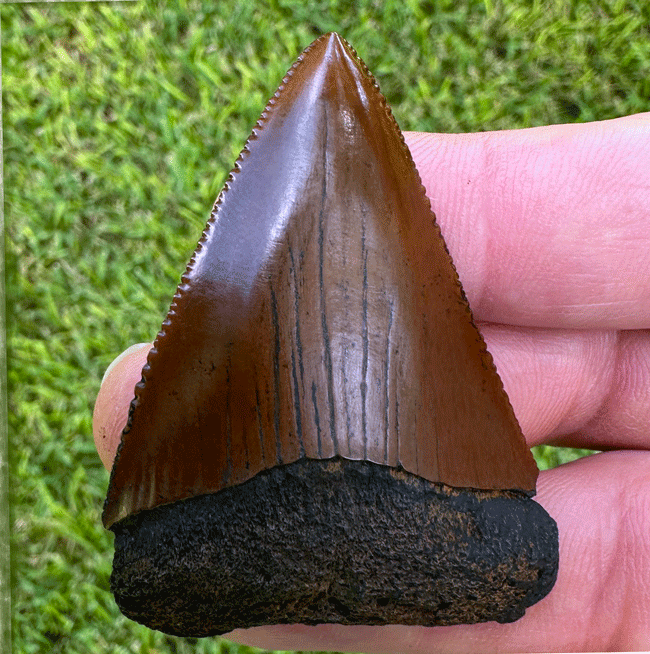
Few fossil finds attract attention quite like a megalodon tooth. Its size, shape, and connection to one of the largest sharks to ever live make it instantly recognizable, even to casual collectors. But when that fossil comes from North Carolina, its appeal often goes even further. A Megalodon Tooth Found in North Carolina is especially valued for its strong preservation, respected fossil localities, and the rare colors that collectors actively look for. North Carolina has built a long-standing reputation in the fossil world for producing exceptional shark teeth. For buyers and collectors, that reputation matters. A Megalodon Tooth from North Carolina is not just impressive because it belonged to a prehistoric giant.
Why North Carolina Specimens Stand Out
Not all megalodon teeth are equal in collector value. Some are common in appearance, while others stand out immediately because of their color, condition, or origin. North Carolina teeth are often sought after because they offer a strong combination of all three. The state is known for fossil-bearing formations and river systems that have produced highly collectible shark teeth for years. Teeth from these areas often show rich natural coloration, including darker tones and, in rarer cases, the copper-red shades that have become especially associated with parts of North Carolina. That kind of visual distinction gives these fossils a stronger display appeal and helps separate them from more ordinary specimens on the market. This is one reason a Megalodon Tooth Found in North Carolina tends to attract serious attention.
Preservation Plays a Major Role
Condition is one of the biggest factors in fossil value. Collectors typically look for complete teeth with strong enamel, a solid root, visible serrations, and a balanced overall shape. Even a large tooth can lose appeal if it has heavy damage, poor structure, or weak surface detail. North Carolina specimens are often appreciated because many examples show excellent preservation. When a tooth retains its natural structure well and also has attractive color, it becomes much more desirable as both a collectible and a display piece. A Megalodon Tooth from North Carolina can appeal to experienced buyers for exactly this reason. It often combines visual impact with the kind of quality collectors want to see in an authentic fossil.
Locality Adds Collector Confidence
In fossil collecting, provenance matters. Buyers place more trust in specimens that are tied to known fossil regions rather than pieces with little or no background. North Carolina has that advantage. Its fossil record, especially from coastal and river localities, gives these teeth a clearer geological identity. That added context makes a difference. A tooth with a known origin feels more meaningful, and it often holds stronger long-term interest for collectors. North Carolina material is already respected within the fossil market, so buyers are naturally more drawn to teeth that can be connected to that locality. When someone purchases a Megalodon Tooth Found in North Carolina, they are often buying into both the fossil itself and the reputation of the region it came from.
Rarity Increases Demand
Scarcity is another reason these fossils hold value. Quality megalodon teeth are not easy to recover in large numbers, and rarer color varieties are even harder to come by. That limited supply helps maintain collector demand, especially for pieces that combine good size, strong condition, and an identifiable North Carolina origin. This is where the market becomes more selective. Collectors do not simply want any large shark tooth. They want one with visual appeal, authenticity, and a source that adds credibility. A Megalodon Tooth from North Carolina often checks those boxes, which is why these pieces remain so desirable for both newer buyers and seasoned collectors.
Why Buyers Continue to Seek Them Out
The appeal of megalodon teeth is easy to understand. They are bold, instantly recognizable, and tied to one of the most famous prehistoric predators ever known. North Carolina examples add another layer of value because they often look better, carry a more respected locality, and feel less ordinary than standard fossil teeth offered elsewhere. That is also why buyers tend to look for trusted sellers when shopping for them. Authenticity, condition, and origin all matter, especially when a fossil is being purchased as a serious collectible rather than a novelty item. For anyone interested in adding a standout specimen to a collection, a carefully sourced Megalodon Tooth Found in North Carolina can be a far stronger choice than a generic piece with little background.
Conclusion
A megalodon tooth is always an impressive fossil, but North Carolina specimens hold a special place in the market. Their value comes from a combination of rarity, preservation, visual appeal, and the reputation of the region itself. When those factors come together in a single piece, the result is a fossil that feels both striking and worthwhile to own. That is why interest in the Megalodon Tooth from North Carolina remains consistently strong. For collectors who want an authentic fossil with real display presence and recognized collector appeal, North Carolina specimens continue to stand out as some of the most desirable options available.
FAQs
1. Why is a Megalodon Tooth Found in North Carolina so valuable?
A Megalodon Tooth Found in North Carolina is valued for its strong preservation, respected fossil localities, and rare natural coloration. North Carolina specimens are also sought after because they come from a region known for producing highly collectible fossil shark teeth.
2. What makes a Megalodon Tooth from North Carolina different from other finds?
A Megalodon Tooth from North Carolina often stands out for its rich color, solid condition, and identifiable origin. Some specimens also show rare copper-red tones that are especially appealing to collectors.
3. Are North Carolina megalodon teeth good for beginner collectors?
Yes. They are a strong choice for beginners because they are recognizable, collectible, and tied to a well-known fossil locality. Buyers just need to make sure they purchase from a trusted source.
4. Does the condition of the tooth affect its value?
Yes. Teeth with strong enamel, visible serrations, balanced shape, and minimal damage are generally more desirable. Better preservation usually means higher collector interest.
5. Why does locality matter when buying a megalodon tooth?
Locality adds context and buyer confidence. A tooth with a known North Carolina origin usually has more collector appeal than a specimen with no clear source.






