

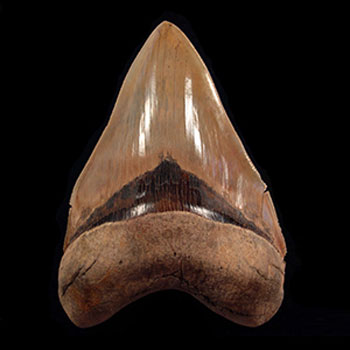
Collectors recognize something different when a fossil speaks through more than just size or color. The moment researchers uncovered the HMS Challenger megalodon tooth, they introduced a fossil backed not just by age but by verifiable history. This wasn’t another surface find or a chance to pull from a common site. It originated from a mission driven by scientific purpose. That detail matters to anyone who understands how a fossil’s journey defines its value. It tells a story of ocean discovery and preserved power, one that continues to resonate with fossil lovers and researchers alike.
Let’s explore more detailed information:
A global expedition made the discovery of fossils possible
In 1872, the HMS Challenger embarked on a global voyage to investigate ocean life, geology, and the previously unexplored depths of the sea. The ship carried trained scientists who didn’t rely on luck to uncover artifacts. They dragged specialized equipment across the seabed to collect samples. One of those dredging sessions near the Azores brought up two Megalodon teeth. These did not emerge from shallow waters or exposed cliffs. The team retrieved them from layers of sediment sitting far beneath the ocean floor. That origin shifted their importance from rare fossils to documented records of prehistoric marine life.
The recovery location raised essential questions
Unlike other fossil teeth found along riverbanks or eroded shores, this tooth carried proof of its source. The crew documented its location, depth, and collection method with precision. That attention to detail gave scientists and collectors something they rarely receive—authenticity with no gaps. Because the sediment came from such a deep layer, it challenged the expected extinction timeline of Megalodon. The tooth’s condition, combined with the age of the surrounding sediment, sparked a fresh debate in marine fossil studies. Scientists began asking how such fossils could remain so well-preserved on the ocean floor.
Preservation created new insight into Megalodon fossils.
When the scientists examined the Megalodon teeth, they found them remarkably intact. The enamel maintained its form, and the root structure appeared stable. These signs indicated excellent preservation conditions at extreme depths. That condition did more than impress the scientific team. It opened new theories about fossilization and marine sediment behavior. Collectors quickly recognized the importance. This tooth offered both fossil beauty and research credibility. In a world where condition and context rarely align, this find stood at the perfect intersection. It demonstrated how deep-sea pressure and time can protect over millions of years.
The value of origin changes everything in fossil collecting
Many fossils circulate without any clear story behind them. They look impressive but leave questions unanswered. That uncertainty limits their long-term value. The HMS Challenger tooth stands apart because its journey never lost detail. From the moment scientists pulled it from the seabed, they maintained records. That chain of custody gives it lasting importance. It shows exactly where it came from, how deep it rested, and which team made the discovery. Collectors and scholars alike trust that kind of information. That trust turns the tooth into a benchmark for what a truly traceable fossil looks like.
The fossil offers more than aesthetic appeal
While many collectors seek color, edge sharpness, and size, this tooth brings more than that. Yes, the enamel shines with character, and the serrations still show definition. But the true appeal lies in the connection to science and human exploration. This isn’t just a prehistoric remnant. It’s a fossil that passed through the hands of those trained to study, not sell. That focus preserved its credibility. Collectors often measure value solely through physical features. Still, this tooth adds the unmatched trait of being the first recorded discovery. That elevates it beyond the typical market scale.
The HMS Challenger megalodon tooth reshaped fossil expectations
Once the scientific community examined the Challenger tooth, they started rethinking how Megalodon fossils could inform larger oceanic timelines. The conditions in which the tooth appeared provided clues about the species’ environment. It helped researchers understand the role of marine sediment in preservation. At the same time, the find gave collectors a chance to own a piece of history that also played a role in shaping marine science. The combination of biological, geological, and historical data turned this specimen into something that continues to impact how people study the ocean’s ancient life.
Proof-backed fossils always hold higher ground.
Collectors who focus solely on display value overlook a deeper layer of significance. Fossils with verified documentation will always draw more serious attention. That holds especially true in the case of this Megalodon tooth. The proof of recovery, combined with the expedition’s reputation, lends credibility that few fossils can match. This isn’t a case of word-of-mouth or assumed origin. The scientific expedition recorded its steps in real time. Those steps included how and where the specimen was recovered. That level of precision transforms it into a rare fossil with an unshakable foundation.
The physical features still impress modern collectors
Despite the passage of time, the tooth still shows the raw power of its original purpose. The serrations reflect a predator designed to shear through bone. The wide root and thick enamel speak to size and strength. Collectors continue to admire these features, even as the scientific backstory adds further weight. The tooth doesn’t rely on condition alone to prove its worth. Instead, it brings together physical presence and historical value in a way that captures the interest of both science-driven individuals and fossil-focused collectors who seek more than surface appeal.
The Challenger discovery connects science and collection
Many discoveries live in labs or museums and never reach those who genuinely appreciate fossils. This Megalodon tooth came to public view because of what it represents. It stands as proof of what happens when exploration meets discipline. The Challenger team didn’t search for value. They searched for knowledge. Yet they still uncovered something rare that collectors now regard as one of the most meaningful fossil finds on record. The connection between scientific work and fossil collecting demonstrates how two worlds can come together without compromising integrity or value.
Final Thoughts
The HMS Challenger megalodon tooth remains one of the most valuable shark teeth ever discovered. Its recorded journey, combined with its physical power, enables it to rank above the typical fossil. This specimen offers more than weight or color. It offers trust. The scientists who found it documented every detail. That record turned a remarkable fossil into a milestone in marine research. Today, collectors view it as a rare chance to own something tangible, complete, and irreplaceable. This tooth doesn’t just belong in a collection. It belongs in the larger story of discovery.
Footnote
The HMS embodies both the beauty of fossils and the truth of expeditions, offering collectors and researchers a specimen that remains unmatched in both scientific value and historical depth.






