

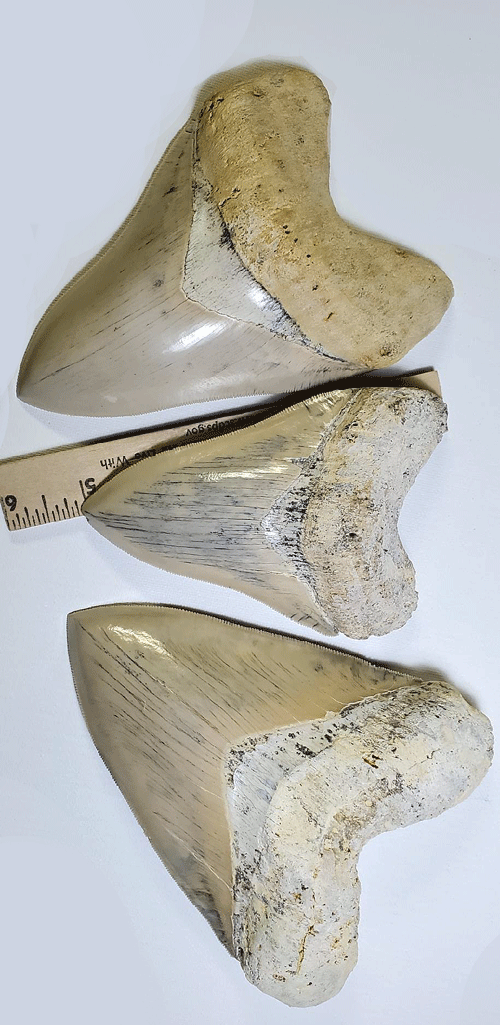
Do you think you’ve snagged an authentic megalodon tooth, or did someone sell you a dino-themed paperweight? Let’s be honest: there are tons of fakes in the fossil world, and distinguishing a true prehistoric giant’s chomper from a clever replica isn’t always easy. If you want to be sure you’re holding a piece of ancient ocean history and not a resin cast souvenir, read on.
Why the Obsession with Megalodon Teeth Anyway?
Megalodon teeth are basically the Ferraris of the fossil world. These shark teeth can grow up to 7 inches long and weigh more than a pound. They’re relics from a predator so terrifying that it made Jaws look like a guppy. However, with demand skyrocketing, the fossil market is flooded with fakes, knockoffs, and “shark-sized Tic Tacs” masquerading as the real deal.
So, how do you know if you’re holding an authentic megalodon tooth in your hand, or something mass-produced in a mold?
Let’s break it down, one serration at a time.
Size Matters (But It’s Not Everything)
While size is a major draw, don’t let it fool you. Yes, a giant tooth is impressive. But counterfeiters know that bigger sells, so they often produce large replicas to lure in unsuspecting collectors.
A real, authentic megalodon tooth tends to have natural imperfections, asymmetry, and signs of wear that you can’t fake. If it looks too perfect, too glossy, or eerily symmetrical, your prehistoric treasure might be less “authentic” and more “art project.”
Pro Tip: Don’t just measure, it’s what’s inside (and outside) that counts. Speaking of which…
Let’s Talk Texture: Real Fossils Feel Different
Here’s where your fingertips come in handy.
Run your fingers over the enamel. An authentic megalodon tooth will have a smooth, but slightly gritty feel due to mineralization over millions of years. You might even feel fine ridges along the edge; those are serrations used to tear through whale flesh like butter.
Fake ones? Too smooth, too shiny, or coated in an unnatural gloss. Think shark tooth meets plastic toy.
Just like a handshake tells you a lot about a person, a tooth’s texture speaks volumes about its authenticity.
Color Me Fossilized
Let’s get a bit artsy, because the colors of an authentic megalodon tooth tell a mineral story. Over millions of years, these teeth absorb minerals from their burial environment. That’s why real teeth come in various hues like black, gray, brown, and even bluish tones.
But fakes often try too hard. Solid, flat black or pristine white? Be skeptical. Those colors rarely come naturally. Real teeth have color variations that look blended—not painted.
If it looks like it just came out of a spray booth, it probably did.
Weight Check: Is It Fossil or Foamcore?
Grab a scale or just trust your instincts. A real, authentic megalodon tooth should feel heavy for its size. That weight comes from fossilization, millions of years of mineral replacement.
Fake ones made from resin or plaster? Surprisingly light. If it feels like you could flick it across the room like a Frisbee, it’s not legit.
It’s like comparing a gold bar to a chocolate bar in foil. One's a treasure, the other melts in your pocket.
The Serration Situation
One of the best ways to spot a fake? Look closely at the edges.
Serrations on an authentic megalodon tooth are small, uneven, and sometimes worn down. Each tooth has a unique pattern, like a fingerprint. Fakes, on the other hand, often have machine-perfect serrations or none at all.
So grab a magnifying glass, or your phone’s zoom, and take a close look. If the edges look like they were cut with a laser, you’ve got a dud.
The Enamel Test: Shine Without the Sparkle
Shiny doesn’t always mean special.
Yes, authentic megalodon tooth enamel has a certain luster. But it’s subtle—like aged leather or polished stone. Too shiny, and it might be coated. Too dull, and it could be artificially aged.
A genuine fossil shows character: small pits, lines, and wear marks that make it unique. Think antique, not brand new.
Ask the Right Questions (and the Right People)
Want to avoid scams altogether? Buy from a trusted source. Reputable fossil dealers provide location data, collection notes, and even a history of the specimen.
At Buried Treasure Fossils, for instance, every authentic megalodon tooth is carefully sourced and verified. You don’t just get a tooth—you get a story.
If a seller doesn’t know where the tooth came from or avoids your questions, walk away faster than a shark spotting a seal.
What About Pricing?
Let’s get down to dollars.
If someone offers you a giant, authentic megalodon tooth for $20, something’s fishy—and not in the cool prehistoric way. Real fossils are valuable. While not every genuine tooth costs a fortune, extreme discounts are a red flag.
You wouldn’t expect to buy a Rolex for $15. Don’t expect to buy a real Megalodon tooth for the price of lunch.
Bonus Tip: Use Blacklight to Detect Glue or Repairs
If you’re feeling scientific, grab a blacklight. Under UV, many adhesives used in repaired or fake teeth will glow. An actual, authentic megalodon tooth won’t.
This trick can also help you detect restoration work, where parts of a tooth were reconstructed or added. It’s not foolproof, but it’s a neat party trick that could save your wallet.
Still Not Sure? Call In the Pros
When in doubt, bring your find to a paleontologist or fossil appraiser. Online communities and forums also have experts who love to help.
Sometimes it takes a trained eye to distinguish between a million-year-old relic and a weekend craft project.
If your goal is to own a true, authentic megalodon tooth, don’t be afraid to ask for verification.
CTA: Ready to Bite Into the Real Deal?
Stop guessing and start collecting with confidence. At Buried Treasure Fossils, we specialize in genuine, high-quality fossil specimens, including the legendary authentic megalodon tooth.
Browse Our Collection
Shop Authentic Fossils Today
Get Expert Advice Before You Buy
Because prehistoric treasures deserve more than guesswork.
Wrapping It Up: Don’t Get Bitten by a Fake
To sum it up, spotting an authentic megalodon tooth takes a mix of science, instinct, and curiosity. From texture to weight, color to serrations, each aspect tells part of the story. With the right knowledge and a bit of caution, you can proudly own a genuine piece of prehistoric power.
So the next time you’re handed a suspiciously shiny shark tooth, just ask yourself: Is this an ancient predator’s weapon… or a fancy shark-sized Tic Tac?
Final CTA: Dive Deeper into the World of Fossils
Got questions about your fossil?
Want to order with confidence?
Looking to learn more?
Join our fossil-loving community and make sure every piece in your collection is the real deal, starting with your next authentic megalodon tooth.






