Imagine pulling something out of your pocket that’s not just old, but millions of years old. Not your average coin or family heirloom, but a fossil from one of the ocean’s most fearsome predators. That’s the kind of bragging rights you get with a Megalodon tooth.
But let’s be honest, finding one is half the story. Knowing it’s real? That’s the real adventure. And in today’s fossil market, where the fakes often look better than the originals, spotting an authentic Megalodon tooth is almost an art form.
Let’s bite into the facts and fiction to make sure you know what’s in your collection, or your pocket.
What Makes a Megalodon Tooth So Special?
Before we talk fakes, let’s talk facts. The Megalodon was a prehistoric shark that could grow up to 60 feet long. That’s longer than a school bus. Its teeth? Absolutely massive. Some were nearly the size of your hand.
But more than size, a Megalodon tooth holds history. It’s a fossilized clue about life in the oceans millions of years ago, what the Megalodon ate, where it lived, and how it hunted. It's like holding a piece of Earth’s natural time capsule.
And yes, it belongs in your hands, not just museums.
Color Tells a Story—And So Does the Weight
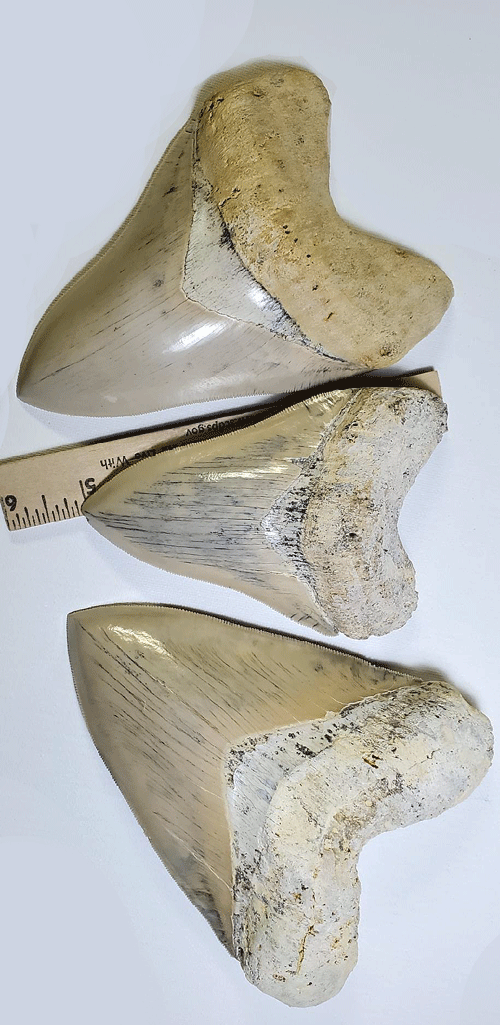
One of the easiest ways to start spotting a real tooth? Color and weight. Authentic fossilized teeth come in a variety of shades, including black, brown, grey, and even hints of blue or green. These colors develop naturally over time, as minerals seep into the tooth during fossilization.
And the weight? That’s something you feel the moment you pick it up. A genuine Megalodon tooth has a dense, stone-like heft that no resin replica can fake.
Next time you’re holding one, feel the weight; it's history pressing against your palm.
Serrations: Nature’s Knife Work
Now, let’s talk edges. A real Megalodon tooth has serrations, tiny saw-like edges along the sides. These were used to tear through the flesh of whales and other marine life. But here’s the secret: the serrations on real teeth are often uneven and worn.
If the edges look machine-made, too perfect or smooth, you might be holding a replica. Real fossils are messy in the most beautiful ways.
And imperfections? They’re a good thing in this case.
Enamel: More Than Just a Shine
You probably hear “enamel” and think of toothpaste commercials. But for fossil lovers, enamel is another key clue. Real fossil enamel has a smooth, glossy texture, but it’s not flawless. There should be tiny scratches, pits, and signs of age.
If the surface of a Megalodon tooth looks like polished plastic, that’s a red flag. Authenticity shows up in the fine details.
In this case, flaws make it all the more fantastic.
Size Isn’t Everything (But It’s Still Pretty Cool)
We know, they’re big. But here’s something you might not expect: not all Megalodon teeth are huge. In fact, smaller teeth can be just as important. Juvenile Megalodons lost smaller teeth, and finding them helps scientists study how these creatures grew and evolved.
So, if you find a Megalodon tooth that’s on the smaller side, don’t discard it. It might hold clues even bigger than its size suggests.
Because every tooth, big or small, tells part of the story.
Real vs. Fake: Know the Red Flags
It’s a collector’s worst nightmare, paying for what you think is a Megalodon tooth, only to discover it’s just painted resin. Here are a few signs that something’s fishy:
● The tooth is unusually smooth
● The color looks painted on
● It’s light, almost like plastic.
● There’s no backstory or documentation.
Real fossils carry weight, not just physically, but historically. A good seller will share the origin of the tooth, when it was discovered, and even provide photos of it being unearthed.
Because every real fossil has a real story.
The Value of Provenance
Think of provenance like a fossil’s resume. Where was it found? By whom? Was it part of a larger dig? This information adds both credibility and value. Reputable sellers like Buried Treasure Fossils provide this information with every tooth.
When purchasing a Megalodon tooth, request the following details. A seller who dodges your questions might be selling more fiction than fossils.
Knowledge is power—and in this case, also protection.
Where to Buy Without Regrets?
Here’s the part where you avoid the rookie mistakes. Never purchase a fossil from an unknown source or a suspicious online listing. Stick with trusted fossil dealers who specialize in prehistoric finds. Look for reviews, seller history, and guarantees.
Buried Treasure Fossils is one of the most respected names in the game. Whether you’re shopping for display pieces or starter fossils, they’ve got you covered.
Because you don’t want a Megalodon tooth that’s made in a factory, you want one pulled from prehistoric seabeds.
Cleaning and Storing Your Fossil
So, you’ve got one. Now what? First, don’t scrub it like your kitchen counter. Use a soft brush or compressed air to remove dirt. Store it in a cool, dry place, away from direct sunlight. Extreme temperatures can damage the fossil structure.
Displaying a Megalodon tooth? Use padded stands or cases to protect it from bumps and falls. A fossil this cool deserves a throne.
Handle with care—it’s been through enough already.
More Than Just a Cool Conversation Starter
Sure, it looks fantastic on a shelf. But there’s more to a Megalodon tooth than decoration. These fossils help paleontologists study ancient ecosystems, track migration patterns, and understand the causes of extinction events.
They’re also excellent teaching tools. Kids love them, and they spark curiosity about science, oceans, and history. So if you’re thinking about gifting one, you’re giving more than a fossil—you’re giving inspiration.
And let’s face it—it’s way cooler than a gift card.
Investment or Obsession? Maybe Both.
Believe it or not, fossil collecting can be an investment. As authentic specimens become increasingly rare, their value rises. That means your collection could be worth more in the future.
But collectors rarely stop at one. Owning a Megalodon tooth often leads to more, more knowledge, more fossils, more excitement. Just don’t be surprised when your “one-time purchase” turns into a full-blown obsession.
Hey, worse things have happened.
Final Checklist: How to Spot a Winner
Let’s do a quick recap:
● Natural weight and density
● Realistic color with variation
● Uneven or worn serrations
● No plastic shine
● Seller provides provenance
● Enamel shows signs of aging
● Comes from a trusted source
Check those boxes, and you’re on your way to owning a Megalodon tooth that’s as real as the shark it came from.
Conclusion
So, is that a fossil in your pocket, or just wishful thinking? Now you know what separates the real thing from a tourist trap. With the right knowledge (and a little caution), you can confidently own a Megalodon tooth that’s as authentic as it is awe-inspiring.
Ready to join the ancient ocean club?