

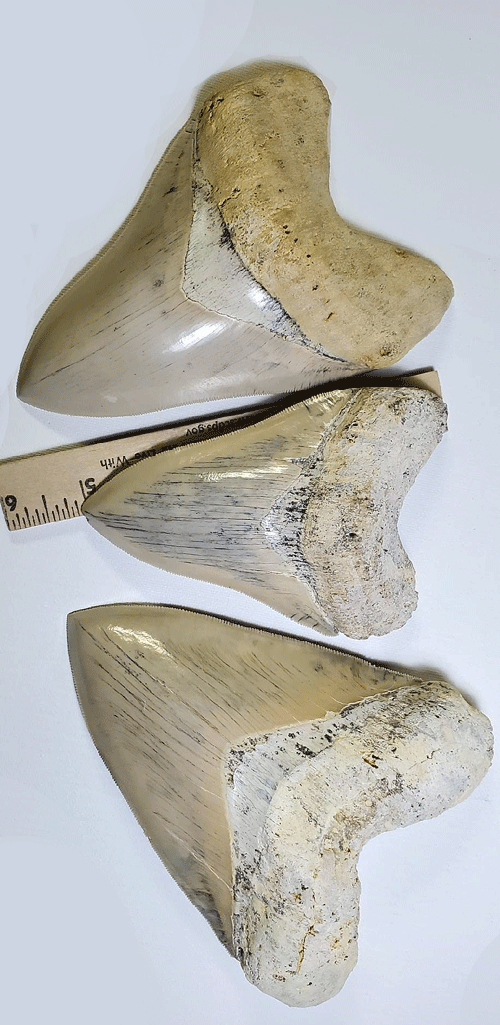
Have you ever dreamed of holding a piece of history—something so ancient it predates the dinosaurs? Imagine owning a relic from the greatest predator that ever lived, the Megalodon. These teeth aren’t just fossils; they’re windows into a forgotten world beneath the waves. But as their popularity rises, so does the number of imitations flooding the market. For fossil enthusiasts and collectors, knowing how to spot a fake isn’t just smart—it’s essential.
In this blog, we’ll walk you through the crucial indicators of authenticity so you never fall victim to a fake fossil. Because when you’re investing in something as rare as a Megalodon tooth, you deserve the real deal. It’s time we say it: identifying a megalodon tooth fossil is an art—and we’re here to teach you exactly how to master it.
Understand What You’re Looking For
To begin, familiarize yourself with what a real Megalodon tooth looks and feels like. These prehistoric marvels can grow up to seven inches long and have a triangular shape with delicate, visible serrations along the edges—much like a steak knife. But here’s the trick: no two teeth are perfectly alike.
Real teeth bear the marks of time—slight imperfections, asymmetry, and natural wear. If you come across a perfectly symmetrical tooth with flawless edges, pause to appreciate it. That might be a red flag. Authentic teeth often showcase individual quirks, such as chips, curves, or unusual coloration, due to their millions of years of being buried beneath ocean sediment.
We don’t want just to admire a fossil—we want to connect with its raw, ancient story.
Check the Color and Mineral Depth
Millions of years buried in mineral-rich environments leave Megalodon teeth with a unique range of colors—black, brown, gray, tan, and even rare blues. But what makes these colors special is their depth and complexity.
A real fossil won’t have a flat, painted-on look. Instead, it displays a naturally marbled appearance. You should see layers of mineralization that go beneath the surface. Uniform or overly vibrant coloring is often a sign of a replica, dyed resin, or even plastic.
The colors of genuine fossils seem to belong to the tooth itself, seeping deeply into every ridge and crevice. That kind of detail can’t be faked—not convincingly, anyway.
Feel the Weight and Density
One of the easiest ways to tell if a tooth is genuine is simply to hold it. Authentic Megalodon tooth fossils are dense and feel much heavier than they look. This is due to the fossilization process, where the organic materials have been substituted with minerals.
Fake teeth, often made from resin or lightweight composite materials, may look the part but won’t carry that solid, ancient weight. When you hold a real fossil in your hand, it’s like having a chunk of prehistoric power. There’s a quiet heaviness to it—a gravity, both literal and metaphorical.
Examine the Enamel Closely
Another telltale feature is the enamel. On a genuine fossil, the enamel should be glossy, but not excessively so. It will have irregularities—tiny pits, faded spots, and a natural texture developed over millions of years.
Many fakes have an overly smooth or plastic-like surface. In some cases, forgers apply a resin coat to give a “fresh shine” to their imitation, which ends up making the tooth look unnaturally perfect. Real enamel shows variation, just like stone weathered by time.
We recommend gently inspecting the enamel under natural light to catch subtle textures that reveal the fossil’s authenticity.
Ask for Provenance and Seller Transparency
When you’re ready to buy, always ask about the fossil’s origin. Any credible seller should be able to tell you where the tooth was found, how it was sourced, and provide details about the environment in which it was discovered.
At Buried Treasure Fossils, we offer complete transparency. Since 2000, we’ve been directly sourcing fossils from trusted global dig sites, ensuring every Megalodon tooth we offer is backed by authentic provenance. Our commitment to quality helps you avoid scams and confidently invest in genuine prehistoric treasures.
Trustworthy sellers want to share the story of the fossil as much as sell it—because the story is half the value.
Be Skeptical of Unrealistic Prices
Here’s a common trap: a massive “Megalodon” tooth priced at a fraction of market value. If it seems too good to be true, it probably is. Authentic Megalodon fossils—especially those over 5 inches—can command high prices due to their rarity and requirement.
Fakes are often priced low to sell quickly, targeting buyers who are new to or unaware of the market value. As collectors ourselves, we believe in fair pricing—but also in pricing that reflects authenticity and rarity. Don’t let a bargain deceive you into buying a fake.
Spotting a Megalodon Tooth Fake vs Real: It’s in the Details
We can’t emphasize this enough—details matter. From serrations to coloration, from weight to enamel, every part of the tooth should tell the same story: one of age, wear, and deep-sea mystery. It’s not enough to go by looks alone. Even skilled forgers can create something that appears real at a glance.
You need to touch, feel, inspect, and question. That’s how we protect our investments—and preserve the integrity of fossil collecting. And if you’re wondering how to tell if a megalodon tooth is real, remember: knowledge is your strongest safeguard.
Final Thoughts: Make the Right Choice Before You Buy
Buying a megalodon tooth fossil should be an exciting moment, not one clouded with doubt or regret. That’s why we go out of our way to ensure our customers feel informed, confident, and thrilled with every fossil they receive. These relics represent not just prehistoric wildlife, but also the thrill of discovery, the marvel of time, and the joy of collecting something rare.
Take your time to examine each fossil closely, check for signs of authenticity, ask questions, and always buy from a reputable source. That way, you can be sure you’re not just buying a piece of rock, but a real tooth from one of the most fearsome predators in Earth’s history.
And if you’re ready to own a genuine piece of the ancient ocean, contact us today—we’re here to guide you every step of the way toward owning a real Megalodon legacy.






