

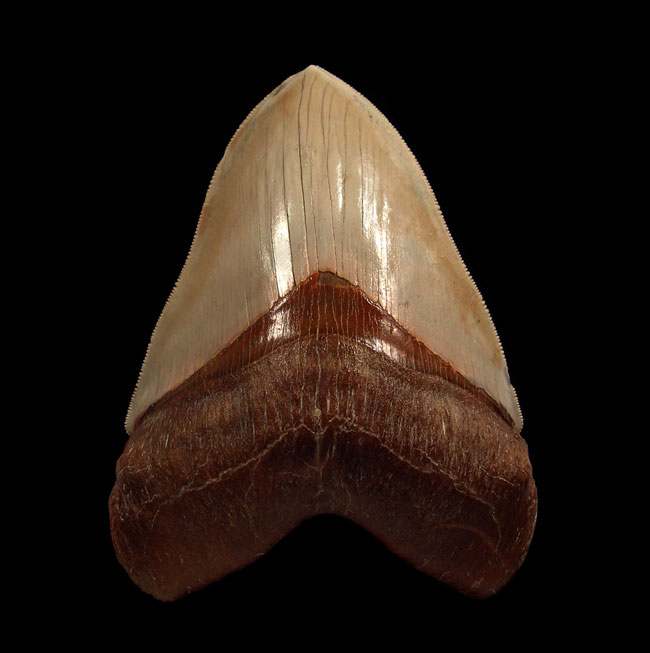
Long before humans walked the Earth, massive sharks patrolled the warm prehistoric seas, ruling the oceans with unmatched power. Among these giants was the legendary Megalodon—a predator so large, its bite could crush the skull of a whale in a single snap. Now, thanks to the discovery of the world's biggest megalodon tooth in Chile, our understanding of this ancient titan has taken an extraordinary leap forward.
This fossil find has made waves among researchers, museum curators, and marine biology scholars. Not only does it represent the largest Megalodon tooth ever unearthed, but it also challenges previous assumptions about the species' growth potential, jaw strength, and evolutionary trajectory. We at Buried Treasure Fossils are thrilled by how discoveries like this deepen the mystery and magnificence of prehistoric life—and we’re proud to offer specimens that echo the grandeur of the Megalodon.
A Monumental Discovery in Chile
The breathtaking Chilean coastline, known for its rugged beauty and rich geological history, has captivated paleontologists for decades. Recently, however, the discovery of an enormous Megalodon tooth has ignited a wave of excitement among researchers and enthusiasts alike. This spectacular specimen, distinguished by its impressive size and remarkable state of preservation, offers compelling evidence of a Megalodon that may surpass any previously imagined. The enormity of the tooth hints at the existence of a creature more formidable than any model crafted in the past, inviting speculation about the prehistoric wonders that once roamed these ancient waters.
Though many teeth have been found across the globe—from North America to Morocco—the world's biggest megalodon tooth stands apart. Its length and girth are enough to recalibrate size estimates for this already colossal species, pushing the upper bounds of what scientists believed was possible for a prehistoric shark.
The tooth’s dimensions suggest a Megalodon exceeding 65 feet in length, far surpassing previous estimations. Such a measurement doesn't merely represent another data point; it redefines the extremes of nature’s design and challenges scientists to revisit long-held models of Megalodon anatomy and predation.
Rewriting the Megalodon Narrative
Prior to the recent discovery, reconstructions of the Megalodon, scientifically known as Otodus megalodon, primarily relied on teeth measuring between 4 to 6 inches in length. These teeth provided valuable insights for researchers to estimate the shark's jaw width, body mass, and feeding behavior. However, the new specimen found in Chile, which significantly exceeds these dimensions, marks a notable advancement in the study of Megalodon.
This finding prompts a reevaluation of our understanding of Megalodon’s biology, particularly regarding its growth patterns and dietary habits. The larger size suggests that the Megalodon had higher caloric requirements and may have employed more aggressive hunting strategies. Furthermore, this could indicate that it occupied a different ecological niche than previously assumed. As a result, paleontologists will need to revisit and adjust their evolutionary models to incorporate these new insights.
In addition, the condition of the tooth—a pristine enamel surface, full serration, and intact root—makes it invaluable for comparative research. It offers unprecedented insight into enamel development, tooth replacement cycles, and stress patterns from predatory activity.
Chile: A Paleontological Powerhouse
Chile's unique geology has positioned it as one of the most significant fossil-rich regions in the Southern Hemisphere. From the Atacama Desert to its coastal cliffs, tectonic activity has exposed sediment layers dating back millions of years. It’s no surprise, then, that such a monumental Megalodon tooth emerged from this land.
This region not only provides a geologically rich setting for fossilization but also protects many specimens from the environmental wear common in other coastal deposits. As a result, fossils found in Chile often exhibit superior preservation—a factor that enhances their scientific and collectible value alike.
At Buried Treasure Fossils, we celebrate this heritage by offering Chilean Megalodon teeth among our curated fossil catalog. These specimens combine scientific merit with visual majesty, making them a cornerstone for both academic collections and private displays.
Implications for Modern Science and Marine Biology
While the Megalodon is long extinct, studying its physical remnants has direct implications for modern science. The predator’s role as an apex species gives us a comparative framework for understanding current marine ecosystems. For instance, by evaluating the Megalodon’s impact on prey populations and marine biodiversity, researchers can draw parallels with modern apex predators like the Great White or Orca.
Moreover, the discovery of the world's biggest megalodon tooth has ignited interest in re-examining growth rate models and extinction hypotheses. Could larger Megalodons have faced accelerated food shortages? Did size play a role in their vulnerability during environmental shifts? These questions aren’t just theoretical—they help guide conservation efforts by illustrating how even dominant species can disappear under the right conditions.
The tooth also plays a critical role in digital fossil modeling. High-resolution scans of this Chilean specimen are already helping scientists and educators reconstruct Megalodon skulls in 3D, providing more accurate teaching tools and museum displays. These advancements make prehistoric life more accessible and immersive than ever before.
Fueling Public Interest and Educational Engagement
For museum curators, this find offers an exceptional opportunity to captivate audiences. A tooth of this magnitude is more than a fossil—it’s a conversation starter, a scientific ambassador, and a symbol of our planet’s wild evolutionary history. Exhibits featuring casts or even the original tooth can drive increased museum traffic, educational programming, and media attention.
Similarly, advanced marine biology students now have a new focal point for research and thesis development. From biomechanics to comparative anatomy, the Chilean Megalodon tooth opens doors to cross-disciplinary studies, merging paleontology, marine ecology, and evolutionary biology.
At Buried Treasure Fossils, we understand the impact a single fossil can have—not just as a collectible, but as a bridge to deeper scientific exploration. That’s why we guarantee the authenticity and legal sourcing of each specimen in our collection, including high-quality Megalodon teeth from regions like Chile, Peru, and South Carolina.
A Lasting Legacy from the Depths
Ultimately, the discovery of the world's biggest megalodon tooth doesn’t just change numbers on a size chart. It changes how we envision the past. It forces us to confront the staggering scale and power of Earth’s ancient predators. And it reminds us that there’s still much we don’t know about the creatures that came before us.
At Buried Treasure Fossils, we’re honored to be a part of that journey of discovery. Our mission is not only to connect collectors with authentic fossils but also to foster awe, curiosity, and scientific inquiry. Whether you're curating a museum exhibit, researching prehistoric sharks, or simply marveling at the forces of evolution, this Chilean find invites us all to look deeper.
If you're ready to hold a piece of that legacy in your hands, explore our hand-picked selection of Megalodon teeth—including rare finds from fossil beds like those in Chile. Let the past inspire your present and ignite your curiosity for what lies beneath the surface of our shared history.






