

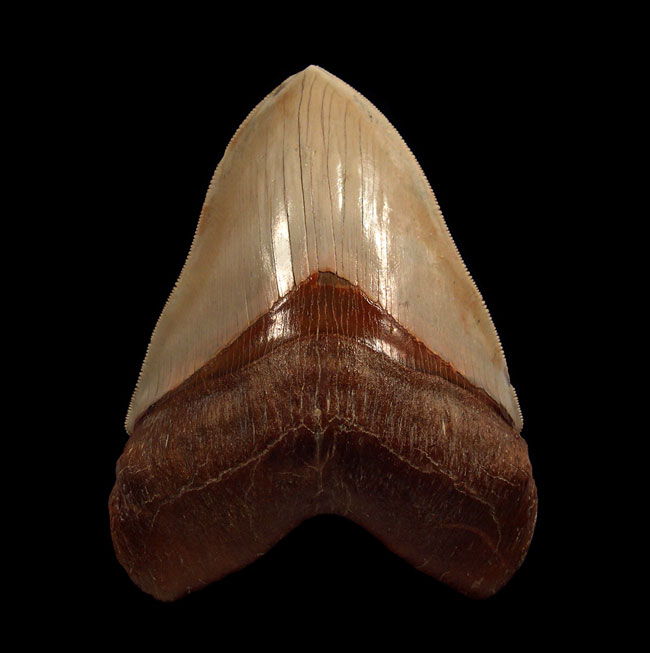
Few fossil discoveries ignite excitement like a massive shark tooth pulled from ancient seabeds. Long before modern oceans took shape, Megalodon ruled as an unmatched marine predator. Just beyond the opening line of this story sits one extraordinary clue—the largest megalodon tooth ever, a fossil that continues to reshape how scientists understand the true scale of this prehistoric giant.
Fossil shark teeth matter because sharks build their bodies around their feeding power. In the second wave of research surrounding the largest megalodon tooth ever, paleontologists immediately focused on how tooth size connects directly to body length, jaw width, and overall hunting dominance. That connection allows science to move beyond speculation and toward measurable, anatomical certainty.
Tooth Size as a Blueprint for Body Length
Sharks leave behind teeth more often than bones, which makes teeth the most reliable fossil evidence available. Researchers compare Megalodon teeth with those of modern great white sharks, whose body proportions scientists already understand in detail. When tooth height increases, body length follows in predictable ratios.
Scaling those ratios upward reveals why a single massive tooth supports estimates approaching 60 feet. A tooth exceeding seven inches does not belong to a modest shark. Instead, it signals a skull several feet wide and a body built to overpower whales. Each millimeter of tooth height pushes length estimates higher, reinforcing Megalodon’s place as the largest predatory shark to ever exist.
Bite Force Science and Feeding Power
Tooth size also reveals bite force. Thick enamel, broad roots, and serrated edges point toward bone-crushing strength. Scientists calculate bite force by examining tooth thickness and jaw mechanics in living sharks, then apply those numbers to Megalodon’s fossilized teeth.
The results astonish researchers. A shark capable of producing teeth this large could generate bite forces several times stronger than any living predator. That power explains how Megalodon hunted whales, seals, and large marine mammals with efficiency. Tooth structure confirms that this shark did not scavenge—it actively dominated its ecosystem.
Anatomy Interpreted from a Single Tooth
Every Megalodon tooth tells a layered story. The root width indicates how deeply the tooth anchored into the jaw, which reflects jaw muscle mass. Wider roots demand stronger muscles, thicker cartilage, and a heavier skull. Those traits combine to support a massive frame capable of sustained predatory activity.
When scientists analyze the largest megalodon tooth ever, they do not see an anomaly. Instead, they see confirmation. The tooth aligns perfectly with growth models that already pointed toward a 50–60 foot shark. Its size strengthens existing estimates rather than contradicting them.
Why Fossil Collectors and Museums Value These Teeth
Large Megalodon teeth attract more than attention—they carry educational weight. Museums rely on them to explain evolution, apex predation, and prehistoric oceans. Collectors value them because they represent measurable science, not myth.
At Buried Treasure Fossils, authentic Megalodon teeth help bridge that gap between fascination and education. Each specimen reflects legality, careful sourcing, and scientific relevance. For enthusiasts and institutions alike, these fossils transform abstract numbers into tangible proof of prehistoric life on an unimaginable scale.
Reinforcing the 60 Foot Megalodon Model
Modern reconstructions rely on multiple data points: tooth size, jaw spacing, feeding behavior, and comparisons to living sharks. The discovery of exceptionally large teeth strengthens every one of those data sets. Instead of questioning size estimates, scientists now refine them with greater confidence.
The fossil record does not exaggerate Megalodon—it confirms it. Teeth this large demand a body that matches their function, and that body comfortably reaches the 60-foot range.
Conclusion
The largest megalodon tooth ever stands as powerful evidence that Megalodon truly earned its reputation as a 60-foot apex predator. Tooth-to-body correlations, bite force science, and anatomical interpretation all converge on the same conclusion: size followed function in prehistoric oceans. For collectors, educators, and shark enthusiasts, holding such a fossil means holding proof of nature’s most extreme predator. Exploring authentic specimens and learning their stories continues to deepen appreciation for Megalodon’s legacy and the ancient seas it once ruled.






