

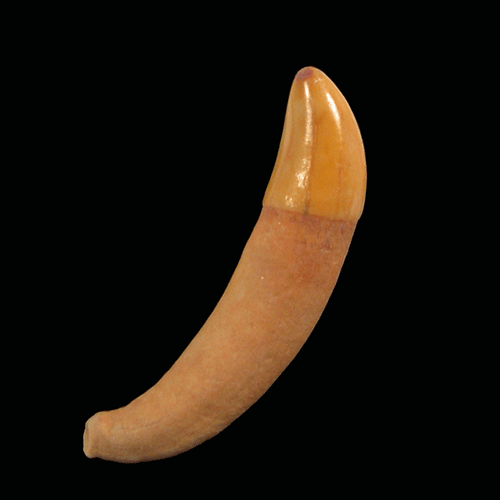
Dolphin teeth fossils are not just remnants of ancient marine life—they’re fragments of an evolutionary journey etched in enamel. Their rarity, size, and species diversity set them apart from more commonly encountered marine fossils. As fossil specialists, we’ve long recognized the allure of shark teeth among collectors. Still, dolphin teeth occupy a far more elusive space, adding layers of complexity and fascination to any collection. If you're scanning through displays or listings with a keen eye, spotting a dolphin tooth for sale often signals you’re looking at something far less common than most marine offerings.
Let’s explore how dolphin teeth fossils compare to other iconic marine relics like shark teeth and whale bones, and why these slender fossils hold deep value for collectors, historians, and enthusiasts alike.
The Elusive Nature of Dolphin Teeth Fossils
Unlike shark teeth, which are frequently found due to the high rate at which sharks naturally shed them, dolphin teeth are singular. Each one represents a permanent part of a once-living creature. Dolphins, being mammals, don’t lose and regrow teeth throughout their lives the way sharks do. This alone accounts for one of the most significant contributors to their scarcity in the fossil record.
Another reason behind their rarity lies in the conditions required for preservation. For a dolphin tooth to fossilize, specific burial environments must prevent decay, mineralize the tissue, and shield it from erosion or scavenging. This convergence of biological uniqueness and environmental precision means that each dolphin tooth fossil discovered carries both scientific and collector value.
Fossil Dolphin Teeth vs. Shark Teeth: A Collector’s Perspective
When comparing dolphin and shark teeth, the volume of shark teeth on the market far outweighs that of dolphins. Millions of fossilized shark teeth are unearthed annually, ranging from small sand tiger specimens to massive Megalodon behemoths. Their serrated edges and triangular profiles make them visually striking and immediately recognizable, which fuels their popularity.
Dolphin teeth, on the other hand, are slender, conical, and often finely tapered—reflecting the precision with which dolphins hunted fish and squid. They're typically more fragile than shark teeth, with smooth enamel and less aggressive wear patterns. These characteristics make them harder to identify and even harder to find in pristine condition.
For a collector, acquiring a dolphin tooth for sale isn’t simply checking another box—it’s securing a piece that reflects evolutionary nuance, ecological adaptation, and paleontological rarity. This level of scarcity drives a distinct type of admiration—one rooted more in appreciation for the unusual and the intricate than the dramatic and the bold.
Comparing Dolphin Teeth to Whale Fossils
Whale fossils span from enormous vertebrae to partial skulls and even embedded ear bones. Their sheer scale and anatomical complexity make them fascinating, but often challenging to acquire, transport, or display. Most fossil whale material is fragmentary and usually confined to specialized or institutional collections due to size and preservation requirements.
Dolphin teeth provide a more detailed and manageable view into marine mammal history. Each tooth reveals specific feeding strategies and taxonomic features, particularly when it comes from extinct genera that no longer exist. Some species of fossil dolphins had unique tooth adaptations—such as elongated rostrums with interlocking dental patterns—adding another layer of interest for experienced collectors.
While whale fossils may command attention for their size and impact, dolphin teeth stand out through subtlety, detail, and historical precision. Their rarity isn’t just about availability—it’s about how much they reveal in such a compact form.
Time, Taphonomy, and Discovery Sites
Most fossil dolphin teeth come from Miocene and Pliocene strata, dating back 5 to 23 million years. These layers often appear in sediment-rich regions, such as the Southeastern U.S., where ancient coastal environments once thrived. But even in well-known fossil zones, dolphin teeth are never guaranteed finds.
Contrast that with shark tooth hotspots—like the phosphate mines of Florida or riverbeds in the Carolinas—where daily diggers can surface handfuls of Carcharhinus or Hemipristis teeth. You’re more likely to find a dozen shark teeth before spotting one legitimate dolphin tooth.
Even when a dolphin tooth for sale surfaces, identifying it correctly requires a keen eye and specialized knowledge of fossils. Their shape can be easily confused with that of other marine vertebrate remains unless carefully examined. This necessity for expert verification adds both challenge and value to the collector experience.
Anatomy, Enamel, and Evidence of Behavior
Dolphin teeth are not only collectible—they’re educational. The uniform, peg-like structure reflects a carnivorous diet suited for seizing slippery prey. Some fossil species had over 100 teeth, while others evolved fewer, more robust teeth used for grasping crustaceans or cephalopods.
Wear patterns and fractures in fossil specimens sometimes suggest feeding behavior or even social combat, providing insight into how these mammals interacted with their environment and with one another. Compared to shark teeth, which primarily reflect tearing and shearing, dolphin teeth often tell stories of precise, intelligent hunting techniques.
Every detail preserved—whether it’s the subtle curve of the root or the faint texture along the enamel—offers more than just aesthetics. It’s a fragment of marine evolution, a lens into the intelligent marine life that existed millions of years before human civilization.
Condition and Collector Market Value
The market for marine fossils spans a wide range, from beginner-level shark teeth to museum-grade Megalodon crowns. Dolphin teeth occupy a unique tier—sought after by collectors who value complexity and rarity over shock factor.
Condition is key. Well-preserved dolphin teeth with full roots, intact enamel, and minimal abrasion are few and far between. When these do appear, especially those attributed to extinct species, their market value climbs—not just monetarily, but in significance; they command respect among seasoned fossil enthusiasts, who understand their comparative scarcity and the effort involved in their discovery.
The phrase dolphin tooth for sale doesn’t circulate widely—and when it does, it’s typically in specialized collections, paleontological exchanges, or through trusted fossil curators who understand their value. Unlike shark teeth, dolphin specimens are less commodified, which enhances their mystique.
Stories Behind the Fossils: More Than Just Teeth
Every dolphin tooth holds a narrative—whether it was buried in Miocene silt, eroded from ancient seabeds, or gently extracted from fossil-bearing clay. Each carries a journey shaped by time, pressure, and patience. And for collectors, these stories matter.
It’s not about simply owning a fossil. It’s about tracing a path through time, connecting with extinct species, and appreciating the role dolphins played in prehistoric marine ecosystems. These teeth, small as they may be, embody rich tales of survival, intelligence, and evolution.
That’s the allure: the depth behind the detail. Each tooth is not just a specimen—it’s a witness to epochs long passed, preserved for the eyes and hands that recognize its value.
Conclusion
Dolphin teeth fossils aren’t commonly found, making them exceptional among marine discoveries. Their rarity stems from unique biological traits, rare fossilization conditions, and the expertise needed to recover and identify them. Unlike shark teeth that flood the market, or whale fossils known for their size, dolphin teeth offer a more refined glimpse into ancient marine life. At Buried Treasure Fossils, spotting a dolphin tooth for sale is more than a chance to acquire—it’s an opportunity to own something truly uncommon. This piece deepens our connection to prehistoric oceans.
Connect with us to explore rare dolphin tooth fossils and enrich your collection with authentic pieces of ancient marine history.






