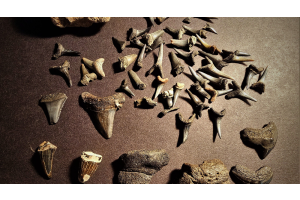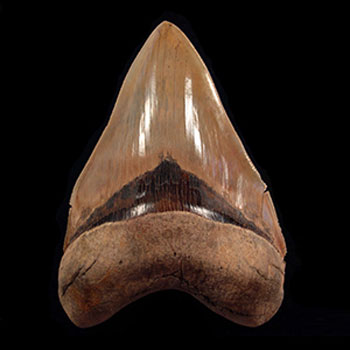
Long before humans set sail across the oceans, colossal predators swam beneath the waves. Among them, none was more awe-inspiring than the megalodon. With jaws capable of crushing whales and teeth larger than a human hand, this prehistoric shark ruled the seas millions of years ago. Today, the creature lives on only in fossilized remains, especially its massive teeth. Collectors and enthusiasts are often captivated by the question of megalodon tooth worth, a phrase that sparks curiosity not only about price but also about history, rarity, and legacy.
To understand how these ancient relics are valued, it’s essential to examine the various factors that influence both collectors and the fossil market. The journey from the ocean floor to the display shelf is layered with science, art, and economics.
The Allure of Ancient Giants
What makes these fossils so fascinating? A single tooth can instantly transport us back millions of years, to a world where enormous creatures dominated the seas. Holding one is not simply about owning a fossil; it’s about grasping a piece of Earth’s prehistory. This connection is a significant part of what fuels demand, adding intangible value that extends beyond numbers.
Size as a Primary Factor
Size has always been a key factor in determining value. Larger teeth are considerably more challenging to find, and anything over five inches can be considered rare. Collectors often prize six-inch teeth, which are even more extraordinary. These fossils showcase the megalodon’s actual size, making them highly sought after. Smaller specimens, although easier to obtain, serve as excellent starting points for new collectors who want to enter fossil ownership without the higher costs associated with larger, more extensive examples.
The Importance of Condition
Condition plays an equally important role. A well-preserved tooth with a sharp tip, visible serrations, and intact enamel is valued much higher than one with chips or fractures. The smoother the enamel and the clearer the structure, the more prized it becomes. For collectors, condition isn’t only about appearance; it’s about the completeness of the story a fossil tells. A pristine tooth speaks of time, geology, and survival through the ages.
Color Variations and Rarity
Over millions of years, mineralization creates unique colors in fossils. Some teeth appear in deep blacks, while others carry earthy browns or even unusual shades of blue and green. These natural variations make each tooth unique. Collectors are especially drawn to unusual hues, as these pieces add a distinctive character to their collections. It’s not uncommon for two teeth of similar size and condition to vary dramatically in price simply because of color differences.
Geographic Origin and Provenance
The location where a tooth was found often contributes to its value. Teeth recovered from rivers in the southeastern United States may differ in look and preservation from those found offshore. Certain regions are especially famous for producing larger or exceptionally well-preserved fossils. Provenance also assures collectors of authenticity, tying a fossil to a specific point on the map and enriching its story.
The Role of Market Demand
Like art or antiques, fossils are subject to market fluctuations. Increased interest among collectors often raises prices, while an influx of smaller specimens can balance the market. However, rare and flawless examples nearly always command strong demand. Market dynamics reveal how these ancient artifacts straddle two worlds: one of science and discovery, and another of economics and investment.
Middle-Range Fossils and Accessibility
For many collectors, mid-range fossils are the most practical option. These teeth may have slight imperfections or fall within average size ranges, but remain incredibly appealing. Prices in this bracket are often more accessible, providing an entry point into the hobby while still offering the thrill of holding a genuine relic from a prehistoric predator.
Exceptional Discoveries
Every so often, a fossil surfaces that surpasses expectations. These exceptional finds—usually oversized, flawless, and uniquely colored—can fetch record-breaking prices. Such teeth are sometimes displayed in museums or locked away in private collections, where they become treasured heirlooms. These rare specimens remind us that the upper limits of fossil collecting can be extraordinary, both in terms of monetary value and historical significance.
The Collector’s Experience
The value of a fossil is not measured only in currency. For many, the real worth lies in the experience of collecting. It starts with curiosity, perhaps sparked by a smaller fossil, and evolves into a passion. Collectors learn to notice the details: enamel quality, serration sharpness, and symmetry. Over time, the collection itself becomes a personal archive, a bridge between Earth’s ancient past and the present.
Educational and Scientific Value
Beyond private collections, these fossils hold immense educational value. Museums and research institutions often acquire them to study past marine ecosystems. Teeth help paleontologists estimate the size of the megalodon and understand its feeding habits. For students and the public, seeing one in person fosters curiosity about natural history and the evolution of marine life. This scientific importance ensures that megalodon fossils are more than decorative items—they are tools for discovery.
Emotional Connection to Prehistory
Owning one of these fossils can stir a sense of wonder unlike anything else. The idea that a tooth once belonged to a creature that swam through ancient oceans millions of years ago is humbling. That connection is what transforms these objects from stones into treasures. Collectors often describe the experience as grounding, a way to feel linked to a time before humanity.
Middle Section Reflection
At this stage, it’s worth revisiting how the megalodon tooth's worth is determined. While numbers matter, the emotional and historical connection adds dimensions that can’t be measured by price alone. A tooth can be both a collectible and a reminder of the natural world’s vastness. This duality is what makes them so compelling to collectors, scientists, and enthusiasts alike.
Future Value and Investment Perspective
Some collectors view these fossils as a form of investment. While markets fluctuate, rare specimens have consistently retained or grown in value. As more collectors enter the field and pristine examples become increasingly scarce, the potential for future appreciation grows. For many, the decision to collect is not only about passion but also about preserving an asset that bridges natural history with modern interest.
Conclusion
In the end, the accurate measure of megalodon tooth worth extends beyond size, condition, color, and rarity. It includes the sense of wonder, history, and connection to Earth’s past that every fossil carries. For some, the value is financial; for others, it’s personal. These ancient relics remind us of a world that existed long before ours, making them timeless in both significance and appeal.
If you’ve ever thought about starting your own collection, now is the time to explore. Take the opportunity to compare specimens, study their unique traits, and find the piece that speaks to you. Holding one of these fossils is more than an act of collecting—it’s a chance to connect with a story millions of years in the making.
Begin your fossil journey today. Explore available specimens, learn what makes each one unique, and discover how owning a piece of prehistory can transform your appreciation of the natural world. A single fossil can spark a lifelong passion—and perhaps even become the centerpiece of your own collection.