

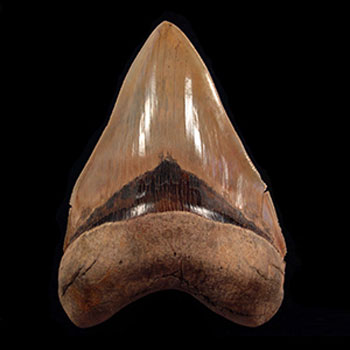
The fascination with ancient relics often begins with curiosity about what life looked like long before humans existed. Among these treasures, the teeth of the mighty megalodon shark stand out as some of the most captivating. Their immense size and remarkable preservation make them coveted fossils for scientists and collectors alike. Many enthusiasts eventually find themselves asking how much a megalodon tooth costs, a question that opens the door to understanding not just price but also rarity, condition, and cultural value.
Transitioning from that question, let’s look deeper into what makes these fossils so extraordinary and why their worth varies so widely.
A glimpse into prehistory
Millions of years ago, megalodon sharks dominated the seas. These predators were believed to grow over 50 feet in length, making them the largest sharks to have ever lived. Their massive jaws held hundreds of teeth, each serrated and perfectly designed for slicing through prey. While the shark itself vanished around 3.6 million years ago, the teeth endured, fossilizing under layers of sediment.
Holding a megalodon tooth today feels like having a direct piece of history. These fossils bridge the gap between a long-extinct predator and the present, offering a tangible reminder of Earth’s incredible evolutionary story.
The science of size and rarity
One of the main factors that drives the value of a tooth is its size. Teeth measuring under 3 inches are relatively common, while those exceeding 6 inches are rare and can be highly valuable. For perspective, the average shark tooth you might find at a beach today is often less than 1 inch. A megalodon tooth the size of a human hand conveys the immense scale of the shark it once belonged to.
Collectors treasure large teeth because they symbolize rarity and prestige. Owning one means possessing something very few people have, making it more than just a fossil—it becomes a centerpiece in any collection.
Color and preservation
Beyond size, color, and preservation, these factors play a critical role in determining worth. Fossilized teeth exhibit a wide variety of shades, from earthy browns and blacks to lighter tones of gray and beige. Some are streaked with minerals absorbed from the surrounding rock and soil, giving them unique patterns. Teeth that retain sharp serrations, intact enamel, and minimal wear are especially desirable.
Collectors often compare these features to gemstones: every tooth is one-of-a-kind. A brilliantly preserved specimen with distinct coloration can significantly elevate its value, even if it is not the largest.
Location of discovery
The place where a tooth is found adds to its intrigue. Fossils discovered in rivers are often well-preserved due to the softer sediments that shield them from erosion. Teeth retrieved from ocean beds may show more wear, polished by years of tumbling in saltwater. Specific regions, such as Florida, South Carolina, and North Carolina, are celebrated for their abundance of megalodon fossils.
These locations have become hotspots for fossil hunters, and teeth sourced from well-known areas can carry additional historical and regional significance. For collectors, provenance is part of the story, and owning a tooth with a clear origin enhances both its narrative and value.
Why collectors are fascinated
Beyond the scientific importance, there’s an emotional dimension to collecting megalodon teeth. Enthusiasts describe the thrill of holding something that once belonged to a creature larger than a city bus. For many, it’s a way of connecting with the natural world in its rawest form—an echo of an ocean once filled with giants.
This fascination also extends into popular culture. Megalodons feature prominently in films, documentaries, and novels, which fuels public interest. As their legend grows, so too does the demand for authentic fossils.
From scientific specimen to collector’s item
While researchers continue to study megalodon fossils to learn more about their feeding patterns and evolutionary role, collectors approach them with a different perspective. Museums may display giant teeth to educate visitors, but private collectors see them as treasures to showcase in their homes. Their appeal is both intellectual and aesthetic—part scientific discovery, part natural art.
The spectrum of value
So, how much does a megalodon tooth cost in real-world terms? Prices vary greatly depending on size, condition, color, and provenance. Smaller teeth can be purchased for under $100, making them accessible to beginners. Mid-range teeth, with good preservation and sharper serrations, can reach several hundred dollars. Exceptional specimens—large, colorful, and well-preserved—often sell for thousands.
The very rarest examples, those measuring over 7 inches or displaying nearly flawless quality, can command premium prices that rival those of fine works of art. This broad spectrum ensures that both casual buyers and serious collectors can find something within their reach.
Collecting responsibly
As interest grows, so does the importance of responsible collecting. Authentic fossils should be accompanied by proper documentation to ensure they are legally and ethically sourced. Collectors are encouraged to seek sellers who prioritize transparency about the origin and acquisition of fossils.
This approach not only protects the environment but also preserves the integrity of the hobby itself. Buying responsibly gives collectors confidence in the authenticity of their purchase and contributes to maintaining history rather than depleting it unlawfully.
Caring for a fossilized treasure
Once a fossil becomes part of a collection, proper care is essential. Though millions of years old, these teeth can still be vulnerable to damage if neglected. Collectors typically store them in stable, dry environments away from excessive sunlight or moisture. Protective cases and display stands not only enhance their appearance but also shield them from accidental damage, such as chips or cracks.
For many, the act of caring for a tooth feels like honoring the immense history it represents. Each specimen, after all, has endured for millions of years—it deserves to be preserved for future generations.
More than an investment
Although value often comes into the conversation, many collectors stress that their attachment goes beyond money. Owning a megalodon tooth sparks awe, serving as a reminder of a time when Earth was ruled by oceanic giants. Some see it as an investment in natural history, while others regard it as a personal connection to a vanished world.
Either way, the worth of a tooth cannot be measured solely in dollars. It carries both tangible and intangible significance, making it an object of fascination unlike any other.
A timeless curiosity
From size and condition to rarity and origin, every detail plays a role in determining a tooth’s value. Yet, the more profound truth is that each specimen tells its own story. These fossils are remnants of an era when oceans were far more dangerous, and they remain one of the few ways we can physically connect with that past.
And so, when asked once again, how much does a megalodon tooth cost, the answer is never just a number. It is history, rarity, and a personal sense of wonder all wrapped into a single object.
Conclusion
Exploring megalodon fossils offers a unique opportunity to hold history in your hands. Whether you’re a seasoned collector or a beginner, there is a piece out there that can inspire your imagination. Smaller specimens make great starting points, while larger teeth bring prestige and wonder.
If you’ve ever thought about owning one, now is the time to explore what’s available. Take the leap into discovery, and let a megalodon tooth be your connection to the deep past.






