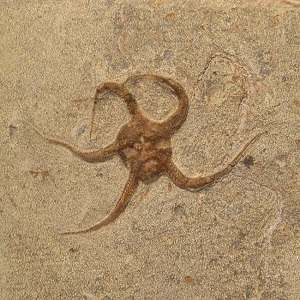
The world’s oceans once held creatures so delicate that their beauty seemed destined to be lost with time. Yet, in the rocks of Morocco, those ancient stars still shine. Brittlestars and Starfish, preserved for hundreds of millions of years, emerge from Moroccan fossil beds with a clarity and magnificence unmatched anywhere else on Earth. These are not just remnants of marine life; they are works of natural artistry, crafted through perfect geological conditions and brought to light by masterful preparation.
This is the story of how Morocco rose to global prominence as the capital for Brittle Stars and Star Fish fossil for sale, an origin tied to its ancient seas, unique geology, and a thriving fossil trade that continues to captivate scientists, collectors, and enthusiasts alike.
The Ancient Seas of Morocco: Cradles of Preservation
Long before deserts and mountain ranges defined Morocco’s modern landscape, vast shallow seas covered the region. These Ordovician and Jurassic waters teemed with marine life, from trilobites and nautiloids to the graceful echinoderms we now call Brittle Stars and Star Fish fossil for sale.
The calm seafloor acted as nature’s perfect archive. When these fragile echinoderms died, they were quickly buried in fine sediment. Unlike in most environments where their skeletons would scatter and dissolve, Morocco’s seabeds sealed them in place. Over millions of years, mineralization preserved every detail, the fine arm segments, the central disc, and the symmetry that defines their beauty.
In formations like the Fezouata Shale and the Katouna Formation, these fossils survived not as broken fragments, but as complete, lifelike impressions that look as though the stars were pressed into stone yesterday.
Morocco’s Geological Gift
The exceptional preservation of Moroccan fossils isn’t an accident, it’s a gift of geology.
Fine-grained sediments acted like a protective blanket, encasing Brittle Stars and Starfish before scavengers or decay could destroy them.
Mineral replacement processes, such as pyritization, added structural strength and remarkable detail to even the most delicate features.
Stable conditions ensured that entire assemblages, multiple Brittle Stars on a single slab, could fossilize together, capturing moments of prehistoric marine life frozen in time.
This natural “alchemy” explains why Moroccan specimens stand out from fossils discovered elsewhere, such as the smaller yet well-preserved Brittle Stars found in Germany. Morocco’s pieces are not only larger but often more dramatic, making them ideal for collectors seeking statement fossils.
From Fossil Beds to Fossil Capital
So, how did Morocco transform from a land of buried treasures into the world’s fossil capital for Brittle Stars and Star Fish fossil for sale?
Rich Local Discoveries
Beginning in the 20th century, Moroccan fossil hunters uncovered vast deposits near Rissani, Erfoud, and El Caid Romi. With each discovery, it became clear that Morocco possessed not just a handful of specimens, but entire beds filled with extraordinary fossils.
Craftsmanship in Preparation
Moroccan fossil preparation developed into an art form. Local experts mastered the skill of carefully extracting fossils from hard limestone matrices without damaging them. The result? Specimens with sharp detail and stunning contrast, perfect for both scientific study and display.
Global Demand
As collectors and museums recognized Morocco’s unmatched fossil supply, demand soared. Today, Moroccan Brittle Stars and Starfish are prized worldwide, often described as “museum quality” and guaranteed for authenticity.
What Makes Moroccan Fossils Exceptional
Moroccan Brittle Stars and Starfish have earned their reputation because of a combination of size, preservation, and authenticity.
Scale: Some Moroccan specimens measure more than 6 inches across, far larger than most examples found elsewhere.
Condition: Fossils are often intact, with arms fully extended and discs preserved in exquisite detail.
Authenticity: Dealers specializing in Moroccan fossils, such as Buried Treasure Fossils, emphasize that their pieces are unaltered, with no restoration, no paint, and no guesswork, just genuine history in stone.
For example, a rare Petraster Starfish from Rissani showcases its arms in flawless symmetry, while a massive Ophiura Brittle Star displays the elegance of Ordovician life, dating back more than 465 million years. Each specimen tells a unique story, anchored in time and authenticity.
Collecting Moroccan Fossils: A Living Legacy
For collectors, Moroccan Brittle Stars and Star Fish fossil for sale are more than decorative pieces, they are investments in natural history. Each fossil represents:
A scientific record: offering insights into echinoderm evolution and ancient marine ecosystems.
An artistic masterpiece: with radial symmetry and lifelike poses that rival modern sculpture.
A cultural treasure: linking Morocco’s fossil trade to global appreciation for Earth’s history.
Whether it’s a slab containing multiple echinoderms, a single Starfish fossilized mid-motion, or a Brittlestar Fossil for sale preserved with astonishing clarity, these pieces connect us directly to oceans that existed long before humans walked the Earth.
Morocco vs. Other Fossil Sources
Germany has long been known for its smaller Brittle Stars, often admired for their fine details. Yet Morocco’s contribution surpasses them in scale and accessibility. The Moroccan fossil beds have produced specimens that are:
Larger and bolder—ideal for collectors who want centerpiece fossils.
More abundant—making them accessible to both seasoned collectors and first-time buyers.
Scientifically significant—providing evolutionary snapshots that rivals find from classic European sites.
This combination of accessibility and rarity explains why Morocco dominates the market for Brittle Star and Starfish fossils.
Why Morocco Captivates Scientists and Collectors Alike
The appeal of Moroccan fossils lies at the intersection of science, art, and history.
For scientists they reveal crucial evolutionary milestones, such as the transition of somasteroids into modern Starfish.
For collectors, they offer aesthetic brilliance and conversation-starting value.
For educators they provide tangible tools to inspire curiosity about life in ancient seas.
In short, Moroccan Brittle Stars and Starfish serve as bridges, connecting academic research, personal passion, and timeless beauty.
Conclusion: Morocco, Where Fossil Stars Still Shine
Few places on Earth can rival Morocco’s legacy in preserving the delicate elegance of Starfish and Brittlestar Fossil for sale. Through geological fortune, human craftsmanship, and a thriving fossil heritage, Morocco has become the capital of these extraordinary specimens.
Every fossil, from a fragile Ordovician Brittle Star to a bold Jurassic Starfish slab, tells a story written across hundreds of millions of years. Owning one is not simply about having a fossil; it’s about holding a piece of Earth’s ancient ocean, forever crystallized in stone. In Morocco, stars are not just found in the sky, they are embedded in stone, waiting to be discovered, cherished, and shared with the world.
Explore our full collection of Moroccan Brittle Star and Starfish fossils today, authenticity guaranteed, history preserved, and beauty unmatched.