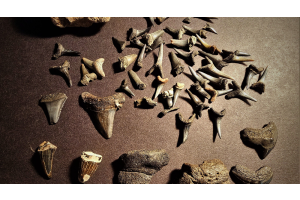
Buying or grading a Megalodon tooth should feel straightforward. On Buried Treasure Fossils, you can judge a specimen using the same signals you see in the listings: size, condition features, locality, eye appeal, and authenticity. The Megalodon category also groups teeth by size tiers and locations, which makes side-by-side comparisons easy before you buy.
Size: The First Quality Signal
Size draws the eye first. Megalodon teeth can exceed 7 inches, but most legitimate specimens rarely exceed 6 to 6½ inches. The site even has a dedicated “6 inch” grouping to help you find showpieces quickly. If two teeth have similar conditions, the larger tooth typically commands the premium.
Collectors also notice the presentation. Most 5-inch-plus teeth on the site come with a custom stand. That matters for heavy crowns that should be supported in a display.
Condition: What the Details Reveal
Condition tells you how well a tooth survived time and transport. Listings highlight these details, and you can use the same checklist when evaluating a candidate:
● Serrations. Are they sharp and complete? Descriptions often call out “razor sharp serrations” on higher-grade pieces. Worn or rolled edges lower desirability.
● Tip. A clean, sharp tip signals better preservation; chips reduce grade.
● Enamel. Look for high-quality, continuous enamel with pleasing luster.
● Bourlette. That contrasting band between crown and root can be “complete,” “large,” or mostly “dentin layer.” Strong, intact bourlettes add eye appeal.
● Root. Seek completeness and good articulation; cracks or loss can be noted in descriptions.
Those are the exact traits sellers describe on top pieces. Read a few listings and you’ll see the pattern repeat.
Locality: How Origin Influences Look and Demand
Locality affects color, texture, and market interest. The Megalodon page organizes teeth by well-known sources, including Florida, North Carolina (including “Copper-Red”), South Carolina, Sharktooth Hill (California), Chile, Peru, and more. That structure lets you compare like-for-like and find the color palette you want.
A megalodon tooth found in North Myrtle Beach fits within South Carolina’s coastal context. Use the South Carolina grouping on the site to benchmark typical enamel tones, serration wear, and overall look for that region. It’s a practical way to set expectations for cleaning, grading, and pricing your beach find.
Eye Appeal: Symmetry, Contrast, and Presence
Eye appeal is what makes a specimen pop in a case. Symmetry matters, but so does contrast, dark bourlette against lighter enamel or the “Bakersfield white” hues you’ll see noted on Sharktooth Hill pieces. When you compare product photos and descriptions, you’ll notice how color and contrast lift the perceived grade even when measurements are similar.
Authenticity and Curation are Non-Negotiables
Authenticity is guaranteed on the Megalodon category page. You’ll also find repeated notes about “no repair / no restoration” when applicable, and where there is professional restoration, listings call it out. That transparency helps both new buyers and experienced collectors make precise decisions.
6) A simple grading workflow you can follow
Here’s a quick, repeatable way to evaluate a tooth on the site or one you already own:
1. Measure correctly. Record the maximum straight-line height. Use the 6–6½ inch benchmark to understand rarity.
2. Check edges. Track serrations from shoulder to tip. Note any smoothing or loss.
3. Inspect the tip. Look for chips, rolling, or a clean, sharp point.
4. Assess enamel. Seek consistent, high-quality enamel with attractive luster.
5. Evaluate the bourlette. Is it large or complete? Is it mostly dentin? Strong contrast adds display impact.
6. Examine the root. Favor completeness and articulated texture; note cracks or erosion.
7. Anchor to locality. Compare with the site’s locality filters to calibrate color and look.
8. Consider display. If it’s 5 inches or more, using a stand isn’t just cosmetic—it protects the piece.
What the Size Tiers Mean for Value
Because most verified teeth cluster under 6 inches, every additional fraction near that line matters. That’s why the site calls out “over 6 inches” and maintains a “6 inch” category—these are scarce and instantly recognizable showpieces. An honest 5-inch tooth with top condition can outshine a larger, worn example, but at equal condition, size tends to win.
Locality Snapshots You Can Use
● South Carolina. Consistent supply and wide size range. Great for comparing a megalodon tooth found in North Myrtle Beach with verified specimens.
● North Carolina (Copper-Red). Sought after for unique colors and strong visual presence.
● Sharktooth Hill (California). Historic locality with distinct hues, sometimes described as “Bakersfield white.” Listings call out enamel, serrations, and tip quality clearly.
● Peru / Chile / Indonesia. Broad color palettes; descriptions emphasize serrations, bourlette completeness, and root articulation.
Use these groups to calibrate what “top quality” looks like before you buy.
Display and Care
Display is part of responsible collecting. Stands stabilize heavy crowns and prevent accidental tip damage. The category specifically notes that most 5-inch-plus teeth come with a custom stand, which is ideal for shelves, cases, and store windows. If you’re assembling a showcase, keep heights level and labels consistent for a professional look.
Why These Criteria Make Sense
The Megalodon used to be massive creatures with a body length of around 60 feet and teeth that could exceed 7 inches. Those massive, serrated crowns are why we evaluate serrations, tips, and enamel so closely today. The same anatomical features that once cut prey are now the collector’s grading cues.
Bottom Line
Evaluate size, then confirm condition details (serrations, tip, enamel, bourlette, root), ground your expectations with the site’s locality filters, and protect the piece with a proper stand. This aligns with how Buried Treasure Fossils presents and curates its Megalodon teeth, so you can grade confidently and build a display that looks as good as it reads.