

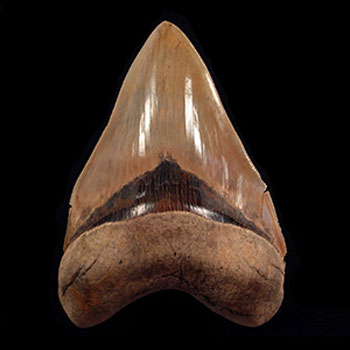
Long before the beaches of North Carolina became a favorite spot for family vacations, the waters that now surround Ocean Isle were home to some of the most powerful predators the Earth has ever known. These enormous sharks, known as megalodons, once ruled the seas with jaws strong enough to crush whales. Today, their legacy lives on through the fossilized remains of their teeth—some of which have made their way to the surface, sparking fascination for anyone lucky enough to stumble upon them. Among the most thrilling discoveries for fossil hunters is the megalodon tooth in Ocean Isle, a relic that connects our modern world to an ancient oceanic giant.
The Megalodon: Ocean’s Prehistoric Titan
Imagine a shark longer than a school bus with teeth as big as your hand—that was the megalodon. Scientists estimate it lived roughly 23 to 3.6 million years ago during the Miocene and Pliocene epochs. Its name, Carcharocles megalodon, literally means “giant tooth,” and for good reason. These massive teeth, often measuring over seven inches, give us clues about the shark’s size, feeding habits, and even the structure of its jaw.
At Buried Treasure Fossils, we share the same excitement that young fossil hunters and curious learners feel when discovering these pieces of history. We understand that each megalodon tooth in Ocean Isle tells a story—not just about the creature it came from, but about the journey it took through millions of years of oceanic transformation.
How Did Megalodon Teeth Reach Ocean Isle?
The process of how a megalodon tooth traveled from deep ocean floors to sunny beaches is as fascinating as the fossil itself. When megalodons died, their skeletons, made mostly of cartilage, quickly decayed. However, their teeth—dense and mineral-rich—settled into the seabed. Over time, layers of sediment buried them deeper, preserving them under pressure.
As millions of years passed, tectonic shifts, rising sea levels, and erosion brought some of these ancient sediments closer to the surface. Ocean Isle’s unique geology, with its blend of coastal and riverine environments, created the perfect conditions for fossils to resurface. Storms, tides, and natural wave action slowly loosened these fossils, carrying them toward the beach where treasure seekers now find them.
What Makes Ocean Isle a Fossil Hotspot
Ocean Isle isn’t just another beach—it’s a living classroom where geology and paleontology meet. The area’s sandy shores and shifting tides make it an ideal location for uncovering prehistoric fossils. Fossil hunters often find smaller shark teeth from species like sand tigers and bull sharks, but occasionally, nature rewards patience with a truly extraordinary find: a megalodon tooth in Ocean Isle.
At Buried Treasure Fossils, we’re passionate about educating collectors and enthusiasts about why these discoveries matter. When you hold a megalodon tooth in your hand, you’re holding evidence of an ecosystem that existed millions of years before humans ever set foot on land. It’s a direct link between ancient life and the world we know today.
How to Identify a Real Megalodon Tooth
Spotting a genuine megalodon tooth takes more than luck—it takes a keen eye and a bit of scientific know-how. Real megalodon teeth are typically:
● Large and triangular, with serrated edges that resemble a saw blade.
● Heavily mineralized, giving them a dark gray or black color.
● Smooth at the root, with a strong enamel surface and visible serrations.
Younger fossil hunters can compare found specimens with photos or guides to learn more about tooth shape and structure. And for those looking to expand their collection, we at Buried Treasure Fossils offer carefully verified specimens that are legally sourced, ensuring every fossil is both authentic and responsibly obtained.
The Science Behind Fossilization
Fossilization is nature’s time capsule. When a megalodon tooth settled into the ocean floor, minerals like silica and calcite replaced the organic material over millions of years. This slow process preserved the tooth’s shape and details while turning it into stone. It’s this transformation that allows us to study them today.
Scientists examine isotopic compositions and micro-scratches on these teeth to learn about ancient ocean temperatures, diets, and migration patterns. Every megalodon tooth in Ocean Isle contributes to this scientific puzzle, helping researchers understand how these sharks adapted to changing marine environments and why they eventually went extinct.
The Thrill of the Hunt: Fossil Hunting Tips
Fossil hunting at Ocean Isle can feel like a real-life treasure hunt. Here are some fun and practical tips we share with fellow explorers:
1. Search after a storm – Strong tides and winds can expose new layers of sediment.
2. Use a sifter or sand scoop – These tools help uncover smaller teeth and shells.
3. Look near river outlets and eroded areas – Ancient sediments often wash down from inland deposits.
4. Go during low tide – More beach surface means more chances to spot something special.
5. Be patient and respectful – Fossil hunting takes time, and preserving nature’s balance is key.
Each tooth found is a discovery worth celebrating—and a reminder that patience and curiosity go hand in hand in the world of paleontology.
Responsible Collecting and Preservation
While it’s exciting to find a tooth from one of Earth’s largest predators, responsible collecting ensures future generations can share that same excitement. Most beaches, including Ocean Isle, allow the collection of surface fossils, but it’s important not to dig into protected areas or disturb wildlife habitats.
Once you find a tooth, clean it gently with water and a soft brush. Avoid harsh chemicals that can damage the fossil’s surface. If you’d like to display it, keep it in a cool, dry place away from direct sunlight. At Buried Treasure Fossils, we provide expert advice and resources to help collectors care for and display their finds properly.
Why Megalodon Teeth Inspire Wonder
Part of what makes megalodon teeth so captivating is their connection to a time when marine life looked dramatically different. These fossils are a blend of art, science, and adventure. Whether displayed on a shelf, studied under a microscope, or shared in a classroom, they spark curiosity about the natural world and our planet’s deep past.
At our store, we see firsthand how a single megalodon tooth in Ocean Isle can ignite a lifelong fascination with paleontology. It reminds us that the Earth is full of stories still waiting to be told—stories written in stone and sand.
Connecting Science, Nature, and Discovery
Every fossil we handle at Buried Treasure Fossils represents more than a product—it’s a piece of history, a teaching tool, and a source of inspiration. We strive to make fossil collecting approachable for everyone, from curious beginners to experienced enthusiasts. Our collection spans everything from tiny trilobites to giant dinosaur claws, but the megalodon tooth remains a favorite among all ages.
As educators and collectors ourselves, we encourage families and nature programs to use these fossils as learning tools. They’re perfect for sparking discussions about evolution, climate change, and how life adapts over time. Through exploration and study, kids gain a sense of wonder and respect for Earth’s ancient past.
Conclusion: Your Next Discovery Awaits
The next time you stroll along the shoreline, remember that the sands beneath your feet once hid the remains of Earth’s greatest predators. Finding a megalodon tooth in Ocean Isle isn’t just about luck—it’s about understanding how our planet preserves its history and reveals it piece by piece.
If you’re inspired to learn more, explore our diverse collection of authentic fossils and dive deeper into the fascinating world of prehistoric life. Whether you’re starting your fossil journey or adding a remarkable specimen to your collection, we’re here to help you uncover the past, one tooth at a time.
Start your adventure with us today—and who knows? Your next fossil find might just rewrite what you thought you knew about the ancient oceans.






