

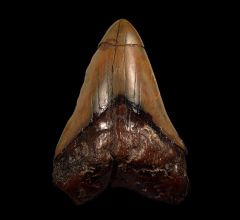
To hold a fossil in your hands is to borrow time from history. The texture, the weight, even the colour whispers of a world that existed millions of years before ours. When that fossil happens to be a tooth from the most formidable shark in Earth’s oceans, it is not simply a keepsake. It is a symbol of power, survival, and mystery. Collectors worldwide share a particular fascination with the megalodon tooth discoveries in the UK, which reveal just how rich Britain’s prehistoric waters once were.
The Shark That Ruled the Seas
The megalodon was the ultimate marine predator. At over 50 feet long with jaws strong enough to crush whale bones, it was the definition of ocean dominance. Its teeth could stretch to seven inches, triangular like knives and serrated like saw blades. Unlike bones, which often deteriorate, teeth fossilize more easily, leaving behind some of the most unmistakable evidence of this shark’s reign.
You are looking at an apex predator that dominated the oceans millions of years ago, every time you see one of these enormous teeth. Every fossil tells a tale of survival through its roots and enamel.
Why the United Kingdom Holds Its Secrets
Many assume that fossilized megalodon teeth are found only in sun-drenched regions, such as Florida or South Africa. Yet the cliffs and shorelines of Britain tell their own tales. During the Miocene and Pliocene epochs, the landmass that became the British Isles was surrounded by warm, nutrient-rich waters teeming with marine life.
Places such as Norfolk, Kent, and Gloucestershire are known among fossil hunters for yielding remarkable finds. Erosion gradually reveals what has been hidden for millions of years. Standing on a windswept British beach, it is difficult to imagine that the ground beneath once held the hunting grounds of the largest shark to ever live. But every uncovered fossil is proof of that lost ocean.
The Moment of Discovery
There is a thrill in finding a fossil that words struggle to capture. Picture walking along a shingle beach, the tide receding, when something triangular and gleaming catches your eye. A quick brush of sand and you realise you are holding a relic from a world that predates humanity.
While not everyone can spend hours scouring cliff edges and beaches, the fascination with these finds remains strong. That is why collectors seek fossils sourced with care and authenticity. Owning one is not only a conversation piece but also a tangible reminder that history is closer than we think.
How a Tooth Becomes a Fossil
When a megalodon lost a tooth, it sank into the seabed, covered over time by layers of sediment. Over millions of years, minerals gradually replaced the organic structure, transforming it into stone while preserving its original shape.
Earth’s constant shifts then took over. Tectonic movement lifted ancient seabeds, storms wore away cliffs, and rivers carried fossils into new places. By the time a collector finds it, the tooth has travelled through more than just water—it has journeyed through epochs.
The Beauty in Variation
No two fossils are alike. Some megalodon tooth UK specimens display serrations so sharp they look fresh, while others reveal rounded edges softened by time and tide. Colours range from deep brown and jet black to shades touched with orange, blue, or even green, depending on the minerals absorbed during fossilisation.
Collectors often value perfect bourlettes and intact roots, but even teeth with wear tell fascinating stories. A chipped edge might mean the shark used that tooth to crush prey. Imperfections are not flaws—they are history preserved.
Why Collectors Treasure Them
Beyond the obvious “wow factor,” fossils appeal to people for many reasons. Some see them as investments, rare items that will only increase in value over time. Others appreciate the educational side, using fossils to spark interest in children or to deepen their own understanding of natural history.
For many, the appeal is emotional. There is something grounding about holding an object that has lasted millions of years. It makes daily worries seem trivial in comparison.
Bringing Fossils Into Reach
We know not everyone can wade into the mud of Britain’s cliffs or dedicate weekends to fossil hunting. That is why we specialise in sourcing authentic, high-quality specimens. Our process ensures that when you add a fossil to your collection, it has been properly identified, carefully cleaned, and acquired in an ethical manner.
Whether you are drawn to the sheer size of a megalodon tooth or the rarity of smaller species like Hexanchus or Lissodus, we make sure that authenticity comes first. Our role is to bridge the gap between the ancient seabed and your personal collection.
Caring for Your Fossil
Fossilised teeth are hardy, but a little care keeps them looking their best. Avoid leaving them in direct sunlight, as that can fade their natural colours. Keep them away from damp areas and resist the urge to polish them—nature has already given them a finish worth showing.
Many collectors choose to display their teeth in cases or frame them. Not only does this protect them, but it also transforms them into striking pieces of art for your living room, study, or office. Guests will inevitably ask, “Is that really a megalodon tooth?” and you will enjoy answering yes.
A Teaching Tool in Disguise
Owning a fossil is more than a personal delight; it can also inspire others. Teachers often use fossils in classrooms to bring lessons to life, while parents find them a way to engage curious children in science. For adults, they are a daily reminder that our world has been shaped by forces far beyond our own. A fossil can be a humble rock on one level and an entire prehistoric story on another.
The Rare Charm of a UK Specimen
Collectors know that provenance matters. A megalodon tooth from the United Kingdom carries an added layer of intrigue because it comes from an uncommon location. The relative scarcity of these finds makes them especially desirable, as they stand apart from the more common fossils found in other regions.
Pairing a UK megalodon tooth with other British fossils creates a remarkable narrative display. Together, they illustrate the wide variety of marine predators that once swam in the same waters.
Why This Belongs on Your Shelf
There are a few objects you can place on a shelf that command attention as powerfully as a megalodon tooth. Its triangular form, its weight, its age—everything about it invites curiosity. To some, it is art; to others, it is history; and to many, it is a way of owning a piece of natural wonder.
Because these fossils are finite, each one discovered feels even more valuable. Once gone, they cannot be replaced. The megalodon is long extinct, which makes every surviving tooth not only a relic but also a treasure worth preserving.
Conclusion
What makes a UK megalodon tooth truly extraordinary is not only its sheer size but also the tale it tells. From the ocean floor of a prehistoric sea to the hands of a modern collector, each one carries a tale millions of years in the making. They are more than fossils; they are storytellers, reminding us of an era when sharks the size of buses ruled the water.
We make it possible for you to bring those stories home. Through careful sourcing and a commitment to authenticity, we connect you with fossils that deserve a place in your collection. If you are ready to add something rare, remarkable, and undeniably conversation-worthy to your shelf, a megalodon tooth from Britain may be the perfect piece.






