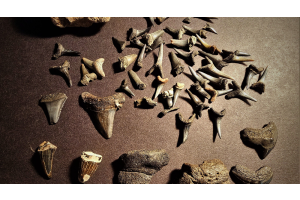
Picture yourself wandering through a fossil fair. Tables are covered with ammonites, trilobites, and polished dinosaur bones. Then you see it: a single tooth, larger than your palm, its serrated edge catching the light. You lean in closer, a little stunned, and the question blurs into your mind before you can stop it—how big can a megalodon tooth get?
That spark of curiosity is what makes megalodon teeth so irresistible. They’re not just fossils; they’re time machines, relics of an apex predator that once ruled the oceans. Whether you’re a casual admirer or a seasoned collector, the size of these teeth is the detail that always captures attention first. And yet, their story runs deeper than sheer scale.
The Ocean’s Original Apex Predator
Megalodon was no ordinary shark. Stretching up to sixty feet long, it dwarfed today’s great whites, basking sharks, and even most whales. This predator swam Earth’s oceans roughly 23 to 3.6 million years ago, its powerful bite leaving little chance for prey to escape.
What makes megalodon such a fascinating mystery is that cartilage—the material making up most of its skeleton—doesn’t fossilize well. Teeth, however, endure. They are the lasting proof of its size and strength, scattered across riverbeds, seabeds, and cliffs all over the world. Each one is a snapshot of a giant that once dominated its environment.
When Size Tells the Story
Numbers speak loudly in paleontology. A great white’s tooth averages two inches. A typical megalodon tooth stretches three to five inches. The rare giants break seven inches. Imagine an entire jaw lined with rows of such blades—hundreds of serrated knives, each longer than your finger.
It’s no wonder collectors and scientists alike obsess over the question: how big can a megalodon tooth get? The answer, while rooted in measurements, carries a sense of awe that statistics alone can’t convey. To see a seven-inch specimen is to stare at evidence of a creature larger than myth.
Why Bigger Fossils Are Harder to Find
Size is not just impressive—it’s significant. Larger fossils belonged to fully mature sharks that lived long lives and grew to their peak potential. That makes them far rarer than smaller specimens, which are more common and more accessible to new collectors.
The rarity of giant teeth drives value upward. They are highly coveted pieces, considered the crown jewels of any collection. But even a modest three-inch tooth has the power to fascinate. The truth is, every fossil represents a survivor of time, a fragment of natural history.
Colors That Rival Size
Size may be the headline, but color and texture add personality. Fossilization infuses minerals into the enamel, producing hues that range from coal black and chocolate brown to sandy beige and even bluish-gray. Some are glossy and smooth, others matte and rugged.
Collectors treasure unusual shades just as much as size. A five-inch tooth with rare coloration can spark more excitement than a six-inch fossil in a common tone. These variations make each piece feel like art sculpted by the Earth itself.
Collecting for Passion and Pride
Megalodon teeth combine durability, beauty, and narrative, making them one of the most sought-after fossils among collectors. Unlike some ancient bones, they are not brittle. They are resilient enough to endure handling, exhibition, and transportation.
For beginners, a smaller tooth makes an affordable and exciting entry point. For seasoned collectors, the hunt for the elusive giants becomes almost a lifelong pursuit. And for everyone in between, there’s the thrill of sharing the fossil with others. Few things light up a room like placing a megalodon tooth on a table and watching jaws drop.
From Fossil to Scientific Treasure
Scientists rely on these teeth for more than shock value. The shape, serrations, and wear patterns provide clues about diet and hunting behavior. Studies suggest that megalodon preyed on whales, dolphins, and other large marine mammals. Some fossils even show bite marks in prehistoric whale bones that perfectly match megalodon’s serrated edges.
By analyzing tooth size and comparing it with modern sharks, researchers have estimated megalodon’s full body length. It’s one of the rare cases where collectors and scientists share the same fascination—because both understand that the tooth is more than a fossil; it’s evidence.
Stories from Collectors
Ask any fossil collector, and they’ll recall their first megalodon tooth vividly. One might describe stumbling upon it in a muddy riverbank, brushing away sediment to reveal sharp serrations. Another remembers the excitement of buying a Moroccan specimen online, holding it up, and realizing their hand couldn’t close around it.
These stories are personal but universal. They capture that moment of connection between a human and a piece of history millions of years old. Collectors often pass these fossils down to children, sparking curiosity that textbooks alone rarely ignite.
Tips for Choosing Your Fossil
If you’re considering your first megalodon tooth, here are a few tips to guide you:
● Authenticity matters: Genuine fossils have depth and texture that replicas can’t match. Always choose a trusted source.
● Condition counts: Look for serrations, intact roots, and enamel. These details influence value and display appeal.
● Think about size and budget: Start with a specimen you can enjoy without pressure. Smaller fossils still tell the same grand story.
● Plan for display: A fossil this extraordinary deserves visibility. Simple stands or cases elevate it into a centerpiece.
Fossils as Teaching Tools
Beyond collecting, megalodon teeth thrive in classrooms and museums. Children hold them and instantly grasp the concept of scale. Teachers use them to explain evolution, extinction, and the power of adaptation. Museums rely on them as crowd favorites, drawing attention before moving visitors into deeper scientific exhibits.
At home, they become conversational anchors. Guests will always ask, “Is that real?” That question opens the door to stories about prehistoric oceans, mineralization, and the giants of Earth’s past.
Bringing Fossils Into Everyday Life
Owning a megalodon tooth means more than adding a fossil to your shelf. It means connecting to time itself. Place one in your office, and it reminds you of nature’s resilience. Keep one in your living room, and it turns gatherings into storytelling sessions. Gift one, and you hand someone a piece of history they’ll never forget.
We love helping people discover these extraordinary fossils. Whether you’re searching for a first specimen or a jaw-dropping showpiece, our collection brings authentic megalodon teeth and other treasures within your reach. Each one is guaranteed genuine, carefully selected, and ready to spark awe.
Why They Never Lose Their Magic
What sets megalodon teeth apart is the combination of traits. They are enormous, they endure, and they carry artistic beauty shaped by time and mineralization. They stun on sight but reward closer inspection, with every serration and shade adding to their story.
Even among dinosaur fossils, meteorites, or ancient artifacts, these teeth stand as icons. They connect us directly to one of the ocean’s greatest predators, a creature that once ruled waters across the globe. They remind us how vast, wild, and unpredictable life on Earth has always been.
Conclusion
So, to circle back: how big can a megalodon tooth get? The largest specimens reach seven inches, astonishing in both rarity and presence. But size is only part of the magic. Every tooth—whether three inches or seven—offers a glimpse into an ocean ruled by giants.
Owning one isn’t just about display. It’s about holding millions of years of history, connecting with nature’s raw power, and sparking conversations that stretch across time. Explore our collection today and discover the fossil that calls to you. Because some treasures don’t just decorate a room—they stun, inspire, and remind us of the giants that once swam beneath the waves.