

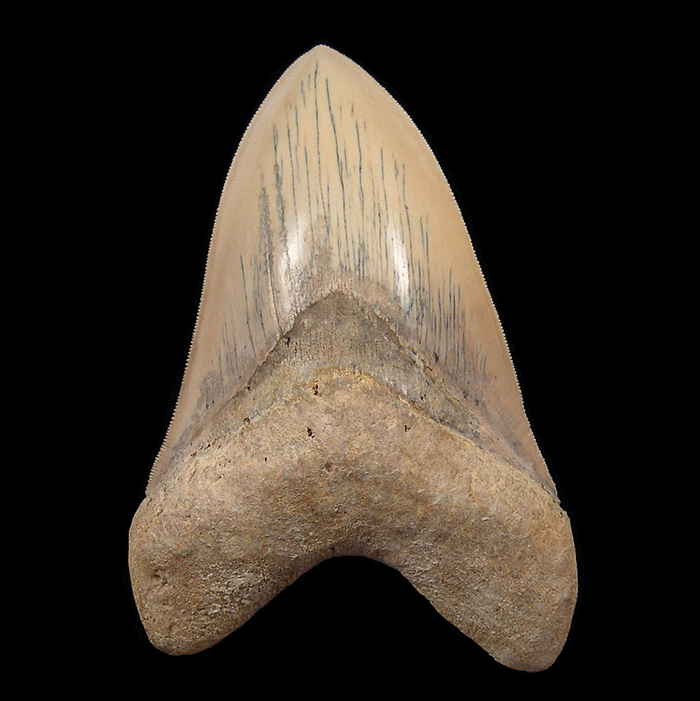
Millions of years ago, the ocean was not the tranquil blue expanse we know today. It was alive with thunderous movements and shadowy giants—predators so immense that even whales feared their presence. Among these rulers of the sea, none captured the imagination quite like the megalodon, an ancient shark that once dominated the waters with unmatched force. Fossil evidence discovered across various regions, including the deep turquoise waters of the Caribbean, continues to reveal stories buried beneath layers of time. Scientists and collectors alike remain captivated by these relics, particularly those associated with the Carcharocles megalodon, a name that evokes both mystery and grandeur.
These fossils aren’t merely remnants of bone and tooth—they’re fragments of history, echoes of creatures that shaped the ocean’s ecosystem long before humanity existed.
The Titan of the Deep: Nature’s Ultimate Predator
Imagine a predator stretching nearly 60 feet long, its jaw wide enough to swallow two adult humans side by side. The megalodon was not only colossal in size but also refined in its design. Its serrated teeth—some over seven inches—were built to crush the thickest bones, slicing through prey with terrifying precision.
Fossils found near ancient Caribbean seabeds indicate that these waters once hosted thriving marine life, making them ideal feeding grounds for such a hunter. The temperature, salinity, and prey diversity would have made this region a paradise for a creature at the top of the food chain.
Caribbean Connections: Fossils That Tell a Story
Each fossilized tooth recovered from the Caribbean holds clues about the life of this prehistoric predator. Slight color variations in the enamel hint at mineral compositions in ancient sediments, while wear patterns tell tales of feeding habits and survival. Collectors often prize these fossils not merely for their rarity but for the history they embody—a direct connection to an oceanic world long vanished.
The Caribbean’s fossil-rich sites have become treasure troves for paleontologists and enthusiasts who see these discoveries as a tangible bridge between scientific curiosity and natural art. Every specimen holds its own story, revealing how the megalodon’s domain once stretched across global waters.
A Glimpse Beneath the Surface: Life During the Megalodon Era
The seas of the Miocene and Pliocene epochs teemed with marine mammals, massive turtles, and early whales. These animals provided abundant food sources, making the oceans an arena of survival. The megalodon’s dominance wasn’t limited to hunting—it influenced migration patterns and even the evolution of smaller shark species that adapted to evade its reach.
In the Caribbean, coral reefs flourished, offering both prey and concealment. It’s believed that juvenile megalodons may have used shallower waters as nurseries, staying close to warm currents until they grew large enough to venture into deeper hunting grounds.
From Fossil to Artifact: The Collector’s Fascination
There’s an undeniable allure in holding a megalodon tooth. Its size and weight evoke the enormity of the creature itself, while the fine serrations whisper of its predatory efficiency. Each fossil—preserved through millions of years—is a testament to Earth’s capacity for both creation and endurance.
For collectors, acquiring one isn’t merely an addition to a shelf; it’s a connection to deep time. A megalodon fossil represents resilience, transformation, and the raw power of nature sculpted into mineralized perfection. Whether mounted in display cases or held in the palm, these fossils remind us of a world that once moved to the rhythm of giants.
Why the Caribbean Matters in Paleontology
Beyond its turquoise beauty, the Caribbean remains an essential key to understanding prehistoric marine ecosystems. The region’s geological stability has preserved fossils exceptionally well, offering scientists a rare opportunity to trace evolutionary patterns. Discoveries here have helped reconstruct migration routes, feeding behaviors, and the eventual decline of these magnificent sharks.
When viewed in this light, each fossil from the Caribbean becomes more than a collector’s item—it’s a scientific artifact that expands humanity’s understanding of life’s ancient narrative.
The Mystery of Extinction
The disappearance of the megalodon remains a puzzle to researchers. Theories range from climate change to the emergence of new predators that compete for the same prey. Some suggest that as ocean temperatures cooled and food sources diminished, the great shark could no longer sustain its immense size.
The Caribbean, once a cradle of life for this species, may have also been a witness to its decline. The shifting of ocean currents and sea levels could have altered breeding and feeding zones, slowly forcing this apex predator toward extinction. Yet, even in its absence, its legacy endures in the deep blue silence of those same waters.
The Collector’s Dream: Owning a Piece of History
There’s something profoundly humbling about holding a megalodon fossil that originated in the Caribbean. Every ridge, curve, and mineral hue reflects eons of natural artistry. For enthusiasts, acquiring such a piece isn’t merely about ownership—it’s about stewardship of history. Each tooth is a relic of the ocean’s untamed past, frozen in time and waiting for a new story to begin.
When properly preserved, these fossils retain their intricate details, from the glossy enamel to the worn edges that once tore through prey. They stand as reminders of a species that ruled with quiet dominance, shaping the marine world as we know it.
Reimagining Giants: What the Megalodon Teaches Us
Beyond its fearsome reputation, the megalodon embodies balance—between might and adaptation, between life and extinction. Its story is one of evolution’s greatest lessons: that even the most formidable beings are subject to change. The Caribbean’s fossil records provide evidence of this truth, showcasing how nature evolves, adapts, and renews.
To explore the world of Carcharocles megalodon, through Caribbean fossils, is to journey through time itself. It’s to witness the echoes of an age when the ocean was ruled by shadows longer than city buses, when nature sculpted creatures beyond imagination.
Conclusion: Embrace the Ocean’s Ancient Legacy
The ocean still holds many secrets, but few are as awe-inspiring as the megalodon’s story. Each fossil unearthed from the Caribbean reminds us that beneath the waves lies a museum of time—waiting to be discovered, admired, and reflected upon.
For those drawn to the mysteries of the deep, exploring authentic megalodon fossils offers a chance to connect with Earth’s ancient rhythm. Whether you’re a collector, a student of natural history, or someone captivated by the majesty of prehistoric life, these relics bring that lost world closer to touch.
Explore the collection, uncover history beneath your fingertips, and let the story of the megalodon inspire your subsequent great discovery.






