

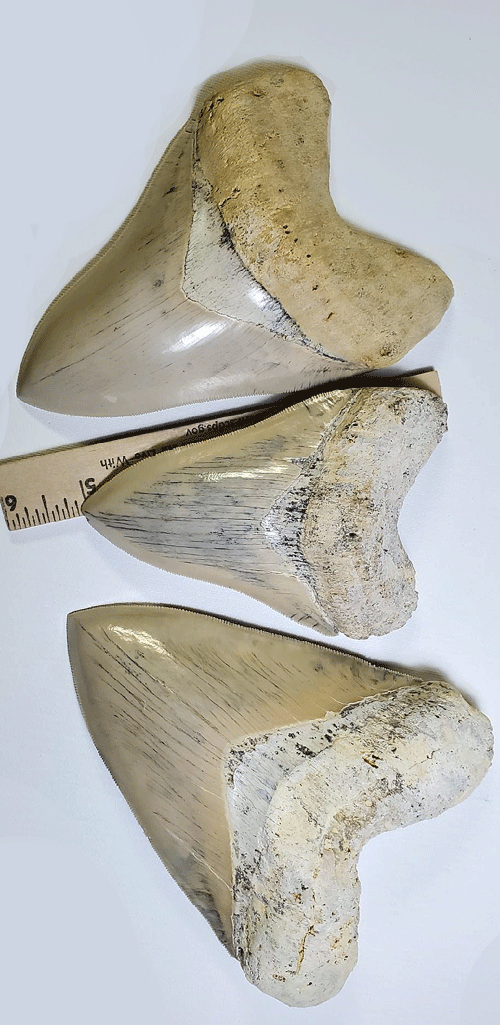
You wonder if that megalodon tooth fossil in your hand is real. You’re not alone. Even long-time collectors get fooled when replicas copy nature too well. Many look convincing until someone with trained eyes checks the surface, root, and enamel. Every detail tells a story, but not every story tells the truth. Some fakes pass basic tests because they mimic general shapes and proportions. What sets real apart from replicas lies deeper than just the first look. That’s where this guide helps. Dealers don’t rely on luck or guesses. They follow signs. So can you, once you learn what they know.
Let’s explore more detailed information:
Fake fossils show clues when you know what to observe
Real teeth carry evidence that no modern tool can fully recreate. First, look at the shine. Fake pieces often appear too glossy or smooth. That unnatural surface comes from polishing or coating. Authentic fossils exhibit a balanced, matte finish with a subtle enamel texture. Serration lines also give away the truth. Real serrations look sharp but aged. Many fakes omit this detail or carve it unnaturally. Shape matters too. Nature doesn’t make perfect symmetry. Real specimens curve, chip, or wear in uneven ways. If a tooth looks flawless, question it. A slight imperfection often proves more than a perfect form ever could.
The root structure often reveals the truth that most buyers overlook
Root structure often reveals what lies beneath the surface. Dealers inspect the transition between the enamel and the root. Real megalodon tooth fossils exhibit a clear, gradual shift, often accompanied by natural cracks or mineral deposits. Fake ones may glue pieces or mold the root with tools. Enamel tells its own story. Dealers shine light across the surface and watch how it reflects. Real enamel scatters light irregularly and shows layered growth. Artificial materials reflect too evenly or seem flat. You can also check the weight. A real fossil feels solid and dense. Many fakes use lightweight resin or material that lacks natural heft.
Dealers don’t guess, they examine layer by layer
Dealers never rely on one clue alone. They consider the entire profile of the fossil. A polished surface can appear on real teeth, but not alongside incorrect serration or weak root form. A heavy fake may exist, but it would not have inconsistent enamel patterns. That’s why expert eyes matter. When examining fossils, we check for alignment between size, texture, color variation, and mineral composition. Each feature either strengthens or weakens the case for authenticity. We don’t rush the process. Our team inspects every specimen before listing it. Every real megalodon tooth fossil earns that title after proving its identity.
Collectors grow confident when they learn what to trust
Collectors trust their instincts, but instincts grow stronger with knowledge. You don’t need to become a full-time dealer to spot the fakes. You need to slow down, observe the details correctly, and understand what nature leaves behind. Many first-time buyers get swept up in the thrill. That thrill turns into disappointment when doubt enters. You can avoid that. Ask questions. Learn the features. Study the patterns. An actual fossil carries age, not just in years but in presence. It feels ancient because it is. That’s the difference between a showpiece and a real piece of natural history.
We inspect every fossil to protect every buyer
We source our fossils with care. We only list items that pass our internal checks. Each fossil undergoes a hands-on review, where we assess authenticity through physical inspection, rather than relying on guesswork. We compare the structure, shape, and density with those of known authentic samples. When we accept a tooth, we stand behind it. Our reputation relies on what we offer and how we offer it. We understand that buyers expect truth. That’s why we only deal with specimens that meet the highest standard for accuracy and preservation. You won’t find shortcuts here. You’ll find fossils that prove themselves in every way.
Doubt fades when you look at the right signs
If you already bought a tooth and now feel unsure, don’t panic. Start by checking the basics: surface texture, root detail, enamel lines, and weight. Use a magnifying lens or an intense light. Focus on areas where fakes often fail—perfectly carved serrations, glassy finishes, or unnatural uniformity. Don’t let doubt ruin the experience. You can take steps now to validate what you own. Trust takes time, but information builds it fast. Dealers don’t know everything at a glance, but they know what signs to follow. You can learn that too, even without deep experience. One fossil teaches a lot.
Real fossils carry more than beauty—they have truth
When a fossil proves real, it does more than sit in a case. It connects you to a time before recorded history. That’s why authenticity matters. When you buy a replica, you purchase an exact copy of an object. When you own a genuine fossil, you hold a piece of the earth’s memory. That truth changes how you collect, how you share, and how you value your find. The joy in fossil collecting lies in discovery, not deception. So treat every purchase like it matters because it does. Real megalodon tooth fossils deserve your attention, not just for what they are but for what they represent.
Slow collecting builds smarter collecting
Many fossil buyers fall into the trap of speed. They rush to buy what looks impressive, only to end up with less than they had hoped for. Don’t let that happen. Take a step back. Look at what you want to own and why it matters. Then make decisions with confidence, not confusion. The right fossil will speak through its details. You need to learn the language. When you choose to trust what you see and back it with what you’ve learned, you stop guessing. You start knowing. And that shift makes every find more rewarding than the one before it.
Final Thoughts
You now understand how real collectors think, check, and decide. You know what separates replicas from actual relics. That knowledge helps you protect your time, your money, and your trust. Use it every time you browse, examine, or make a purchase. When a fossil looks too good, remember what you learned here. Ask questions. Slow down. Take a closer look. Your eye will sharpen with each check, each step. We built our process around the same habits. We trust only what passes the test of age and detail. A real megalodon tooth fossil carries that truth. Now you can spot it.
Footnote
Always inspect fossils in natural light when possible. Strong daylight helps you notice enamel texture, root structure, and authentic signs that indoor lighting can sometimes hide.






