

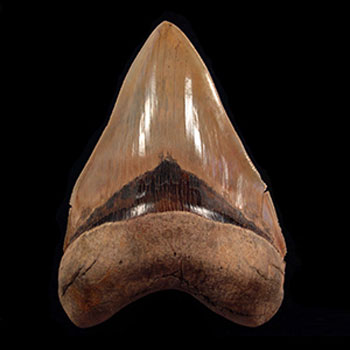
Long before humans navigated the seas, the oceans were ruled by a predator so immense that it reshaped the marine ecosystem around it. This apex hunter was not simply large—it was colossal, commanding the depths with unmatched dominance. Its territory spanned oceans, its prey included some of the largest marine animals, and its presence must have been both fearsome and awe-inspiring.
Though the creature disappeared millions of years ago, its story has been slowly reconstructed through rare and remarkable fossil discoveries. Among the most treasured finds, a preserved megalodon shark skeleton offers scientists and enthusiasts an extraordinary chance to glimpse the blueprint of this ocean giant. These remains serve as time capsules, transporting us back to an era when the seas teemed with creatures we can only imagine today.
And while the science behind these fossils is fascinating, the emotional connection they spark is equally powerful—they remind us of Earth’s long and dramatic history, one in which change is constant and survival is never guaranteed.
Reconstructing the Body of a Legend
The skeleton of a megalodon is not a single discovery but a collection of clues painstakingly pieced together. Most of the time, paleontologists work with vertebrae that resemble ancient, stone-like coins—each one a marker of the shark’s spine and scale. A single vertebra can hint at an animal exceeding 50 feet in length. Multiply that by the full column, and the enormity becomes staggering.
The process of reconstructing these giants involves comparing fossilized remains with modern sharks. The basic body plan—streamlined, torpedo-shaped—suggests an animal built for efficiency. It could move vast distances in search of prey, navigating ancient oceans that connected continents in ways far different from today.
These skeletal pieces reveal its lifestyle, including the size of its fins, the curve of its tail, and the strength of its core muscles. Every fossilized bone fragment is a puzzle piece in a picture that will never be entirely complete, yet grows sharper with each find.
The Bite That Ruled the Seas
The framework of the skeleton is impressive, but when it comes to understanding the megalodon’s true hunting capability, the jaw takes center stage. The megalodon shark jaw is unlike anything else in the fossil record—its sheer size is intimidating even when seen in a museum setting. Rows of serrated teeth, each up to seven inches long, were designed to slice through blubber, muscle, and bone with terrifying efficiency.
Scientists estimate that this predator’s bite force could reach levels far beyond modern great whites, capable of crushing whale bones with a single snap. The jaw’s structure also reveals its hunting strategy: ambush from below, a swift upward charge, and a disabling bite to immobilize prey. These jaws weren’t just tools for feeding—they were weapons honed by millions of years of evolution.
A Predator’s Place in a Changing Ocean
The megalodon’s reign wasn’t forever. The same oceans that once nurtured its dominance eventually became its downfall. Climate shifts altered the distribution of prey, and the cooling of the seas may have reduced the warm-water zones that the megalodon preferred. Competing predators, such as early orcas, may have challenged its dominance in certain regions.
Its extinction roughly 3.6 million years ago left a gap in the marine ecosystem. Smaller predators filled the void, and the oceans entered a new era of evolutionary development. By studying the skeletal and jaw structures, researchers gain valuable insight into how environmental pressures can shape the destiny of even the most formidable species.
The Journey from Ocean Floor to Display
Recovering these ancient remains is an adventure in itself. Many megalodon fossils are discovered far from today’s coastlines, buried in sediment that was once part of ancient seabeds. Others are brought to light by skilled divers exploring riverbeds, coastal cliffs, and deep-water sites where time and geology have preserved them.
Once found, fossils require meticulous care. The moment they leave their protective environment, they risk damage from exposure. Specialists clean and stabilize each piece, sometimes using advanced preservation materials to ensure the fossil’s longevity. This process ensures that each specimen remains intact for study and display, providing future generations with a tangible link to the past.
Why the Megalodon Continues to Capture Imagination
Part of the megalodon’s enduring allure lies in its mystery. Despite the amount of research dedicated to it, there will always be questions we cannot fully answer. How did it choose its hunting grounds? What were its migratory patterns? How long did individuals live?
These unknowns leave room for imagination, fueling documentaries, artwork, and even fiction. It’s rare to find a species that can capture both scientific curiosity and popular fascination so completely. The megalodon represents the ultimate intersection of fact and wonder—where hard evidence meets an endless horizon of possibilities.
Educational Value Beyond the Fossil
Megalodon fossils are not merely collectors’ items—they are vital teaching tools. In classrooms, they provide a hands-on connection to concepts like evolution, climate change, and marine biology. For young learners, seeing an actual megalodon tooth or vertebra can spark a lifelong interest in science.
For researchers, these fossils are datasets, each offering measurable evidence that contributes to a broader understanding of prehistoric life. From isotopic analysis that reveals ancient water temperatures to 3D modeling that reconstructs body shapes, these remains continue to advance our knowledge.
Collecting a Piece of Prehistory
For enthusiasts, owning a genuine fossil is more than having an object—it’s possessing a fragment of a vanished world. A fossilized tooth or vertebra can serve as both a decorative display and a reminder of life’s vast history. These items are often passed down through generations, carrying their stories with them.
Collectors value authenticity, and reputable sources ensure that specimens are ethically sourced and properly documented. Each fossil tells not only the megalodon’s story but also the story of the place and process through which it was found.
The Responsibility of Preserving the Past
Owning or displaying a megalodon fossil also comes with responsibility. These pieces are irreplaceable, and their care ensures they can continue to educate and inspire for decades to come. Proper handling, controlled environments, and sometimes even professional restoration are essential for maintaining these fossils in excellent condition.
By treating them with care, we honor the long journey they’ve taken—from the ocean floor to the present day—ensuring that their history remains accessible to those who come after us.
Conclusion: Keeping the Legacy Alive
The ocean’s ancient giants may have disappeared from our waters, but they remain alive in the story told through their fossils. Each megalodon shark skeleton and megalodon shark jaw serves as a tangible bridge to a time when the seas were ruled by a predator unlike any other. They remind us that Earth’s history is vast, unpredictable, and filled with creatures beyond our wildest imagination.
Whether displayed in a museum, held in a collector’s hands, or studied in a laboratory, these fossils carry the echoes of an era long past. They are more than relics—they are storytellers, speaking of power, adaptation, and the fragile balance of life in the oceans.
If you’re ready to bring a piece of this prehistoric world into your own collection or simply want to experience the awe these fossils inspire, explore authentic specimens from trusted fossil experts who dedicate their work to preserving Earth’s deep history.






