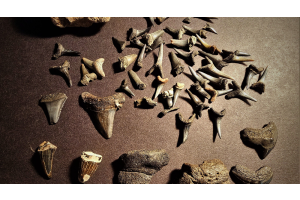
Collectors and paleontology enthusiasts know the thrill of holding a fossil that connects us directly to the prehistoric world. Among the most impressive relics are Megalodon teeth—massive remnants of a shark that once ruled the seas. Yet, with their popularity comes a challenge: replicas and fakes flood the market. For serious enthusiasts, learning how to tell if a megalodon tooth is real is essential. One of the most reliable ways to distinguish authenticity lies in careful examination of root serrations and enamel features—details that can’t easily be imitated.
Why Megalodon Teeth Are So Highly Valued
Megalodon teeth stand as one of the most iconic fossils in the world. These teeth, some reaching more than seven inches, reveal just how immense and powerful this shark was. For collectors, they are not only prized for their size but also for their connection to a predator that dominated oceans millions of years ago. Owning a genuine Megalodon tooth means owning a piece of Earth’s evolutionary story.
Because of this desirability, fake specimens are widespread. Some are resin molds, others are altered modern shark teeth, and some are “restored” pieces where broken teeth are patched up to look whole. To safeguard your collection, paying attention to ancient clues—like root structure, serrations, and enamel—offers the most trustworthy way to verify authenticity.
The Role of Root Structure
When examining a Megalodon tooth, the root serves as a crucial focal point of investigation. Unlike the sleek surfaces of polished replicas, authentic roots reveal a wealth of intricate biological characteristics. Scattered across their rugged surfaces, one can observe minute nutrient holes, known as foramina. These tiny, delicate openings once functioned as conduits for blood vessels, delivering essential nutrients that facilitated the tooth's growth and development. In stark contrast, replicas often overlook this subtle yet significant detail or depict it in an exaggerated manner, failing to capture the true essence of the fossilized specimen.
So, how to tell if a megalodon tooth is real? One way is through the texture. Natural fossilization also creates texture. A real tooth root feels slightly grainy or chalky due to mineral replacement, while fakes may appear smooth, plastic-like, or artificially aged. Weathering can also cause cracks or slight flaking in authentic specimens—signs of millions of years buried in sedimentary rock.
Serrations: Saw-Like Clues of Authenticity
One of the most striking characteristics of Megalodon teeth is their formidable serrated blade edges. These sharp, jagged serrations are far from mere decoration; they served a vital purpose in the shark's predatory arsenal, enabling it to slice through flesh with remarkable precision and efficiency. For enthusiasts and collectors alike, these distinctive serrations are essential indicators of authenticity, adding to the allure and mystery surrounding these ancient ocean giants.
On a genuine specimen, the serrations are sharp, fine, and evenly spaced along the blade. Even with some wear, the pattern remains visible. By contrast, replicas often have blunt or inconsistent serrations. Some fake teeth even skip them altogether, assuming buyers won’t notice. Close inspection with a magnifier will quickly reveal whether the edges bear the intricate saw-like detail only a natural Megalodon tooth carries.
Additionally, real serrations taper naturally toward the tip of the tooth, where they may fade due to feeding wear. A uniform or machine-like pattern is a red flag that the tooth is a replica.
Enamel: Fossilized Beauty in Detail
The enamel of a Megalodon tooth is another area where authenticity shows itself. True enamel is glossy but not overly shiny. Its luster comes from fossilization and mineral content, not artificial polish. Look closely, and you’ll often notice color variations—subtle browns, grays, blacks, or even blues—depending on the minerals present where the tooth fossilized.
Replicas, on the other hand, often show an unnatural uniform color. Some look too shiny, almost like ceramic or plastic. In other cases, artificial paints are applied to mimic weathering, but these layers lack the depth and natural gradient of a real specimen.
Another detail to check is the contact line between the enamel and the root. On genuine fossils, this line is distinct yet organic, showing natural transitions in texture and color. Replicas frequently blur this line, giving an unnatural, blended appearance.
Weight and Density: The Feel of Authenticity
While this blog focuses on serrations and enamel, weight remains another factor worth noting. Fossilized Megalodon teeth are denser and heavier than modern shark teeth or resin replicas. This heaviness comes from millions of years of mineralization, where organic matter was replaced with stone-like minerals. A tooth that feels surprisingly light for its size may be a reproduction rather than a fossil.
Context: Geological and Historical Traces
Authenticity often extends beyond the tooth itself. Genuine fossils sometimes retain bits of the surrounding matrix—sediment or rock that once encased them. These traces are not typically added to fakes, making them valuable authenticity indicators. Moreover, genuine fossilized enamel frequently carries tiny surface imperfections—pits, scratches, or erosion—that are nearly impossible to recreate convincingly.
Why These Details Cannot Be Faked Easily
Replicas may succeed in copying the general shape, but they rarely capture all the subtle markers of real fossilization. Root serrations, nutrient foramina, enamel transitions, and mineral-based coloration are all products of biology and geology acting together over millions of years. That combination cannot be mass-produced in a workshop.
When collectors learn to recognize these fine details, they gain confidence in evaluating fossils and avoid the disappointment of acquiring replicas. At Buried Treasure Fossils, we emphasize these educational points because helping enthusiasts build authentic collections is part of our mission.
Trusted Sources Matter
While personal knowledge is invaluable, buying from trusted sources makes all the difference. Since 2000, we at Buried Treasure Fossils have dedicated ourselves to making authentic fossils accessible to collectors worldwide. Every specimen we offer—from shark teeth to dinosaur bones—is genuine, legally collected, and guaranteed authentic. This commitment is why so many collectors return to us for both entry-level pieces and museum-grade treasures.
We understand the excitement of acquiring fossils, but also the importance of authenticity. Our catalog features a wide range of Megalodon teeth, each vetted for quality and described with careful detail so collectors can shop with confidence.
Conclusion: Holding History in Your Hands
Studying root serrations, enamel structure, and subtle fossilization details gives collectors the best tools to separate replicas from the real thing. Learning how to tell if a megalodon tooth is real ensures that your collection reflects true pieces of natural history, not imitations. Whether it’s the grainy root texture, the saw-like serrations, or the mineral-rich enamel, authentic fossils carry unmistakable markers of their ancient origins.
For anyone passionate about collecting, authenticity isn’t just about value—it’s about connection to prehistoric life. At Buried Treasure Fossils, we’re proud to share that passion and provide fossils that inspire awe and trust. If you’re ready to add a genuine Megalodon tooth or another rare fossil to your collection, explore our carefully curated selection and bring a piece of Earth’s history into your hands.